Four finished kits, cover to cover.
These are full kits exactly as a family receives them. You can read them page by page below, or download and print the PDFs. Ron, Anaya, Camila and Caps are demonstration profiles we created and ran through the same production process as paid kits. Each sample is built so the child can keep going alone, check each step on the page, and see why the method works before moving on.
Built for how children actually learn
A busy page drains a child's working memory. These kits use calm design and cognitive science to reduce anxiety and build true understanding.
The methods stay beside them
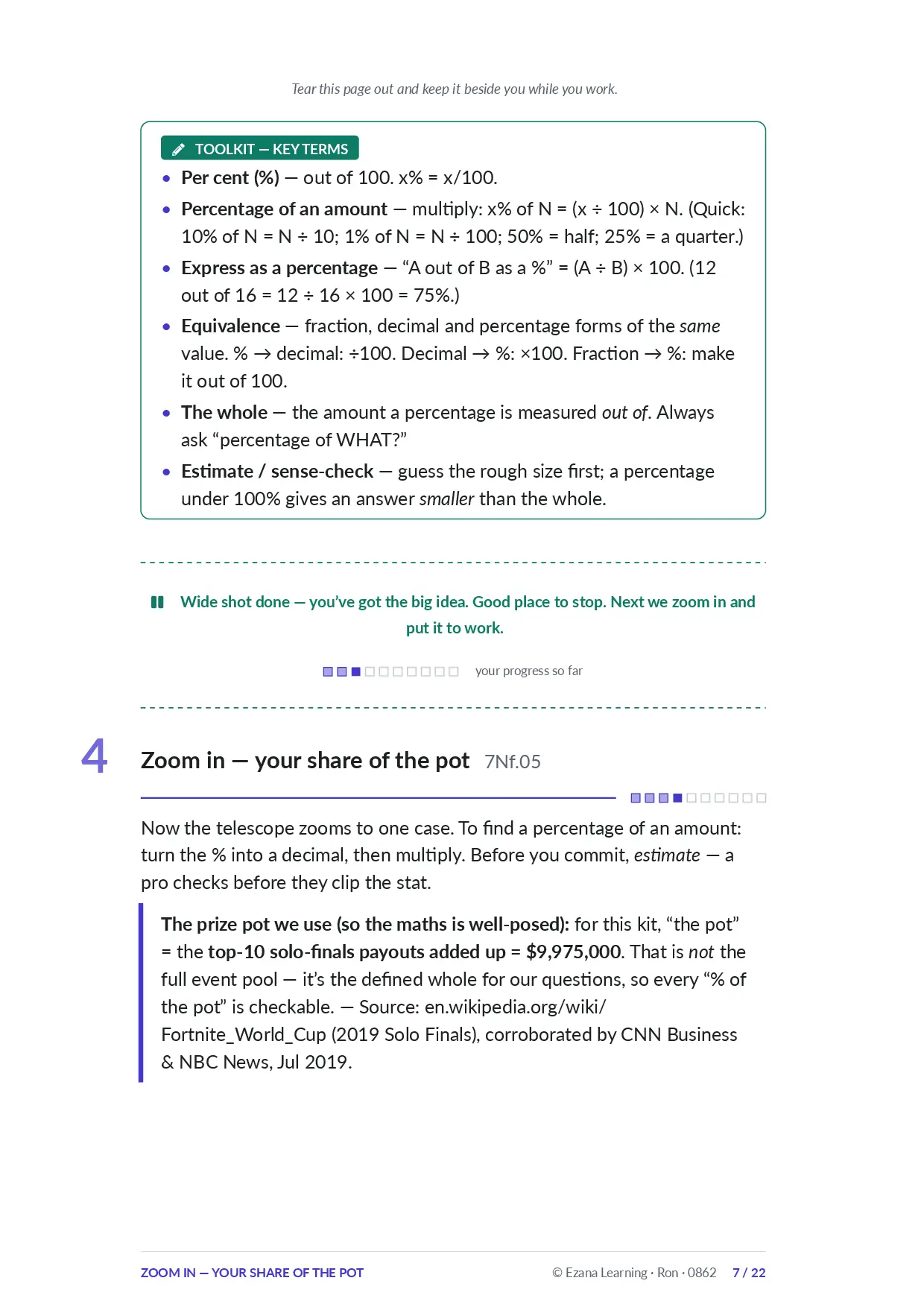
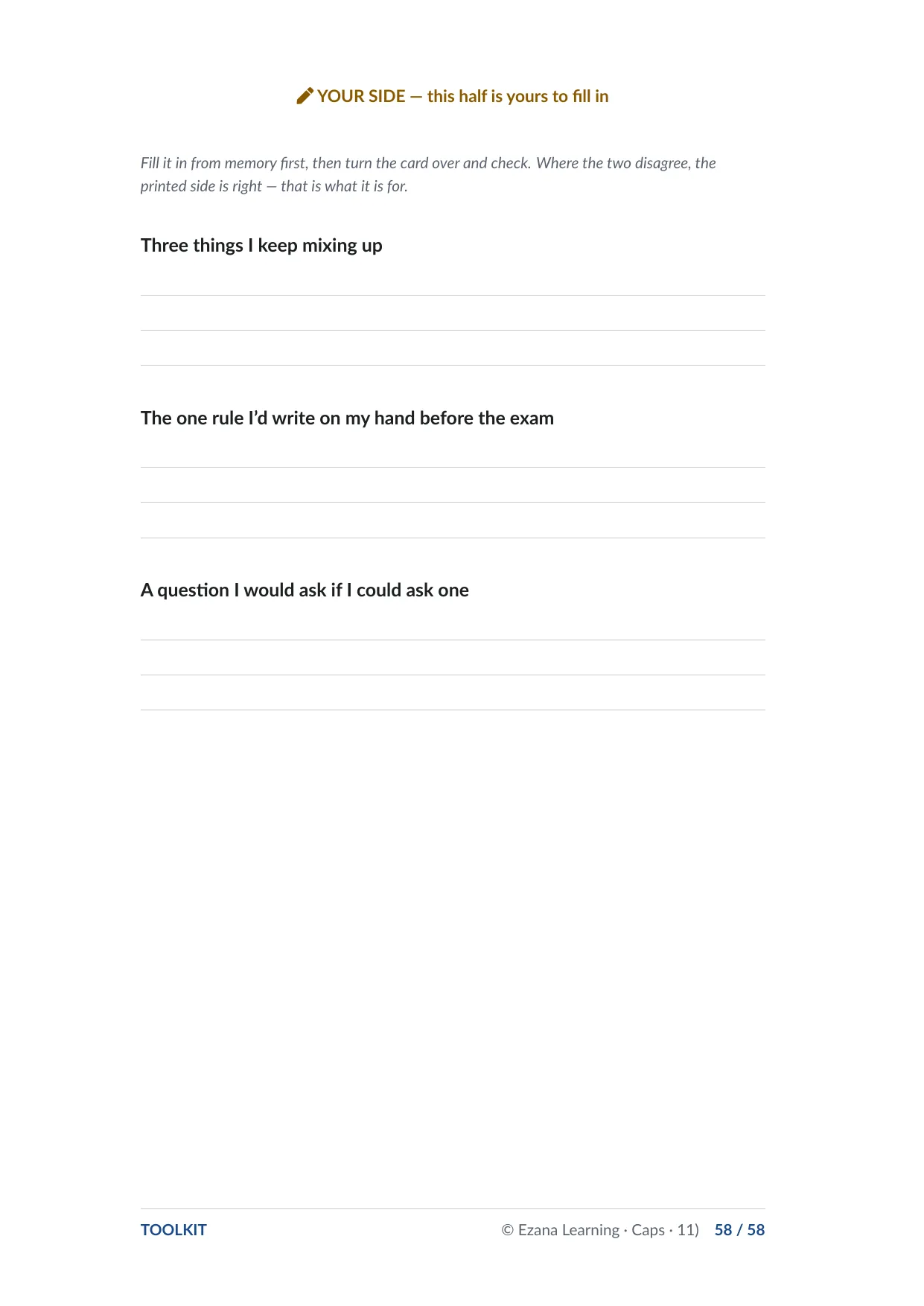
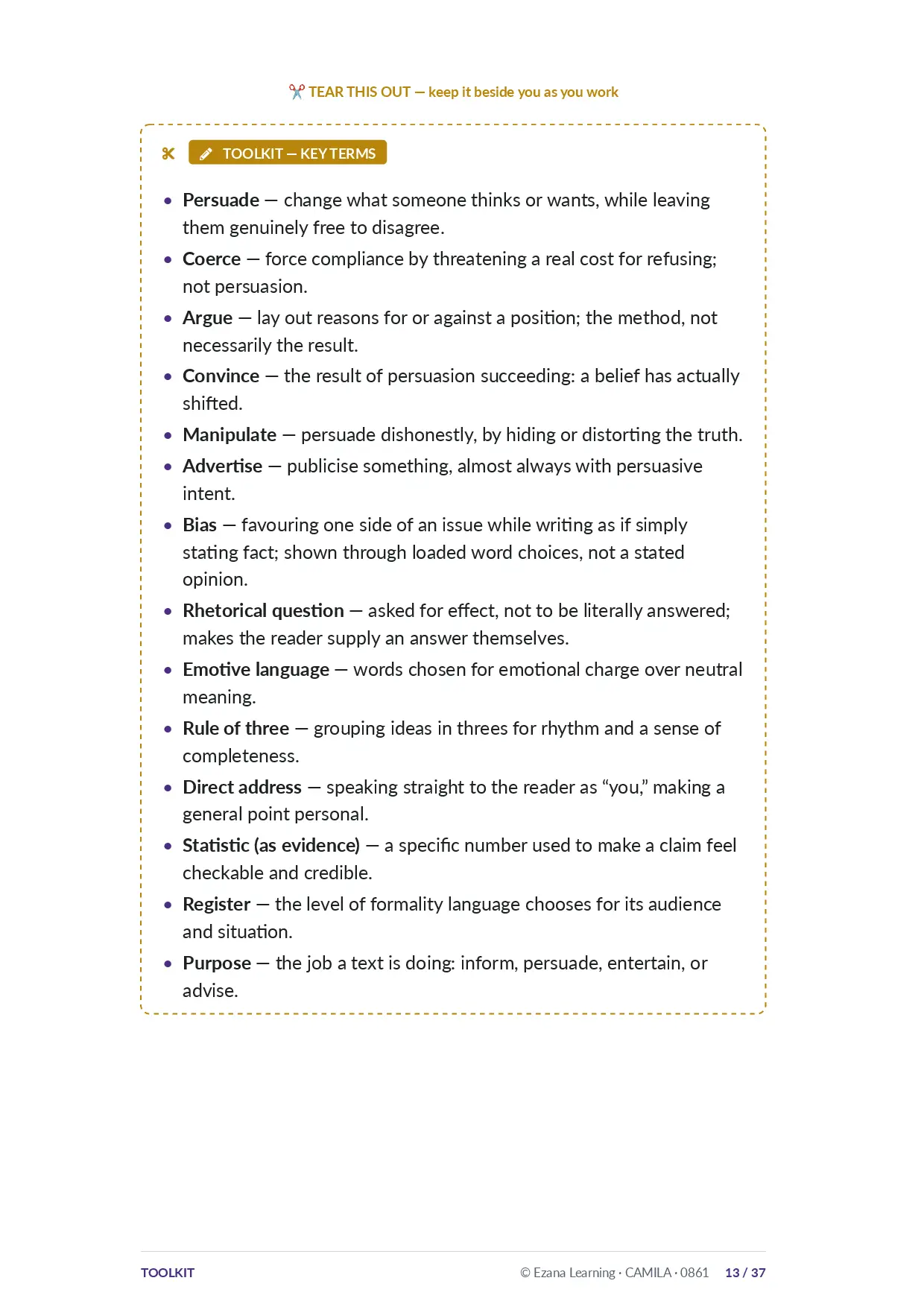
Every kit includes a cut-out Toolkit card that sits next to the child's work — so a forgotten step is a glance away, and never a reason to stop.
They always know how much is left
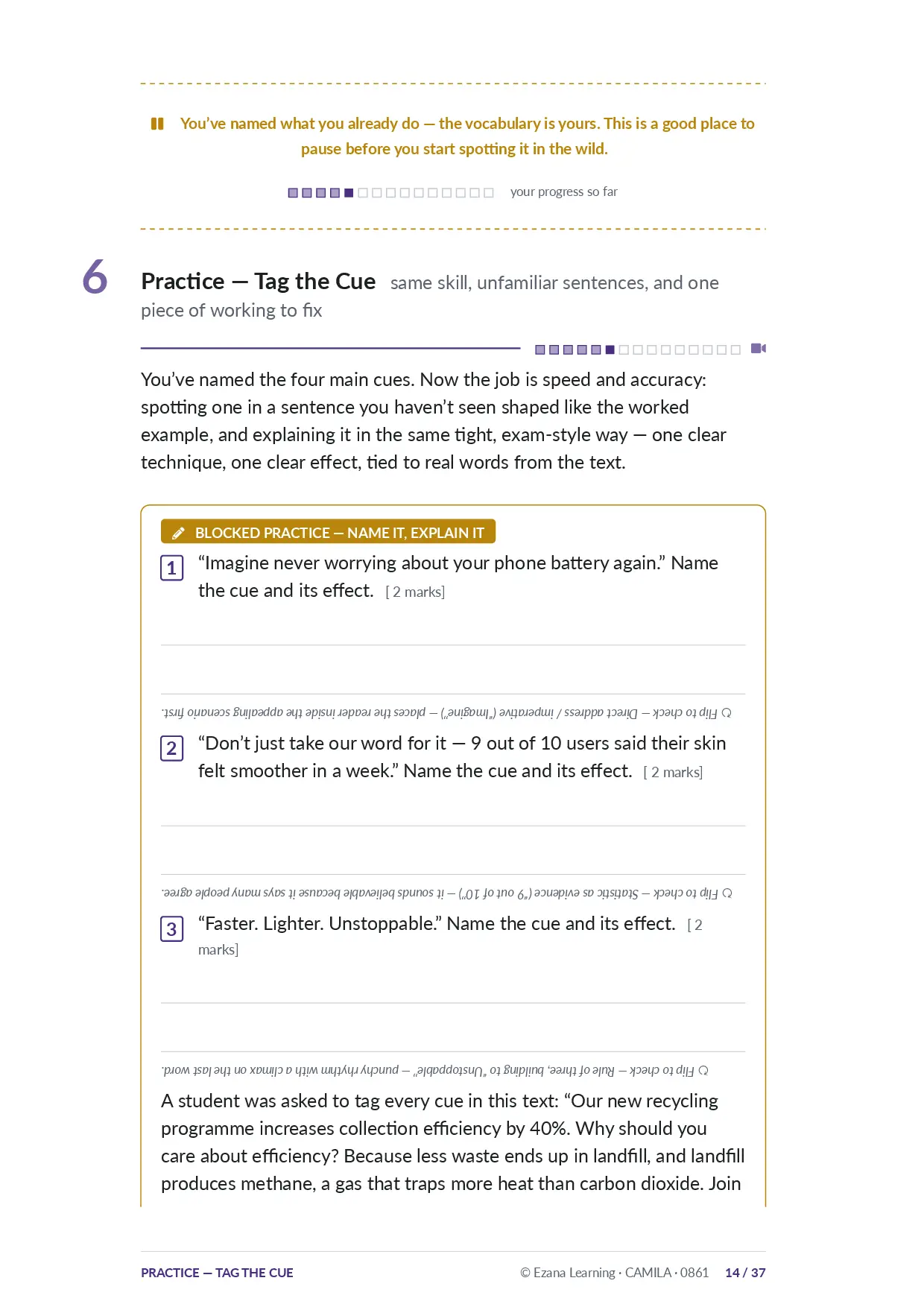
Small progress squares on every section divider show where the child is in the kit. Seeing exactly how much is left keeps a long session feeling finishable.
Actual data, sourced on the page
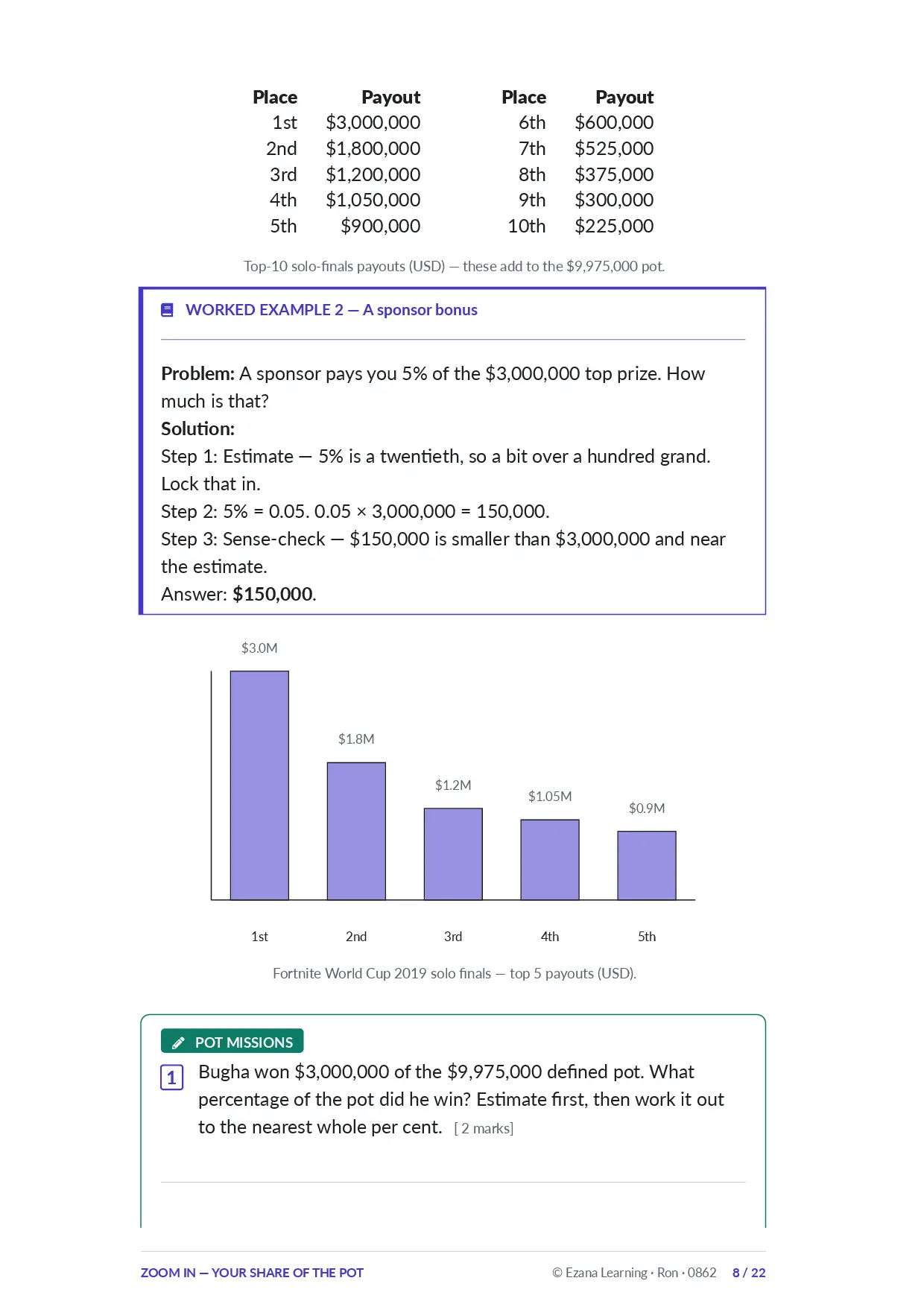
Real Fortnite XP, real tiger populations, real unemployment figures — with the sources named. Children notice the difference between their world and a theme painted on.
Six patterns, nothing else
Every page is built from the same six visual elements, so the eye learns the layout once. A calm, predictable page leaves the child's full attention for the work itself.
Answers the child checks alone
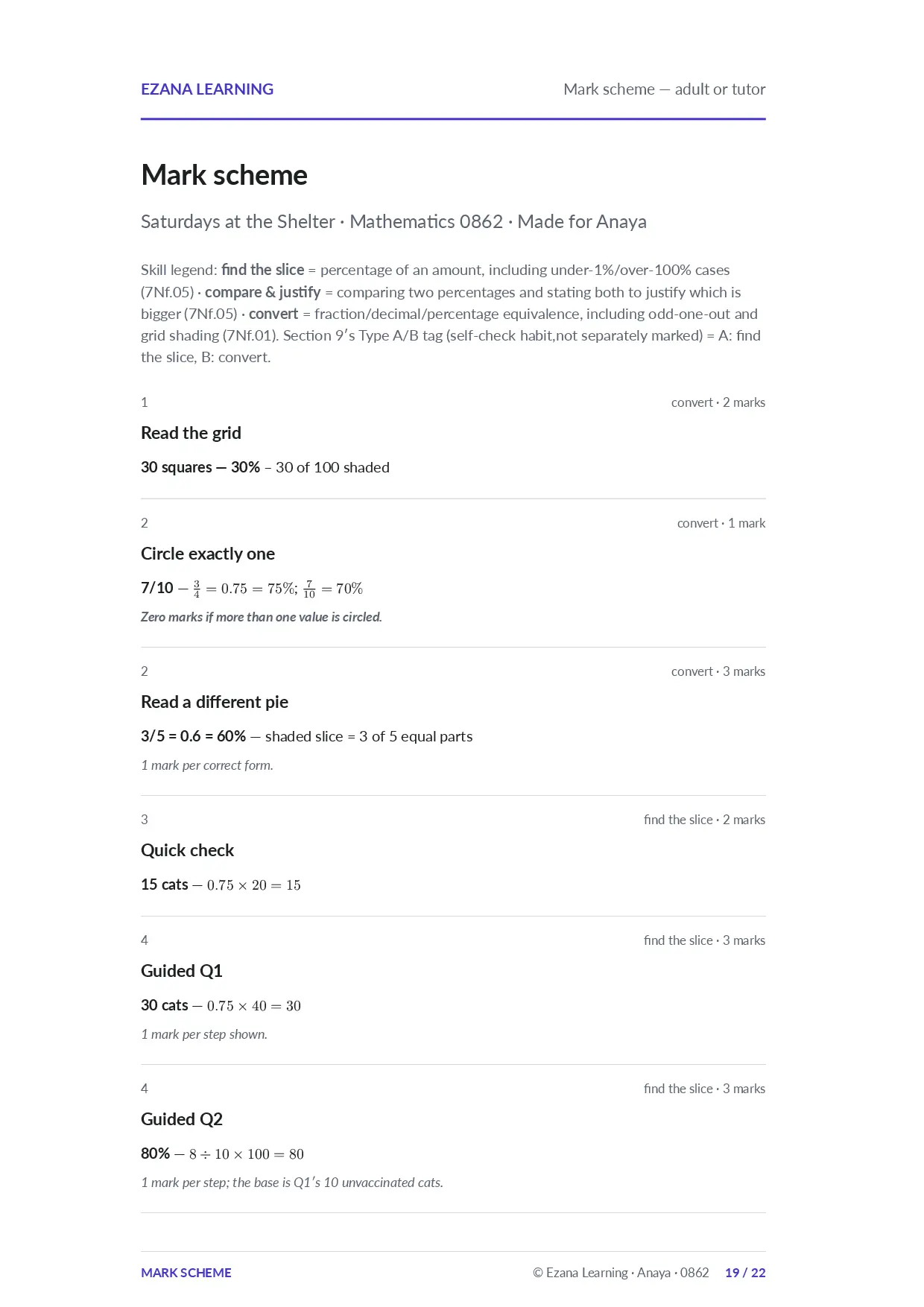
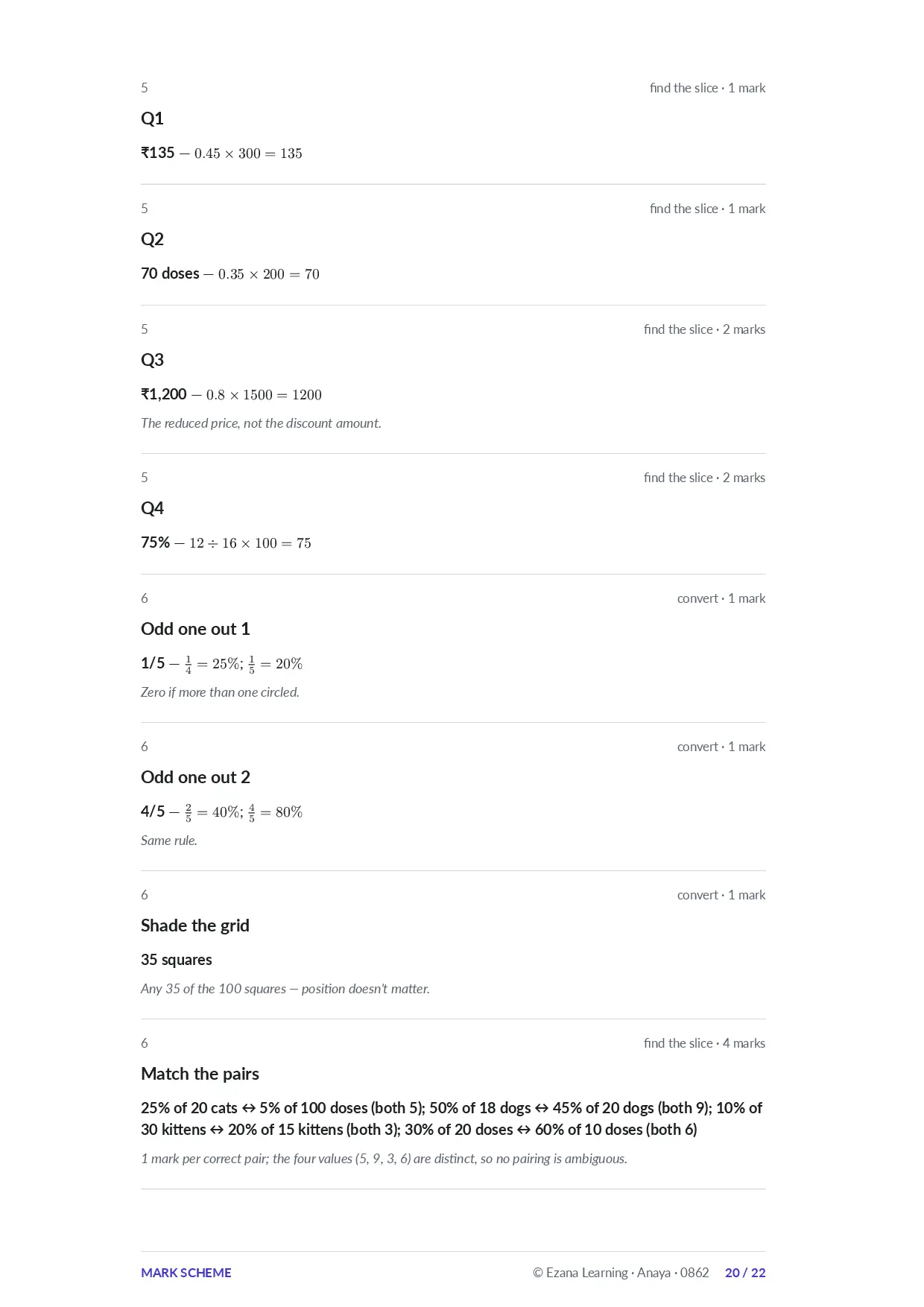
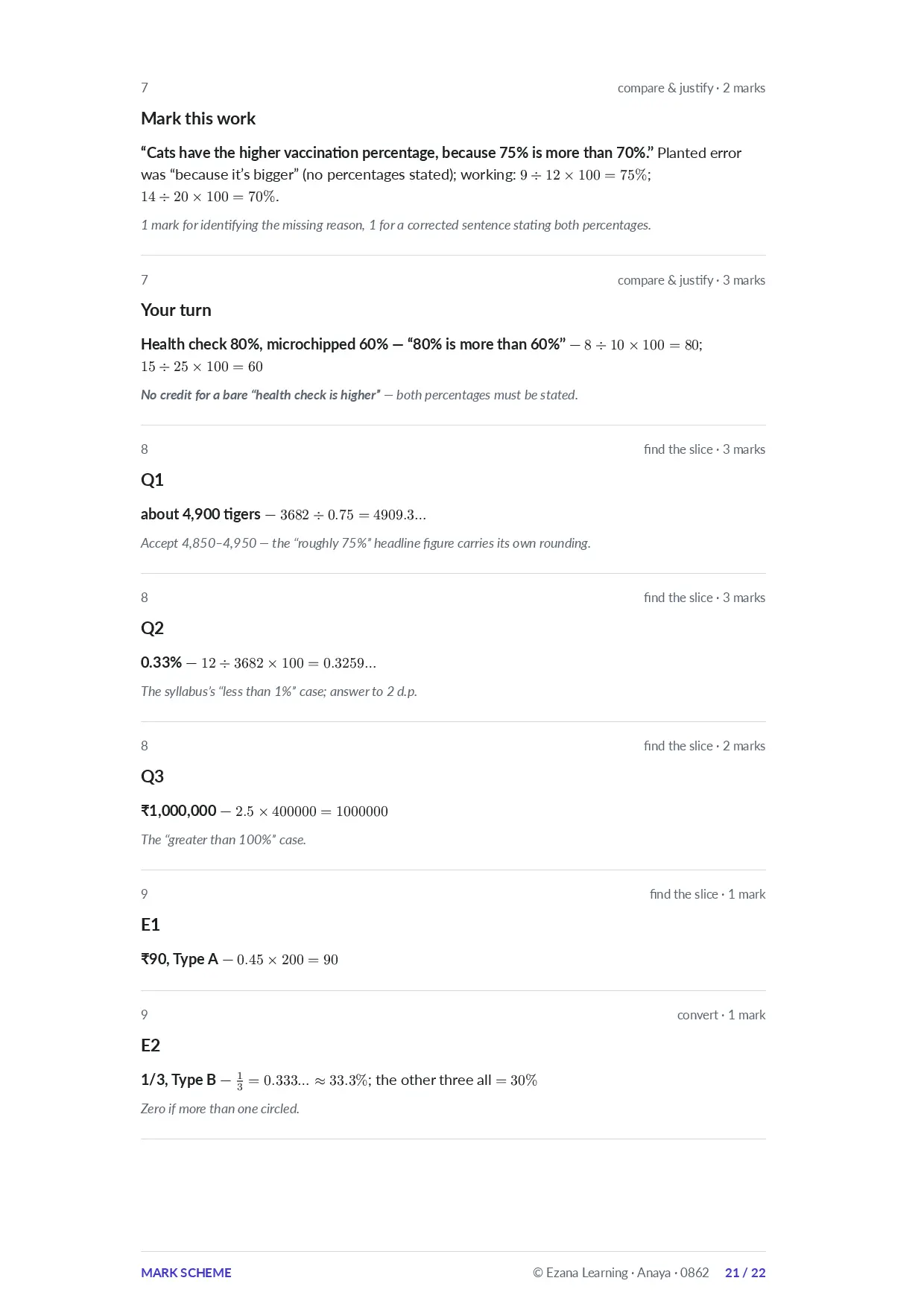
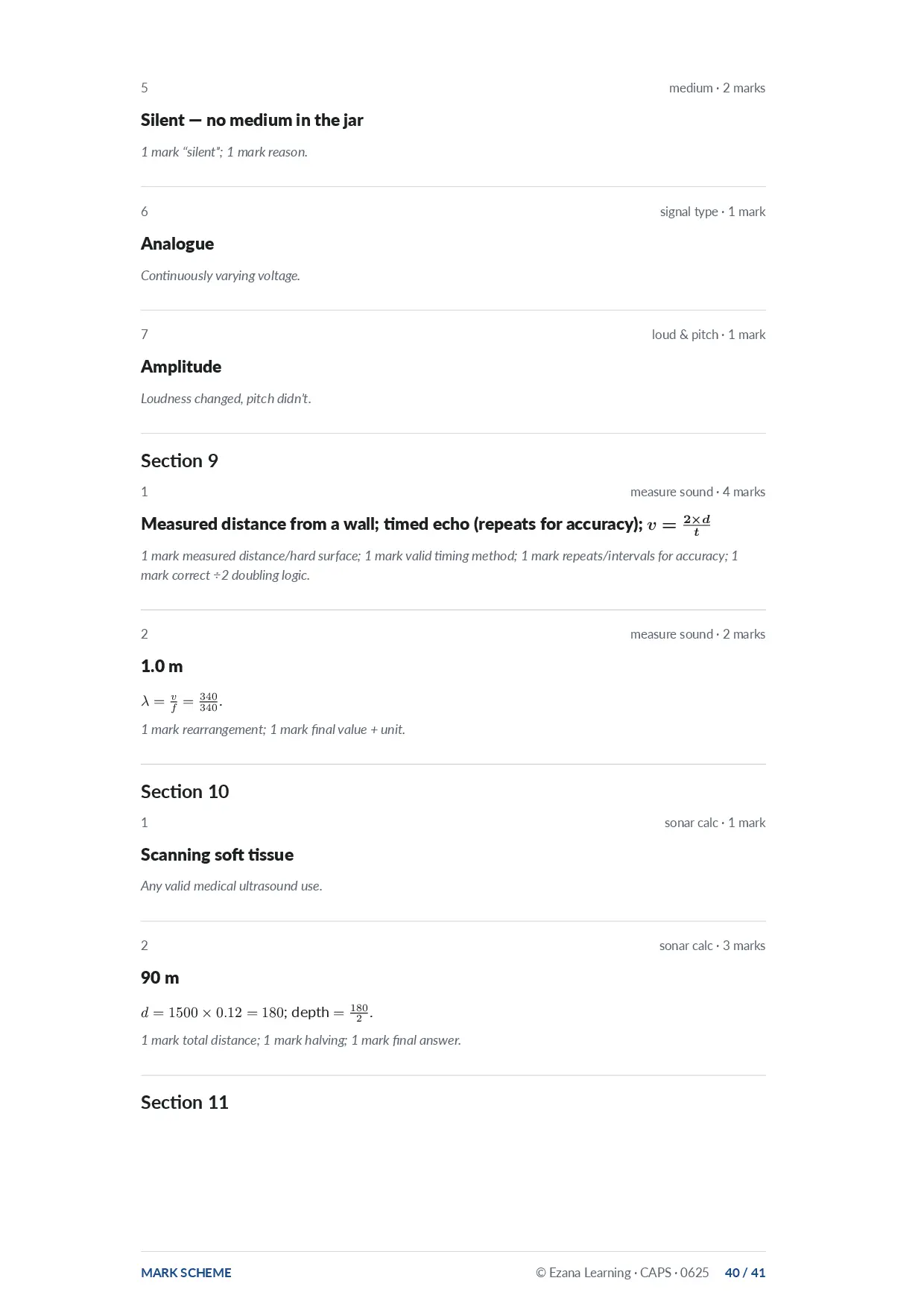
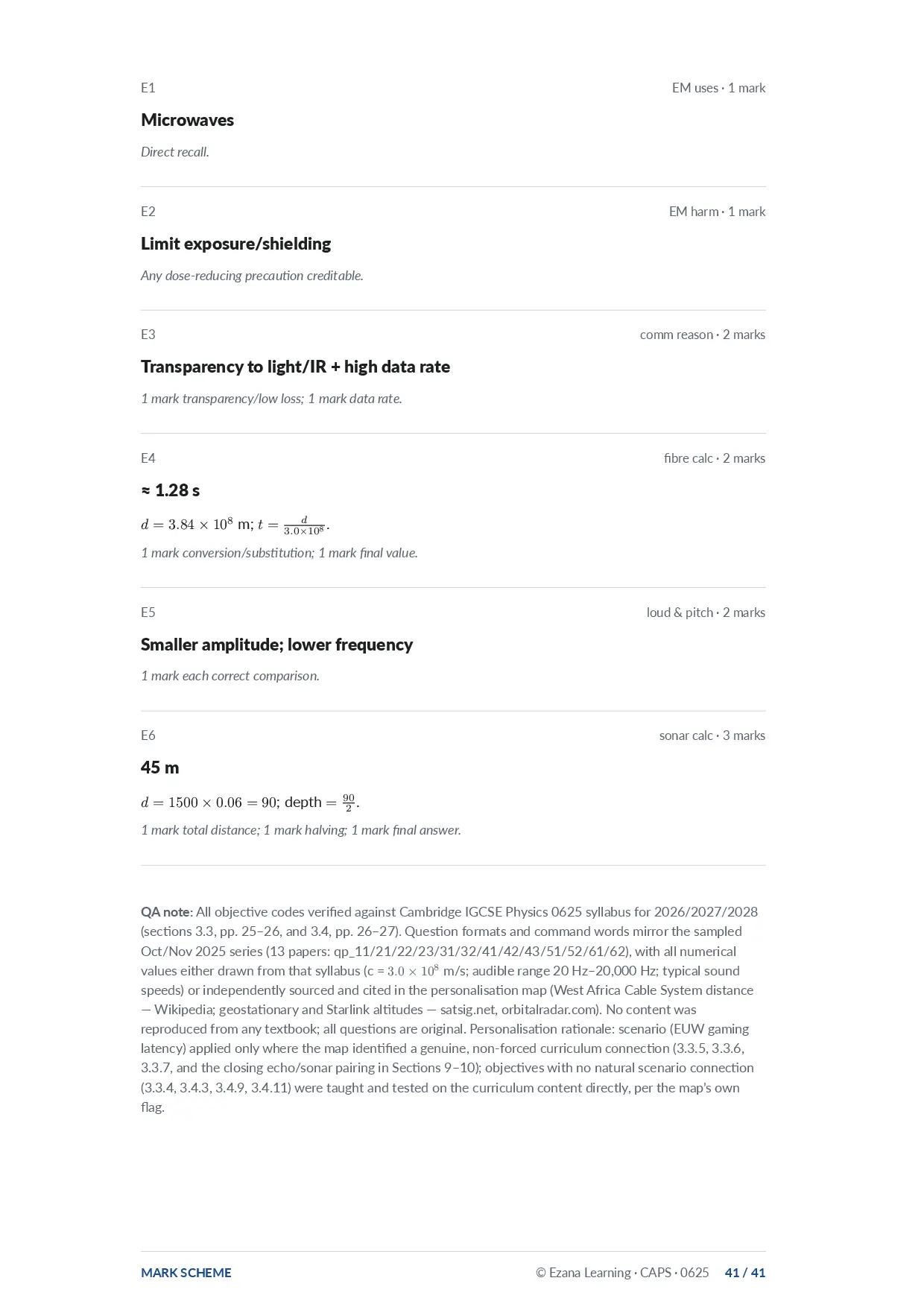
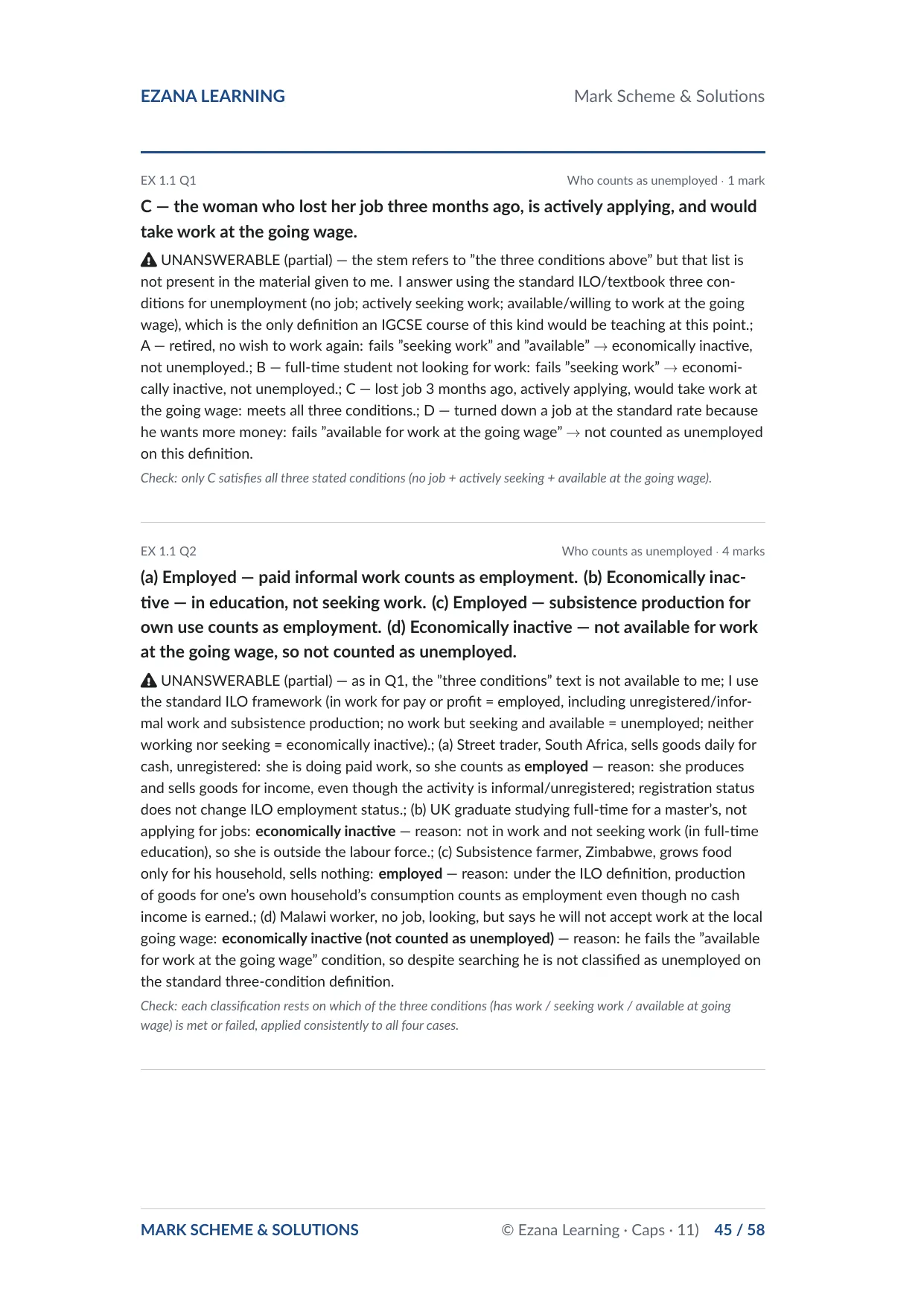
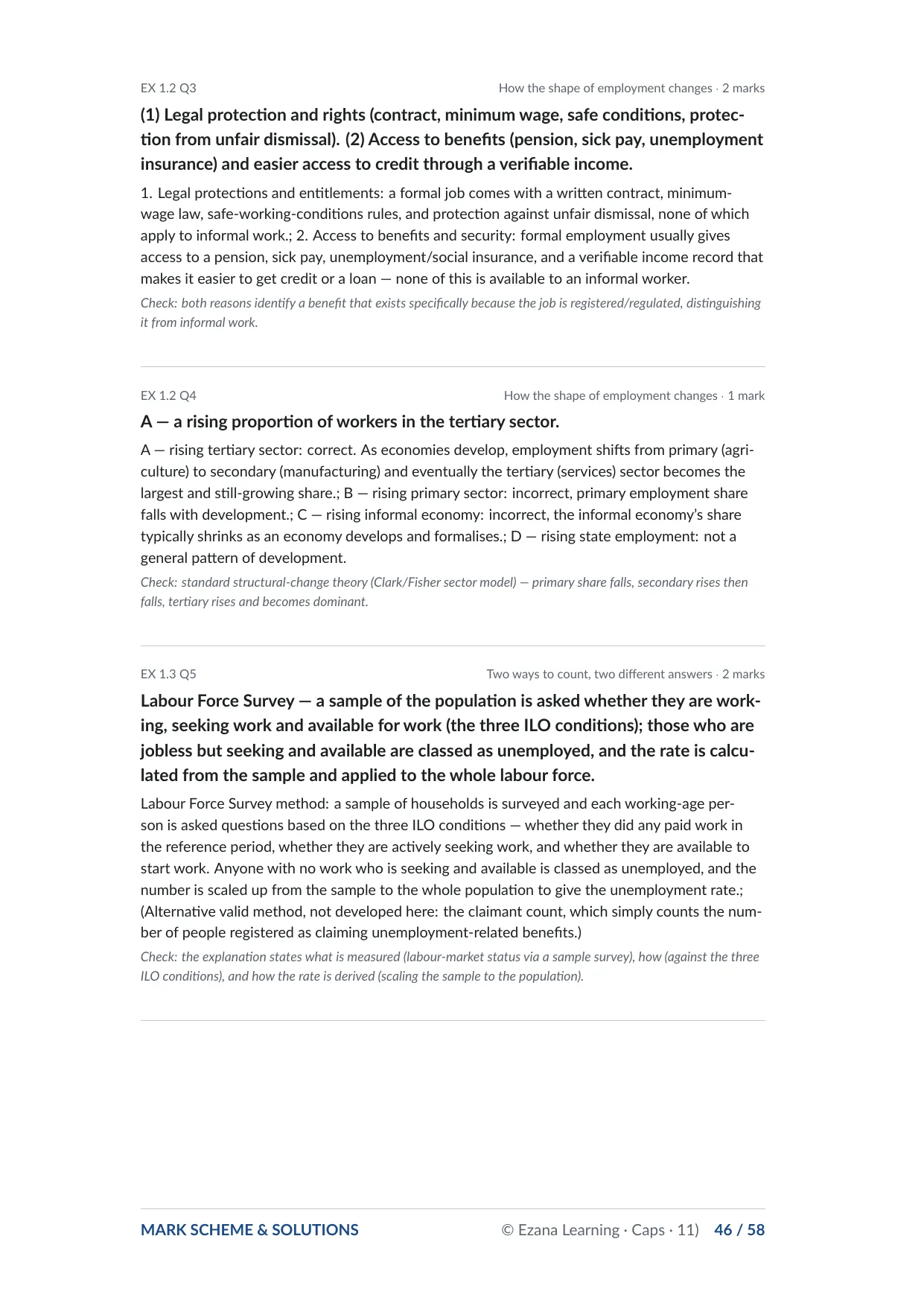
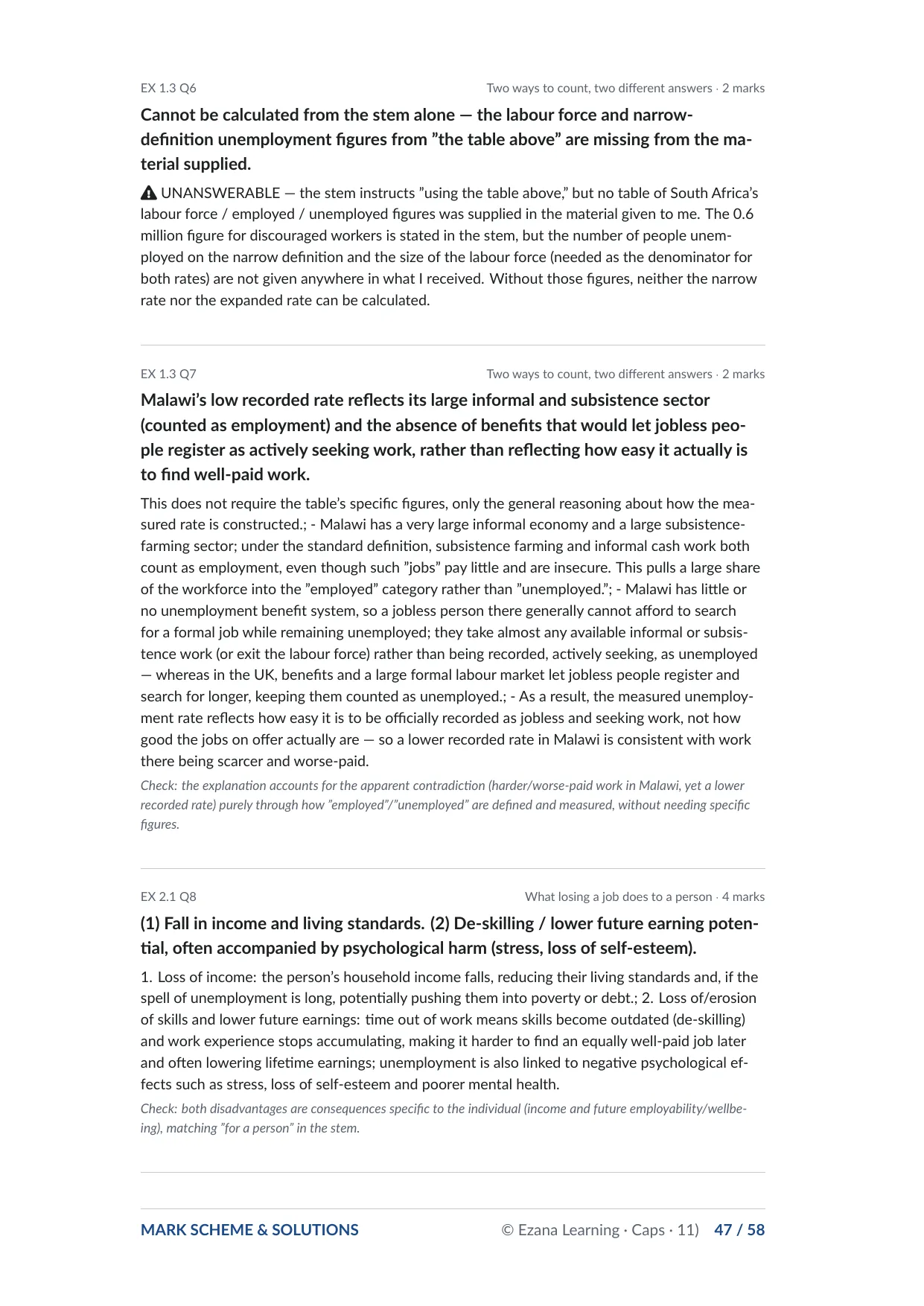
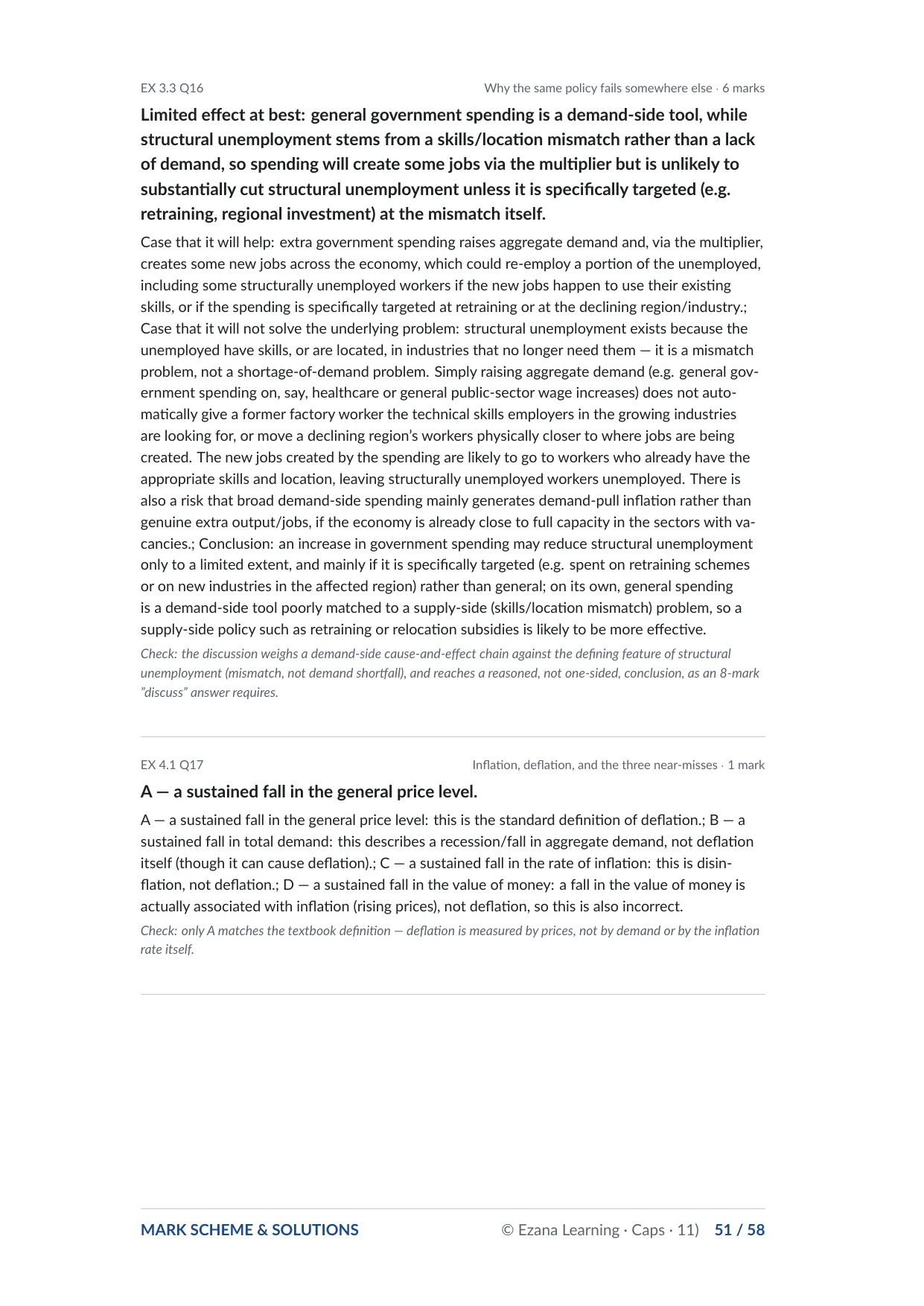
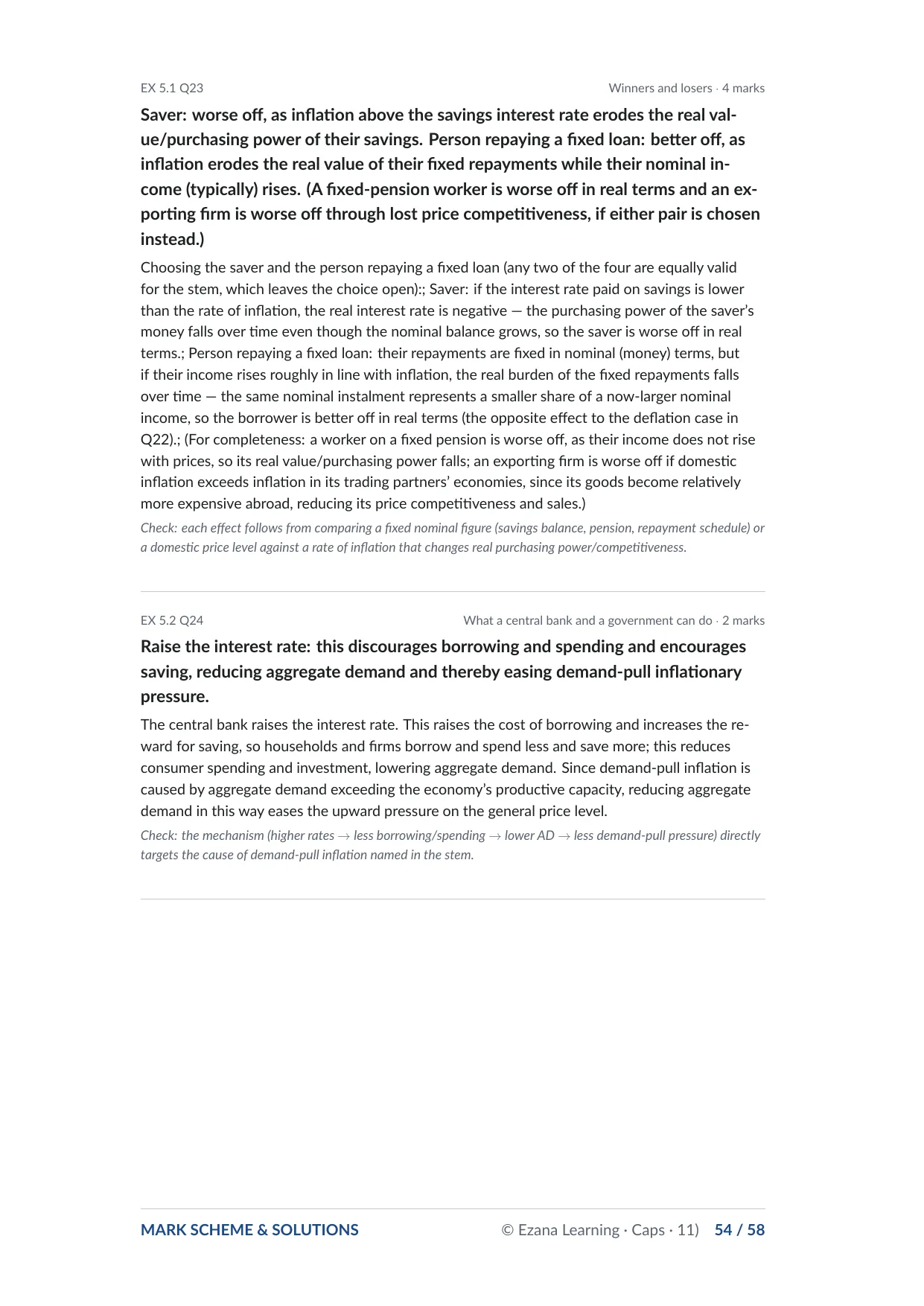
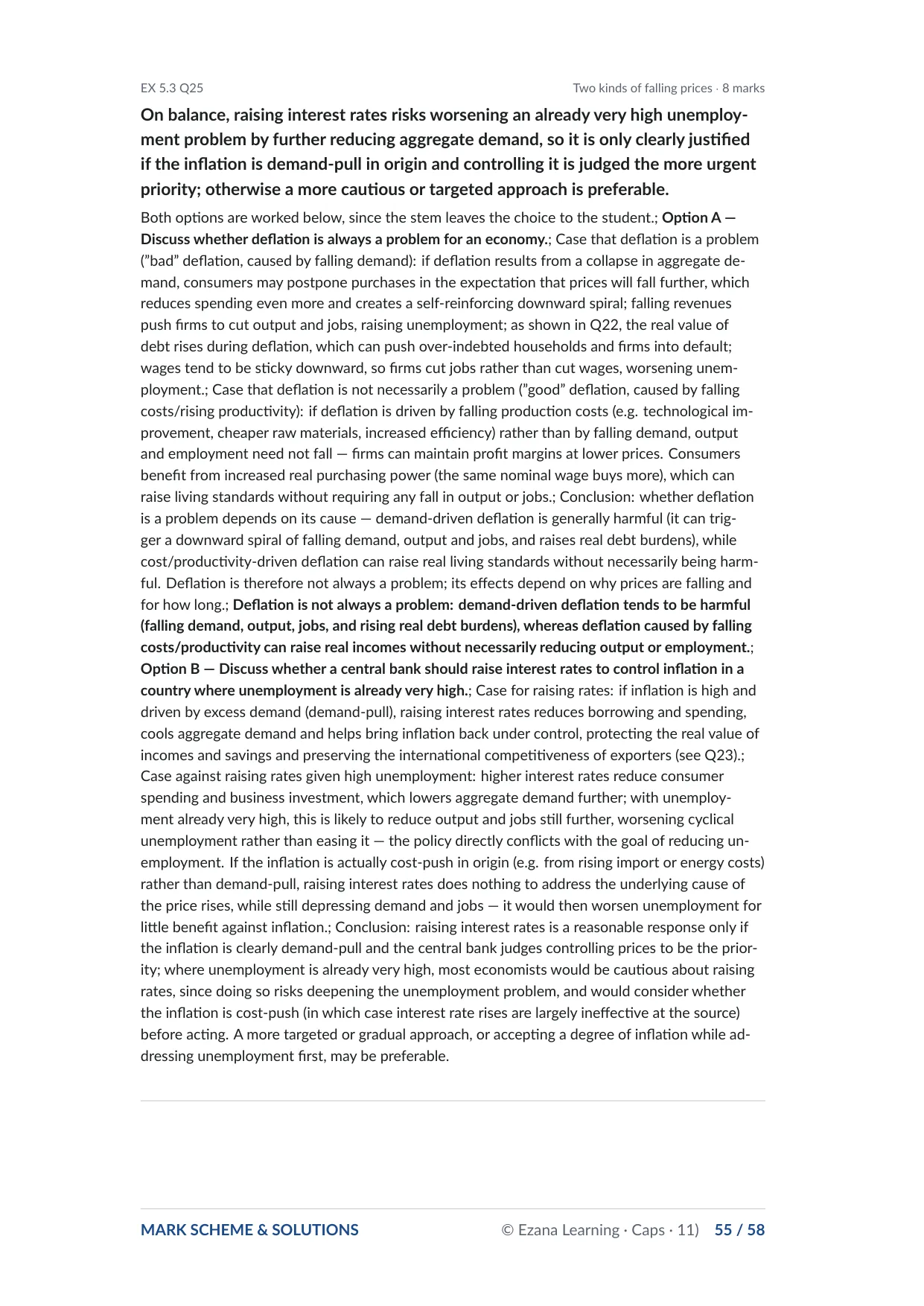
A lean answer page lets the child verify their work without seeing the full steps, while a separate mark scheme gives adults the complete working and examiner notes.
They mark someone else's work
In "Mark this work" sections the child finds and fixes a mistake in a fictional student's working — proof they understand the why, and a reminder that mistakes are normal.
One topic, two children
These two kits teach the same Cambridge Stage 7 objectives (0862, 7Nf.01 and 7Nf.05). The maths goal stays the same. What changes is how many worked steps the page shows before the child works alone. Ron asked for harder, faster work, so his kit gives one worked example and moves quickly to solo questions. Anaya asked for calm, step-by-step support, so her kit keeps full worked examples for longer.
Ron — The Percentage Engine (Fortnite)
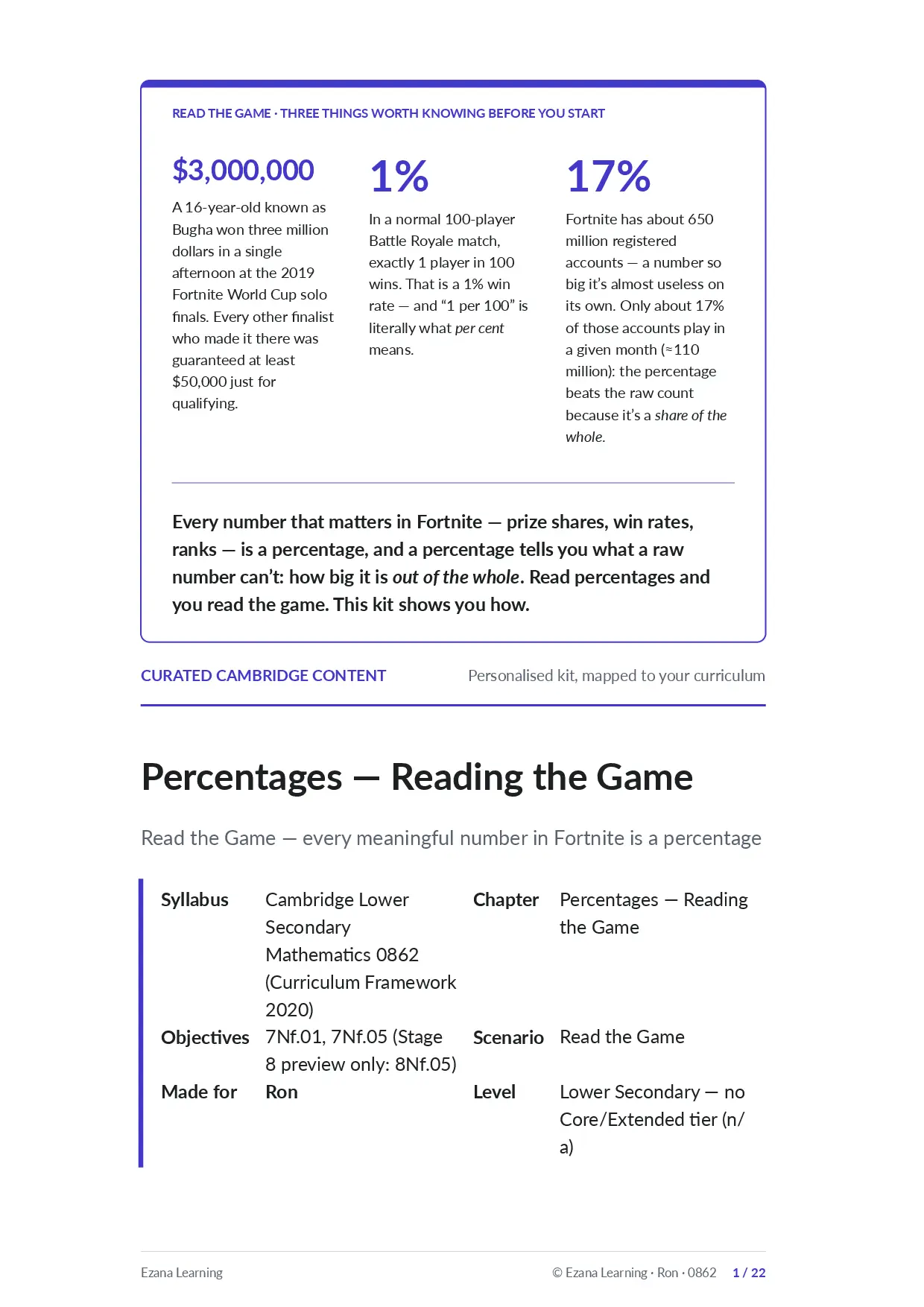
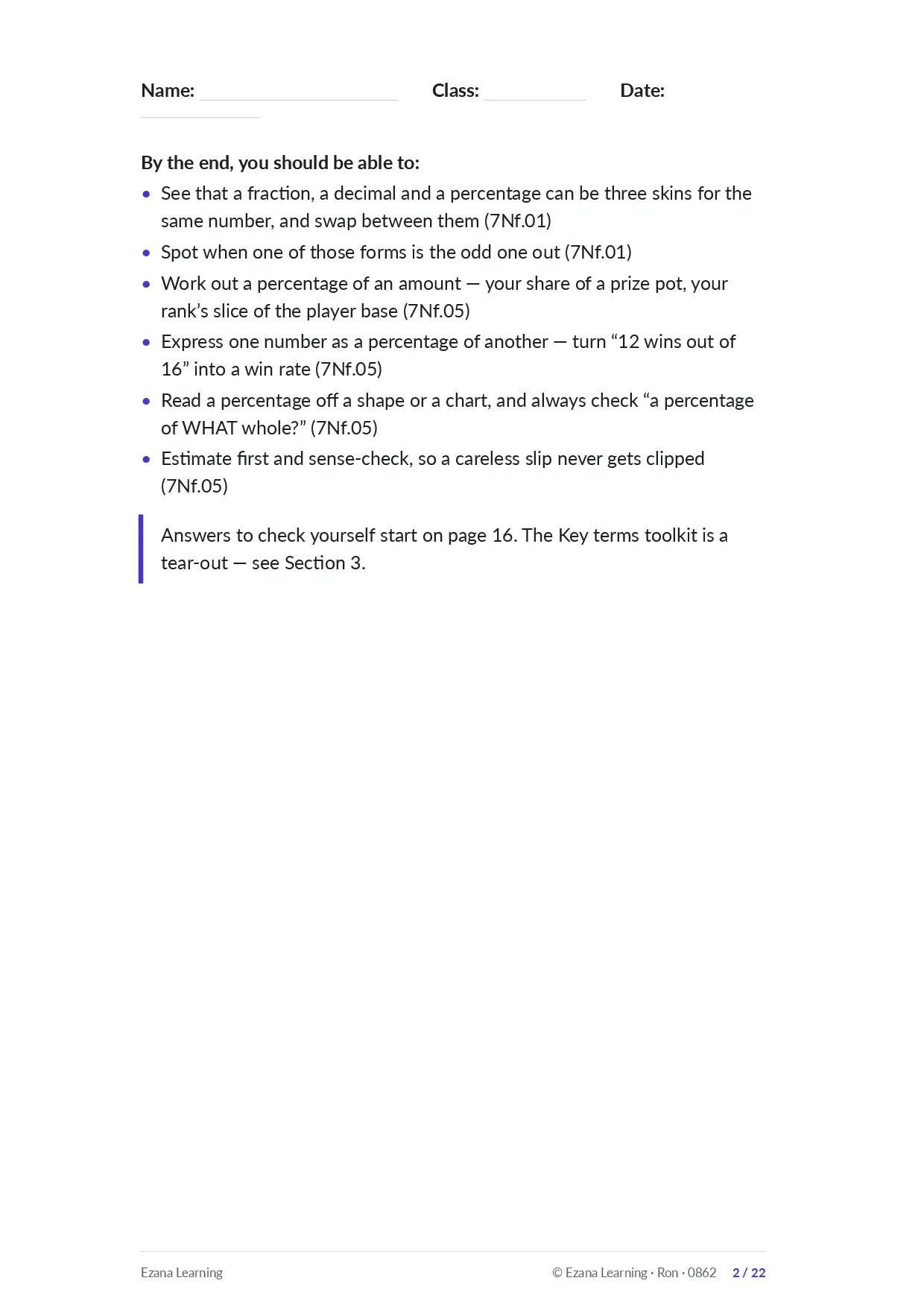
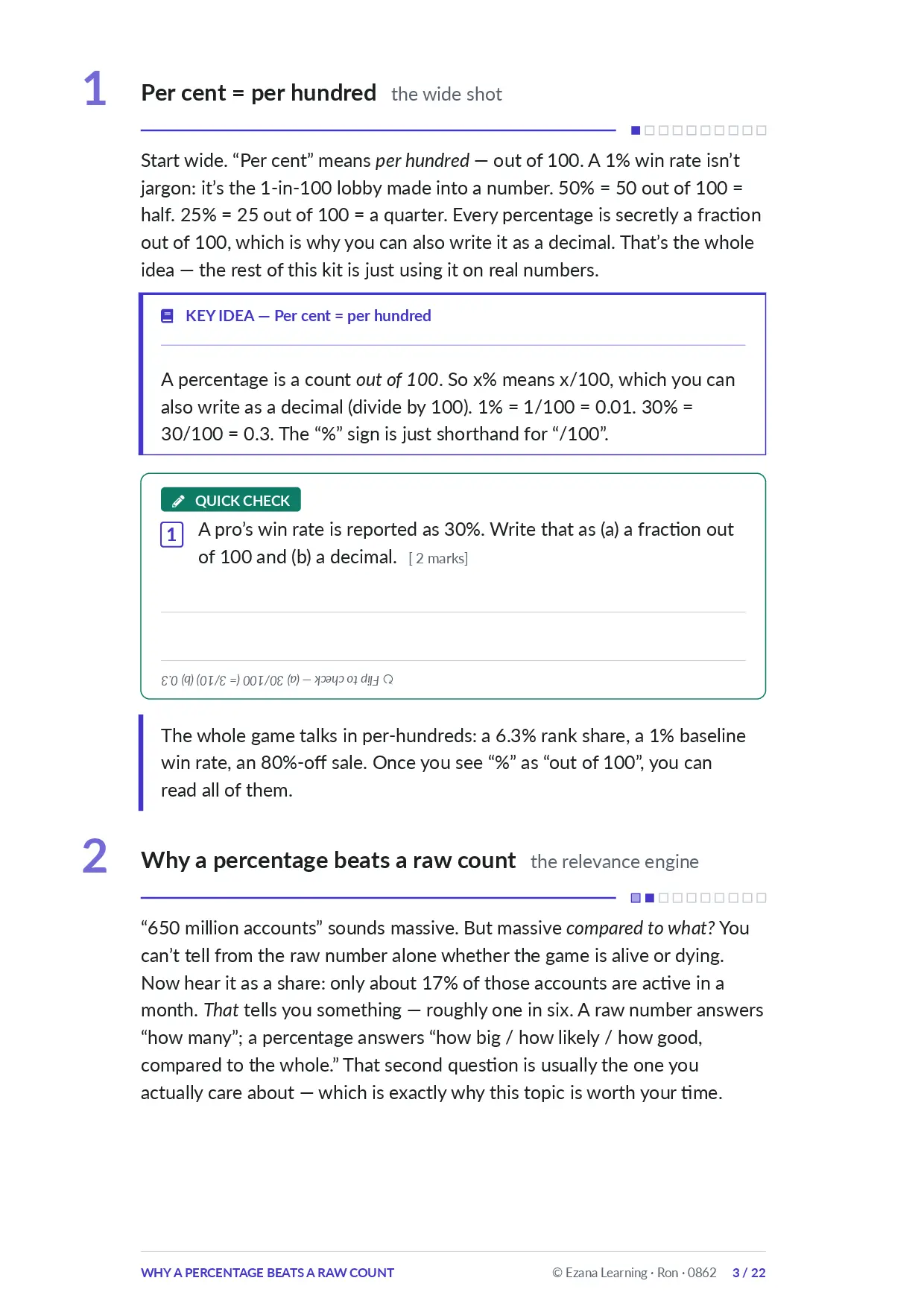
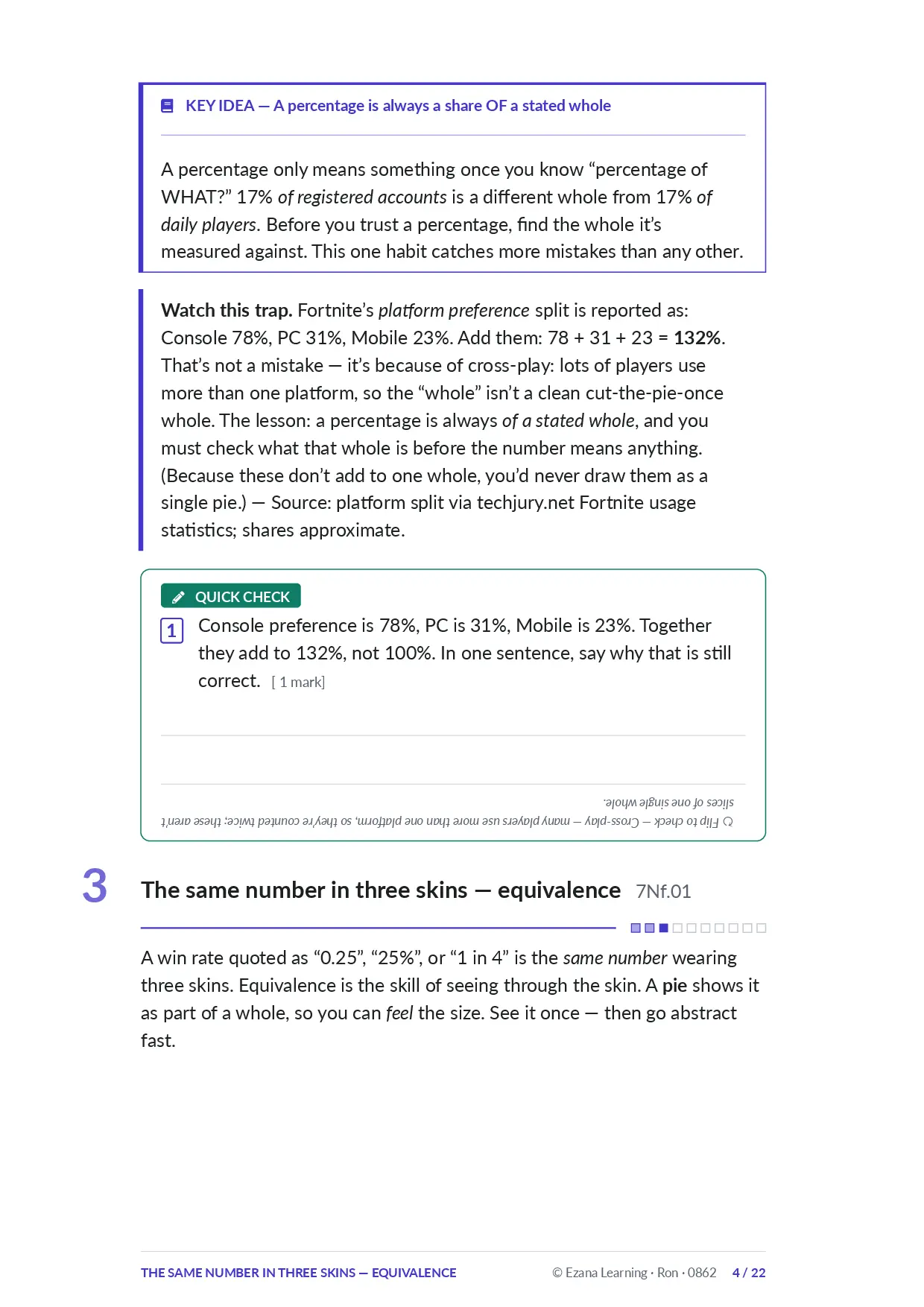
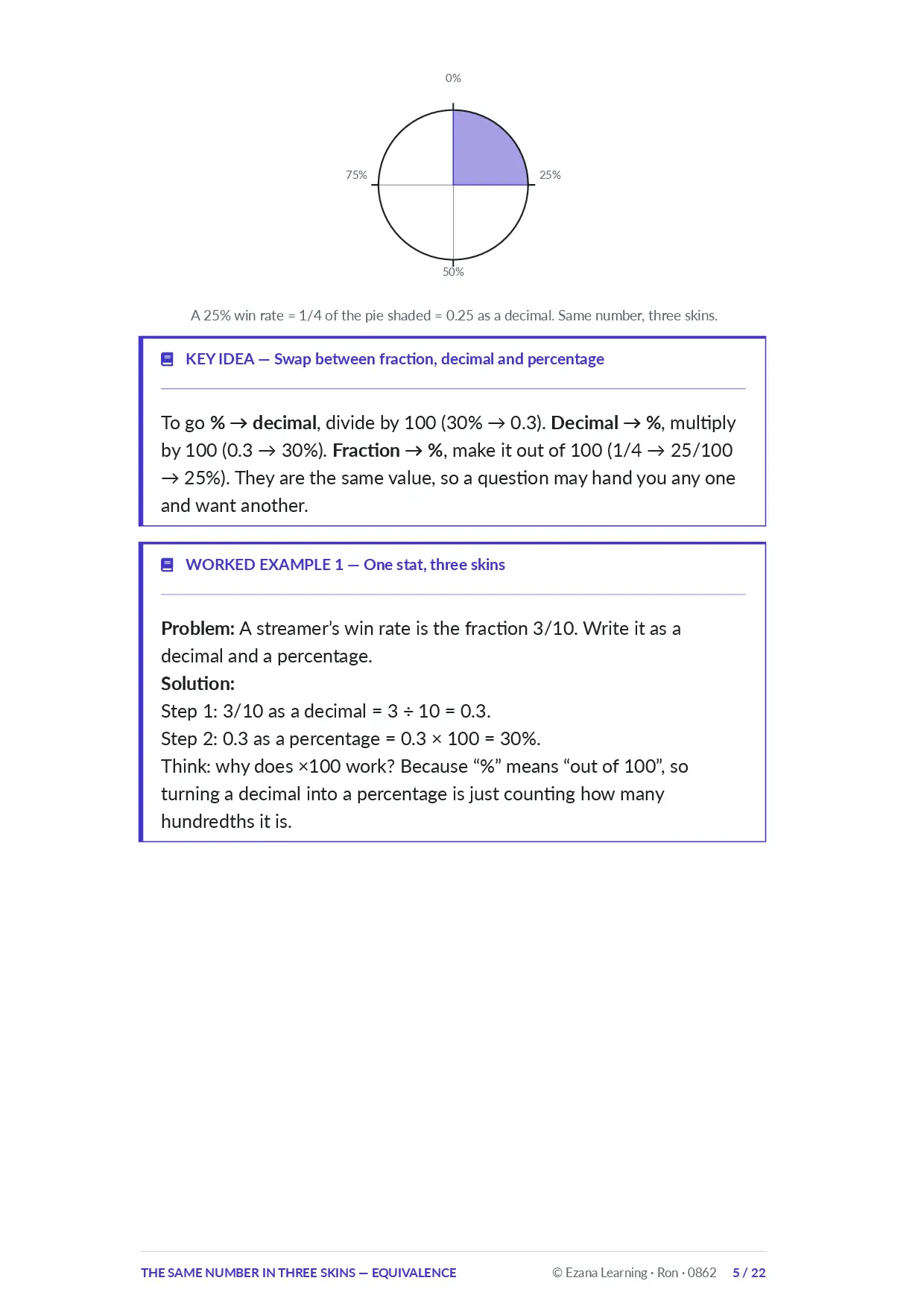
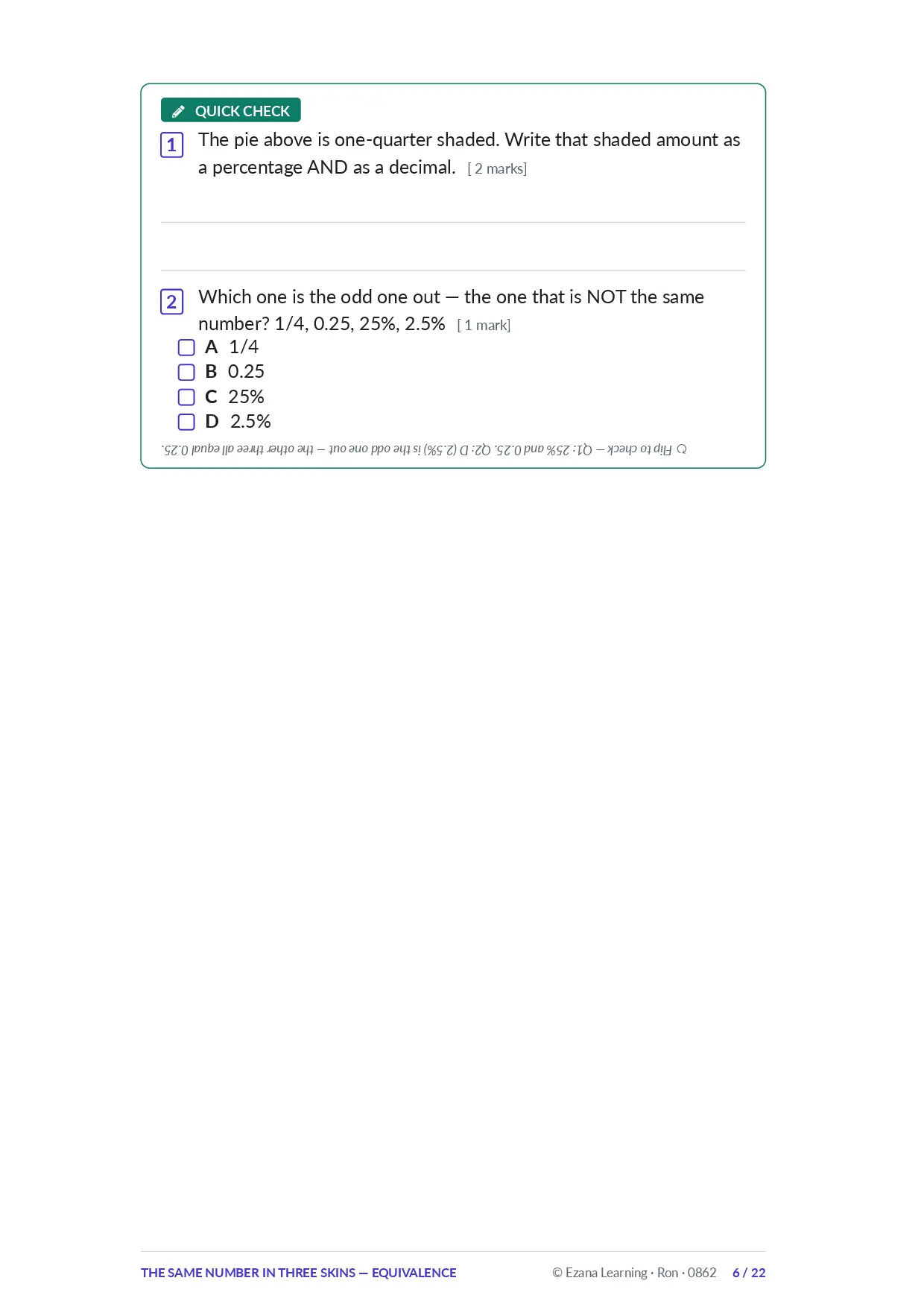
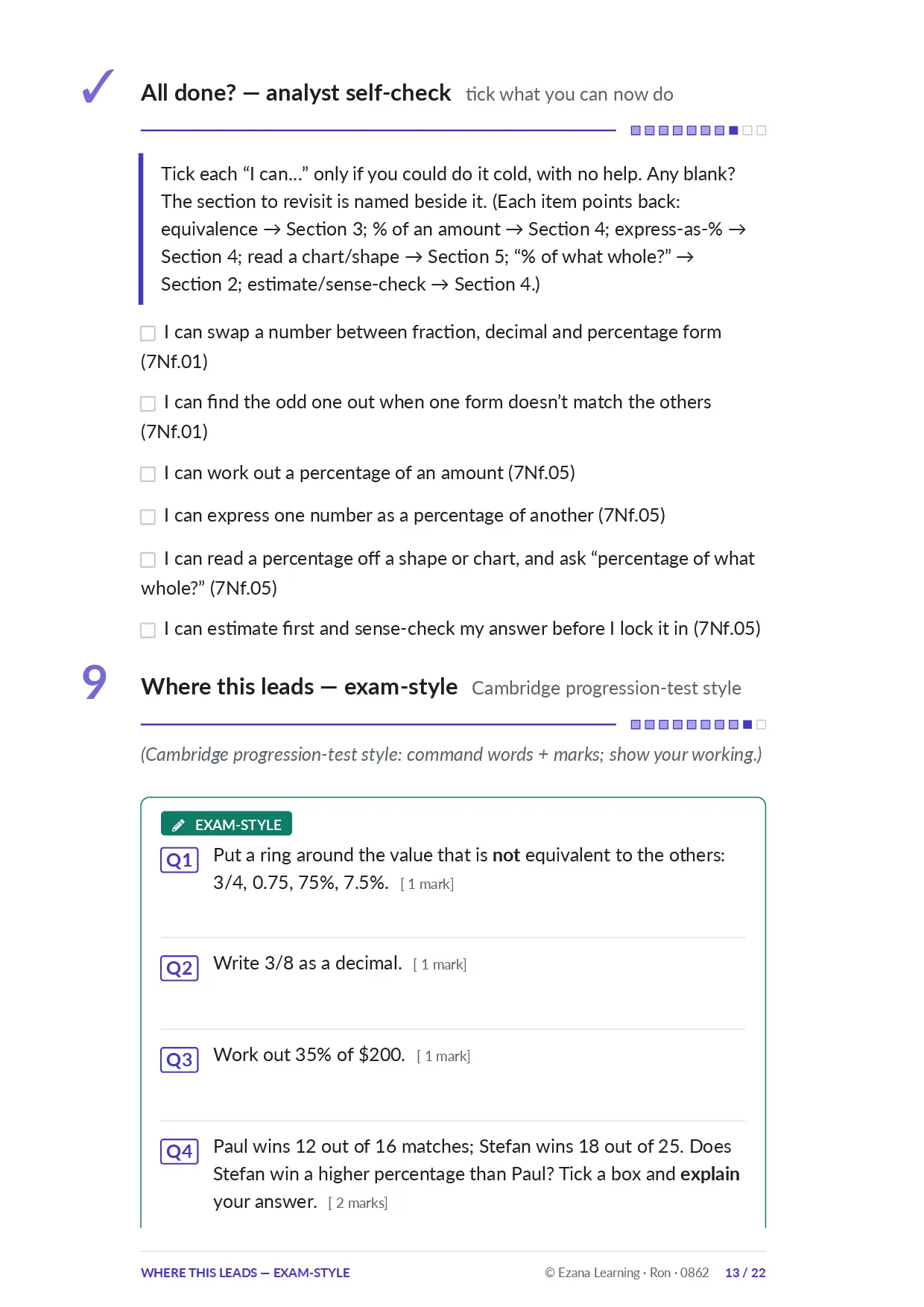
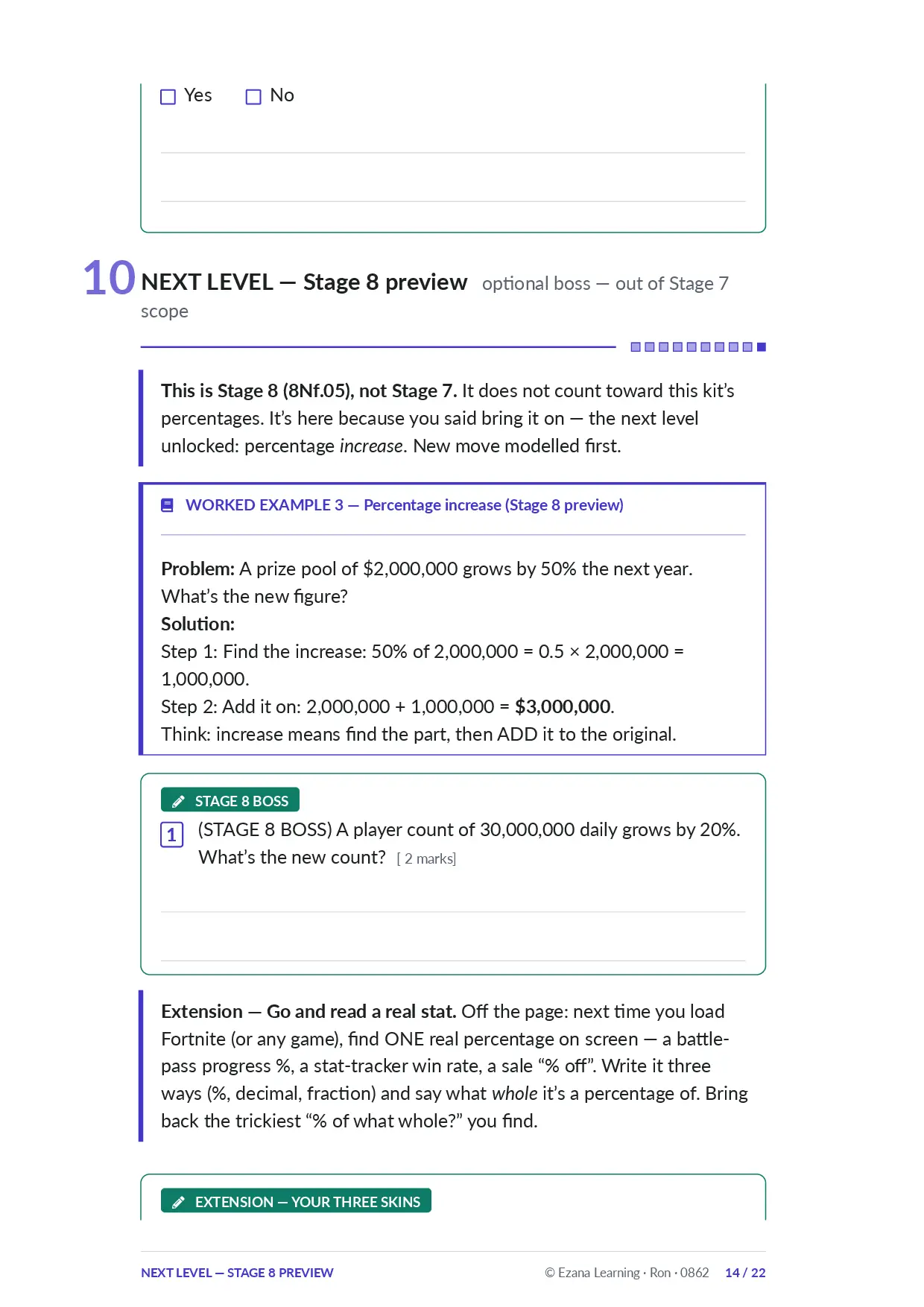
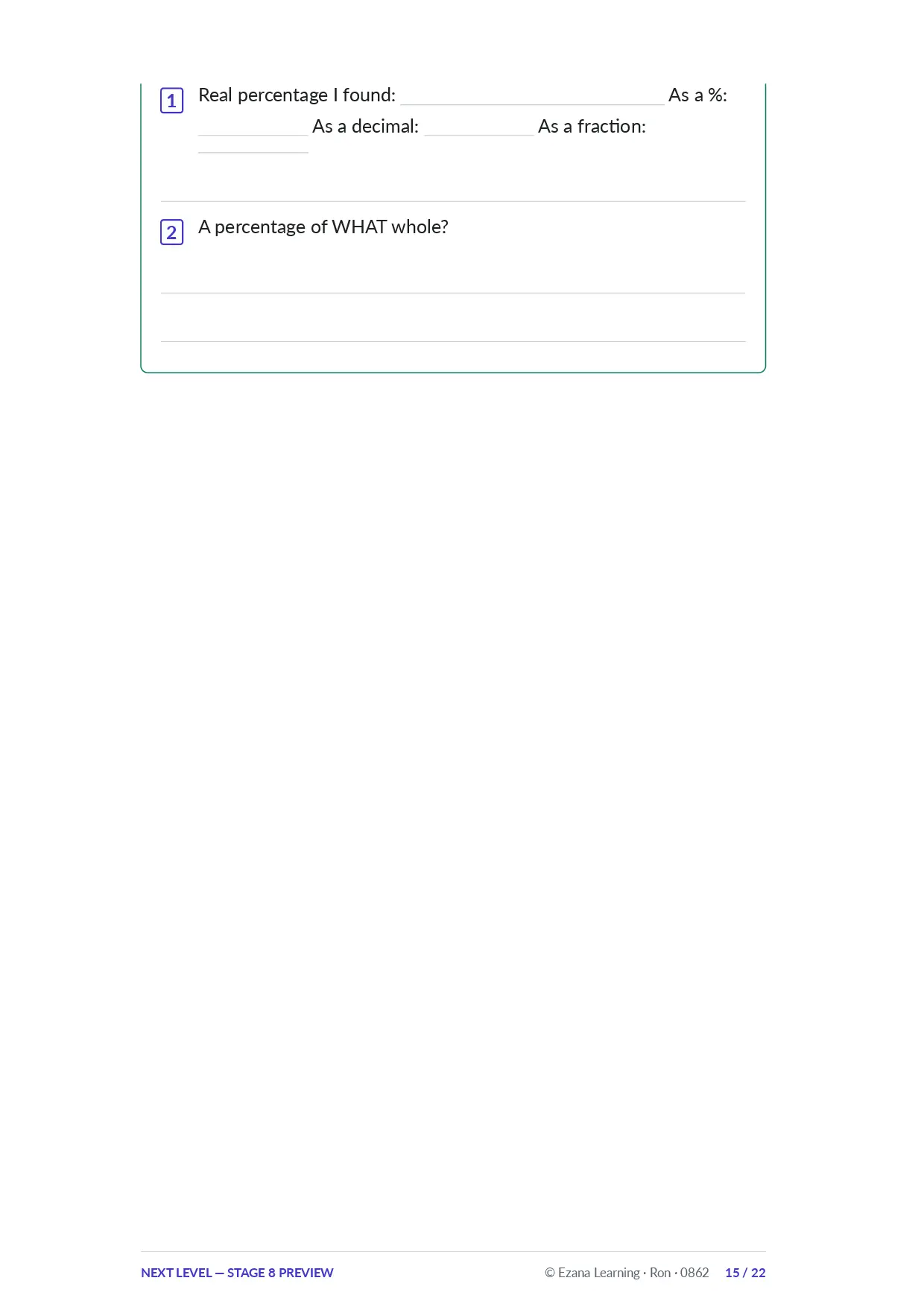
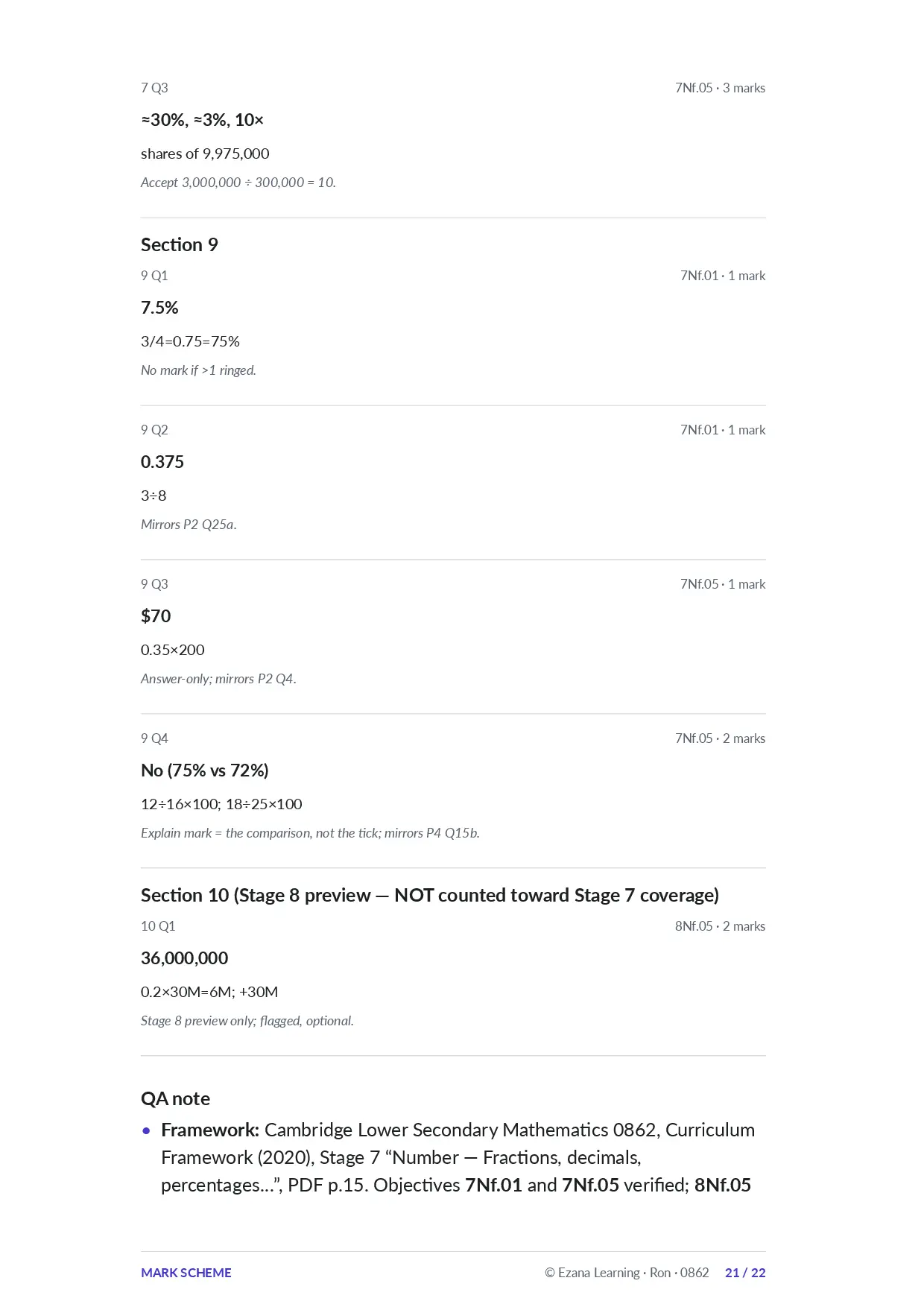
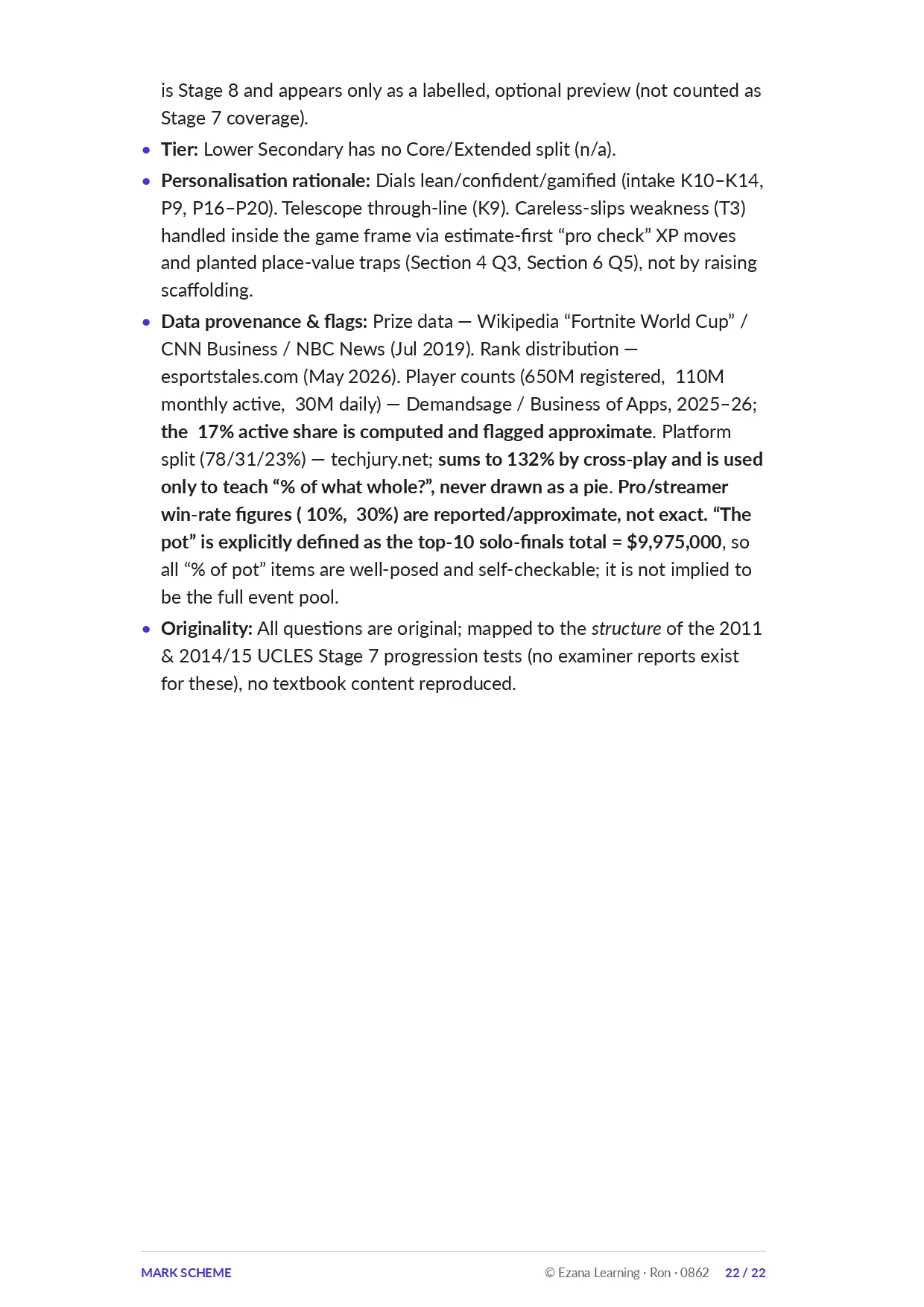
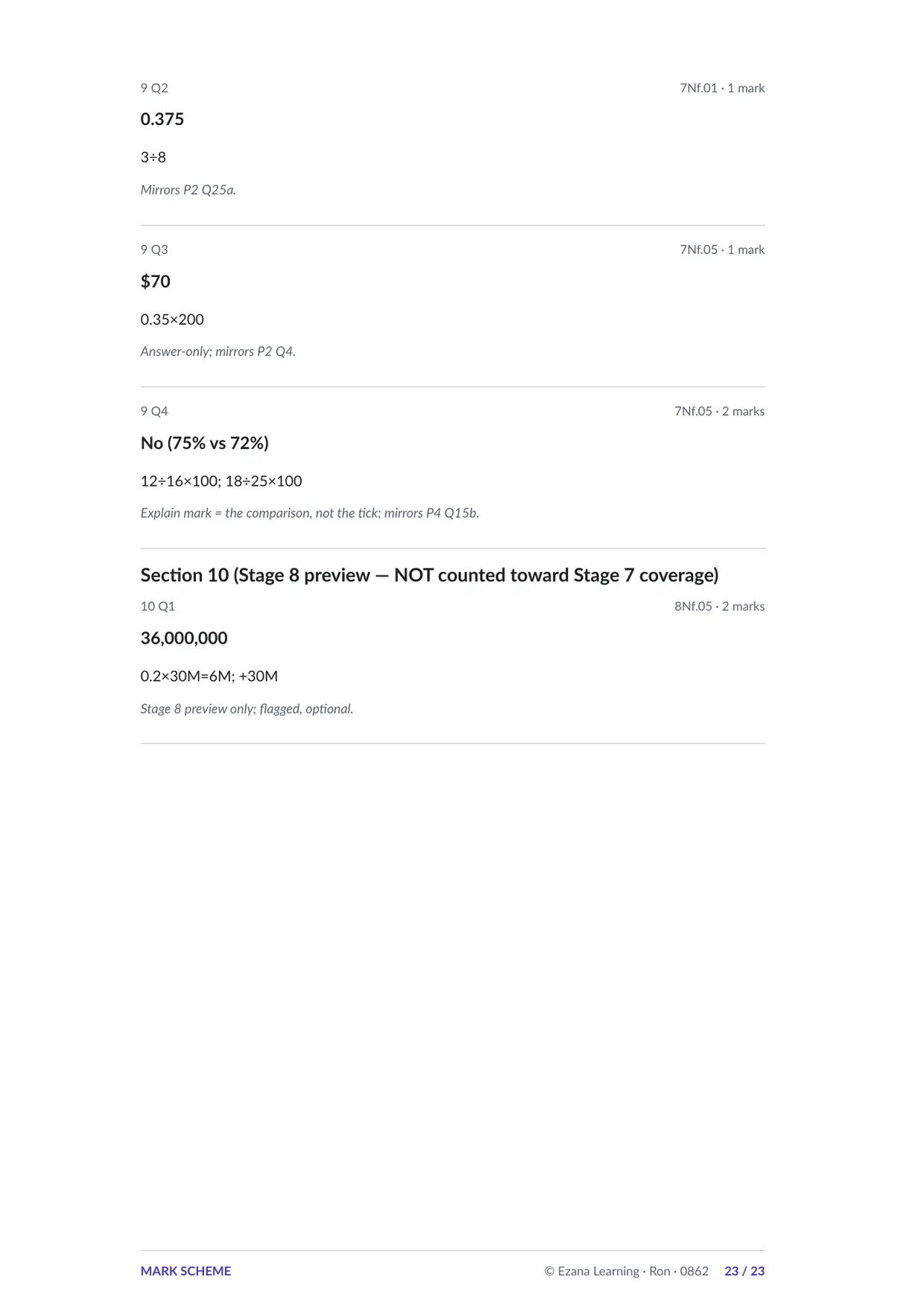
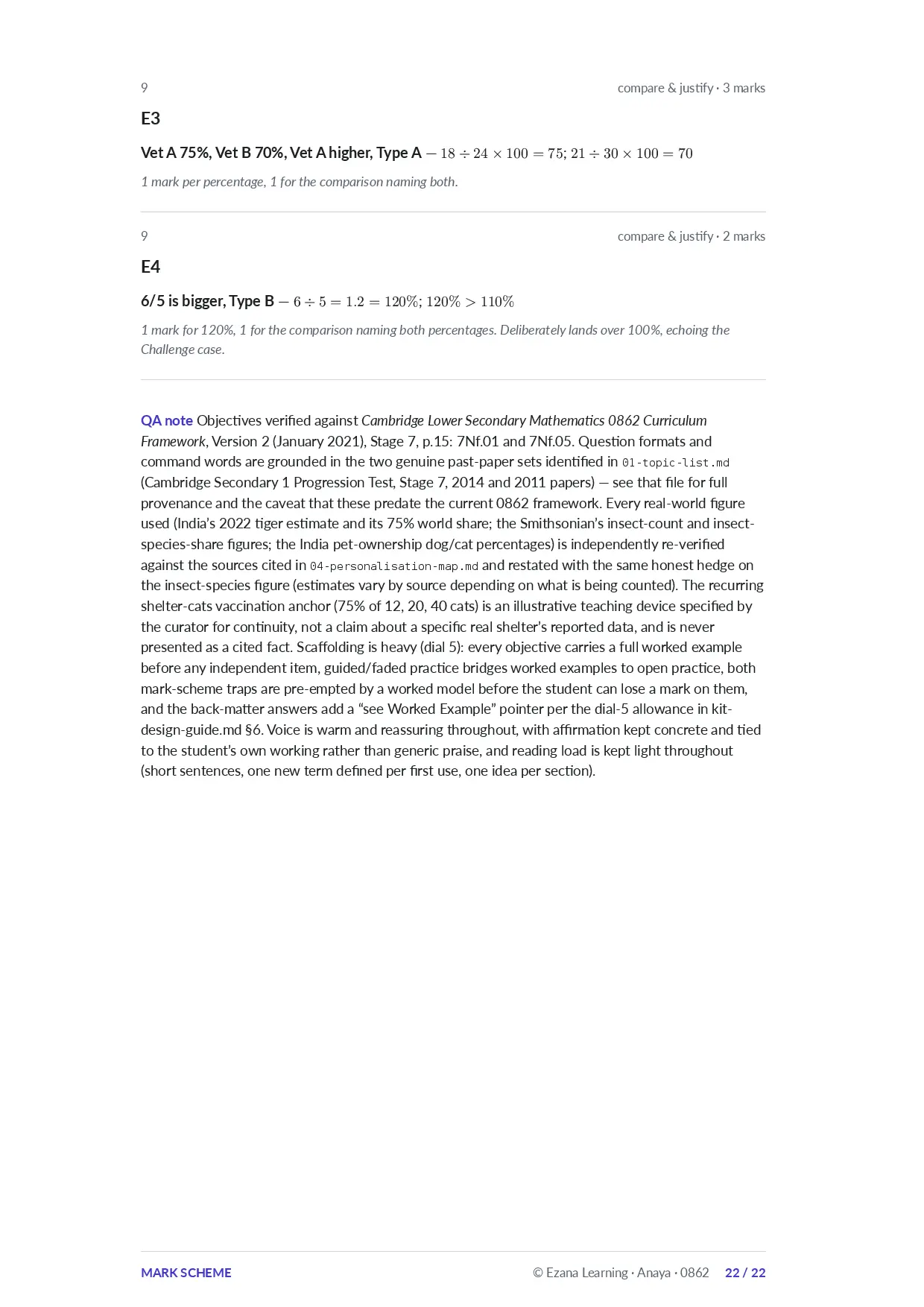
Maths 0862 · Stage 7 · Percentages · 23 pages · topic kitRon likes Fortnite, coding, and football. He said school mathematics felt too easy and he wanted more challenge. So this kit teaches each method clearly, then moves quickly into solo questions. The pages use Fortnite numbers, but each question still checks the same percentage method. It ends with a mixed "Boss Level" where he has to use what he learned in new question types.
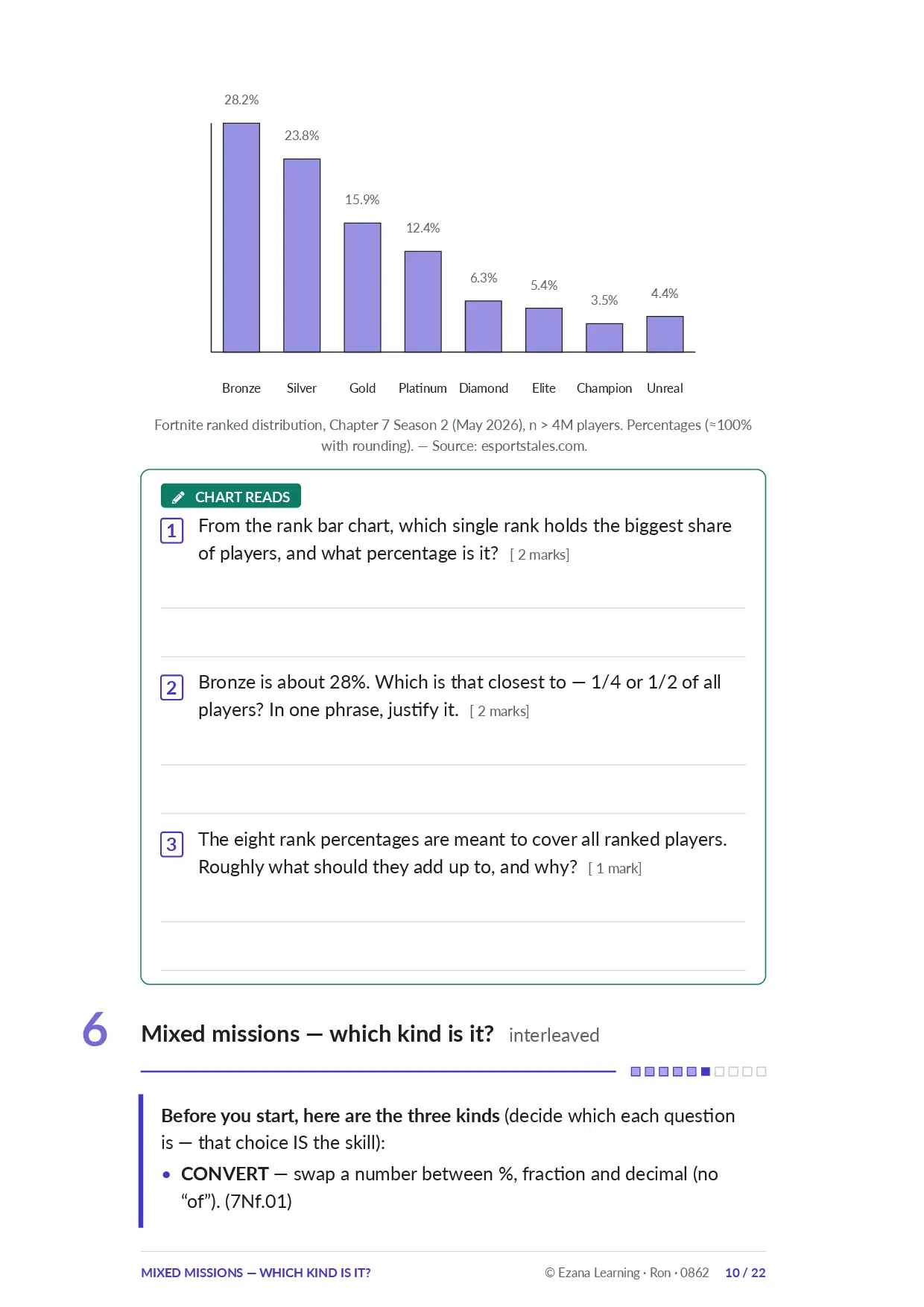
- Page 1 uses figures from Fortnite: V-Bucks pricing, bot-lobby percentages, and Battle Pass XP targets. Each figure is sourced on the page, so the child works with actual data, not made-up filler (page 1).
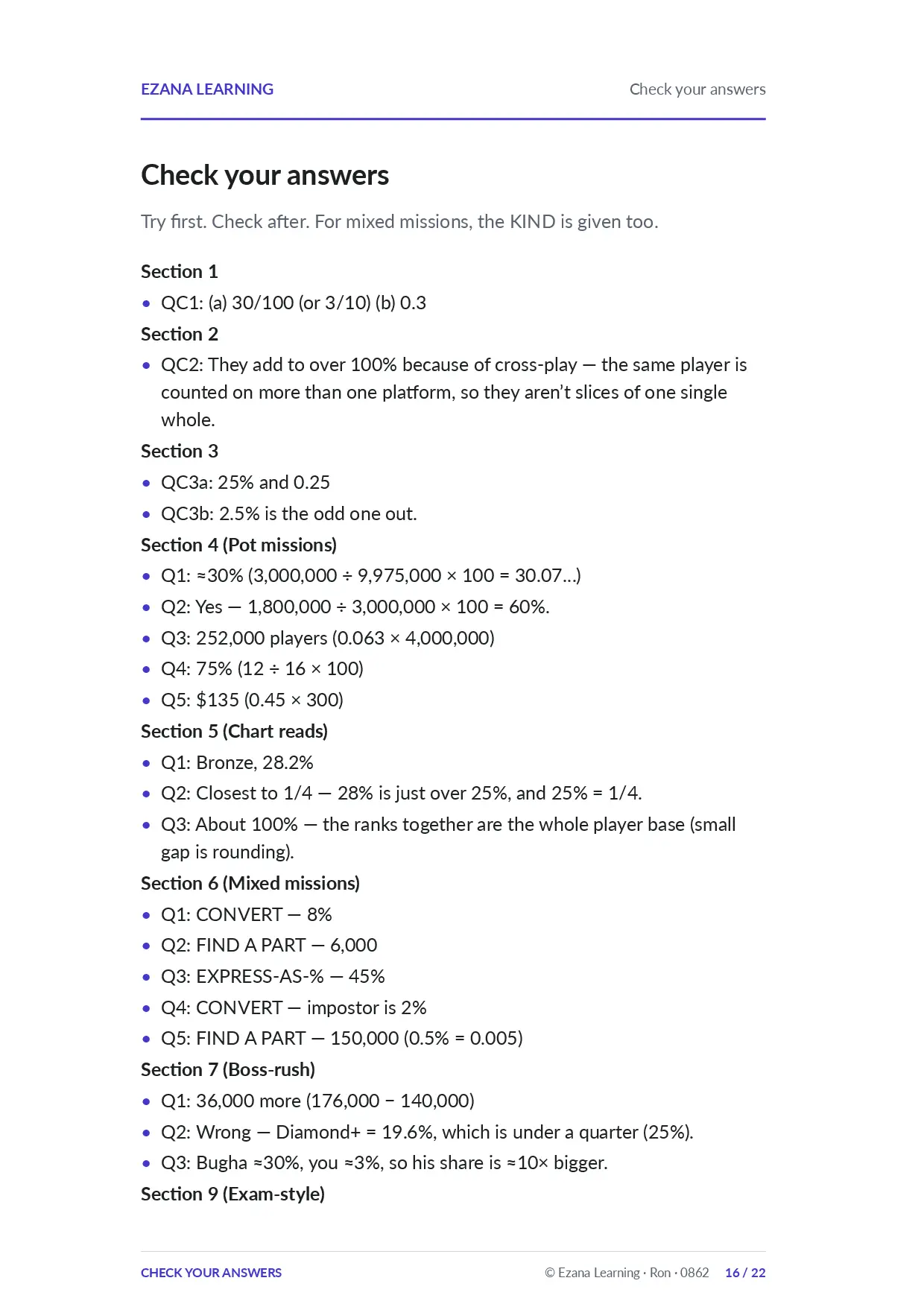
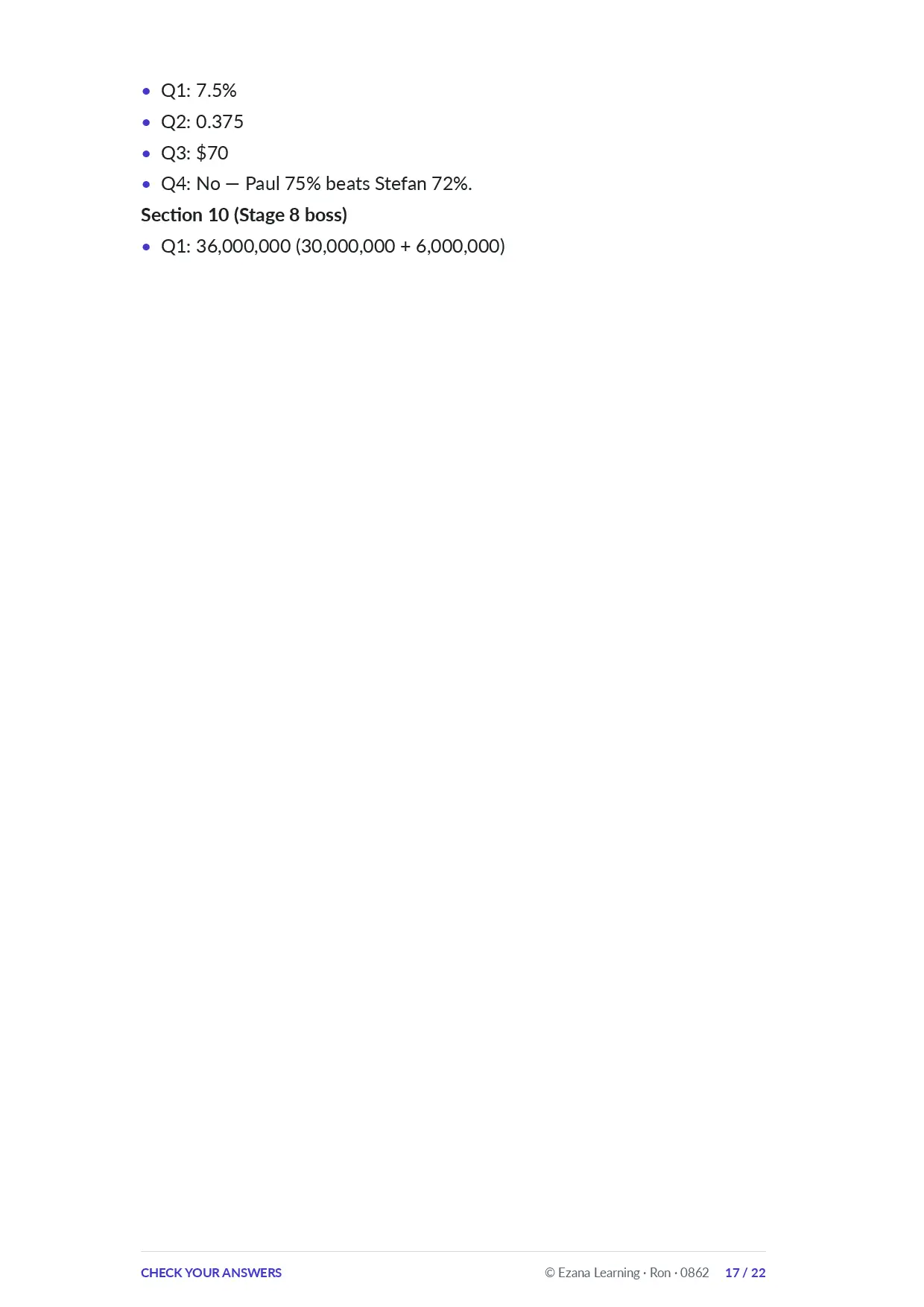
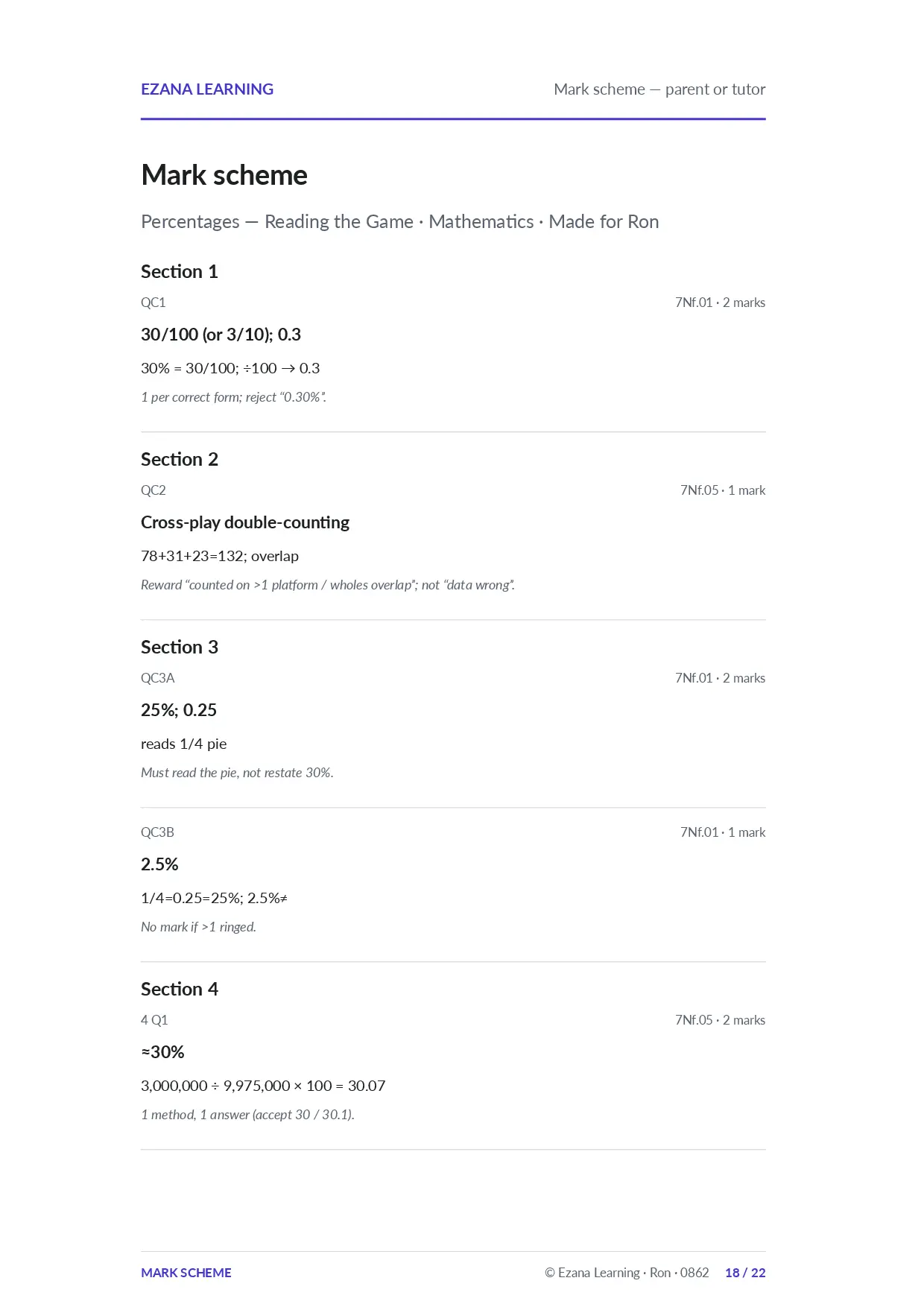
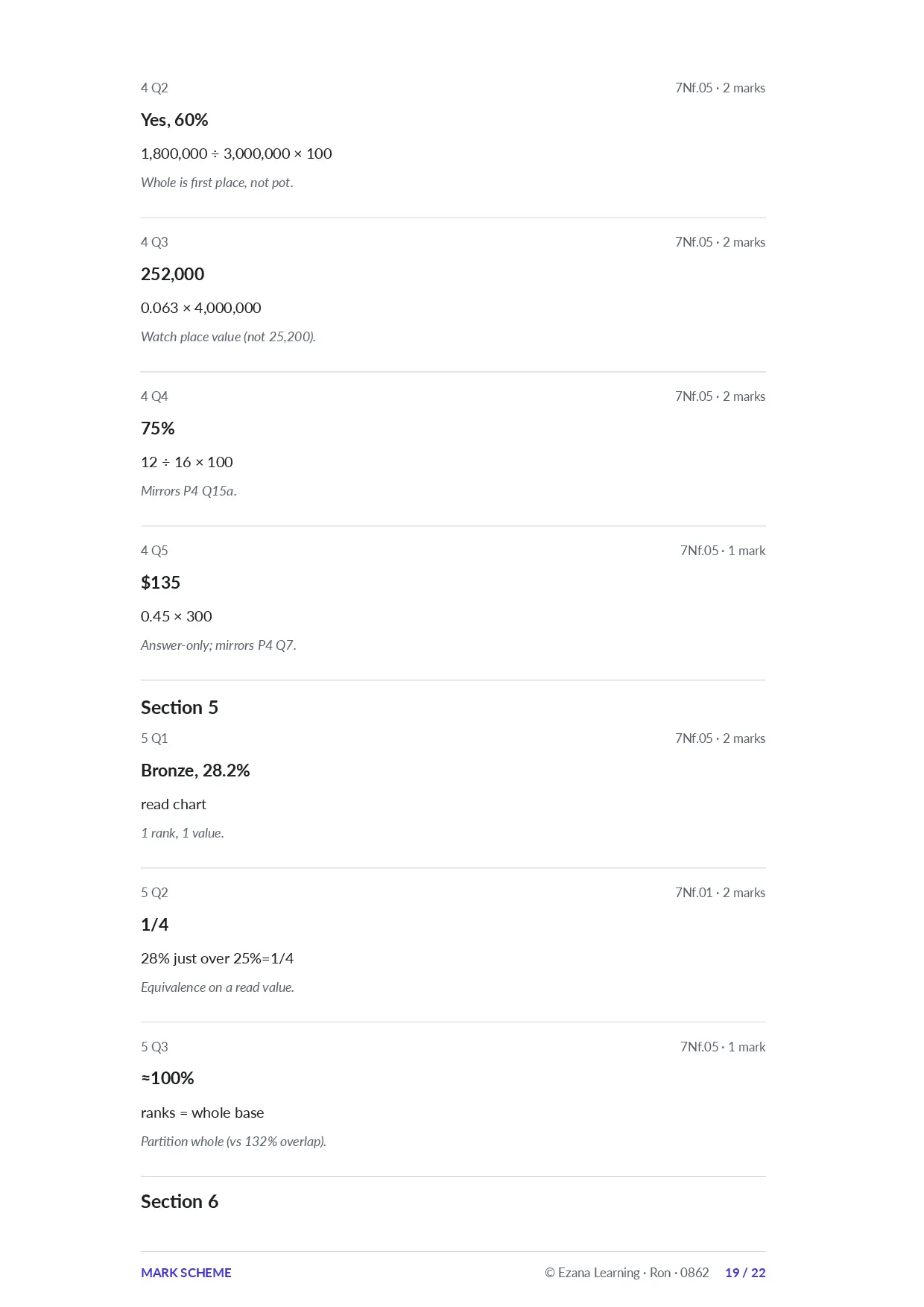
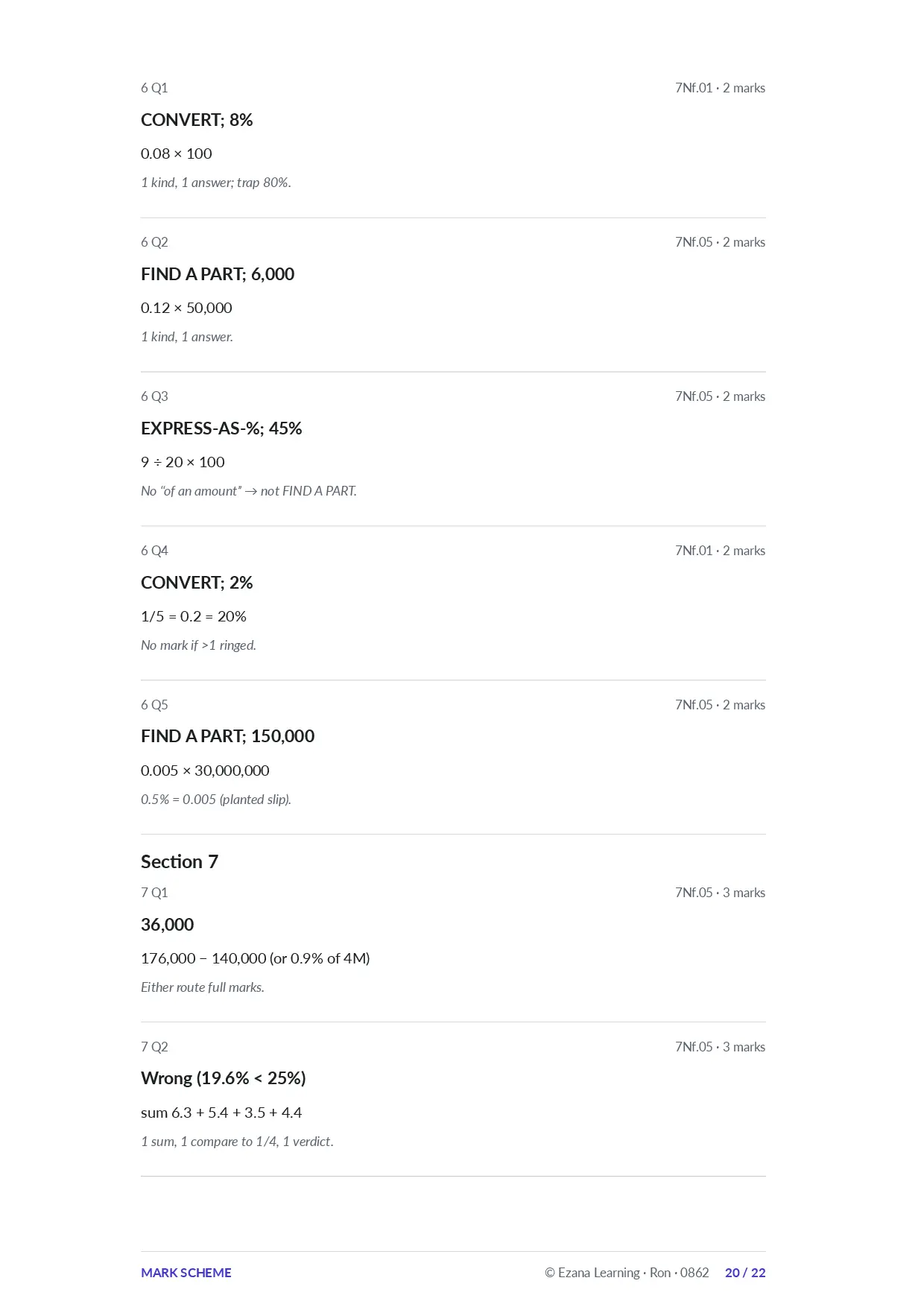
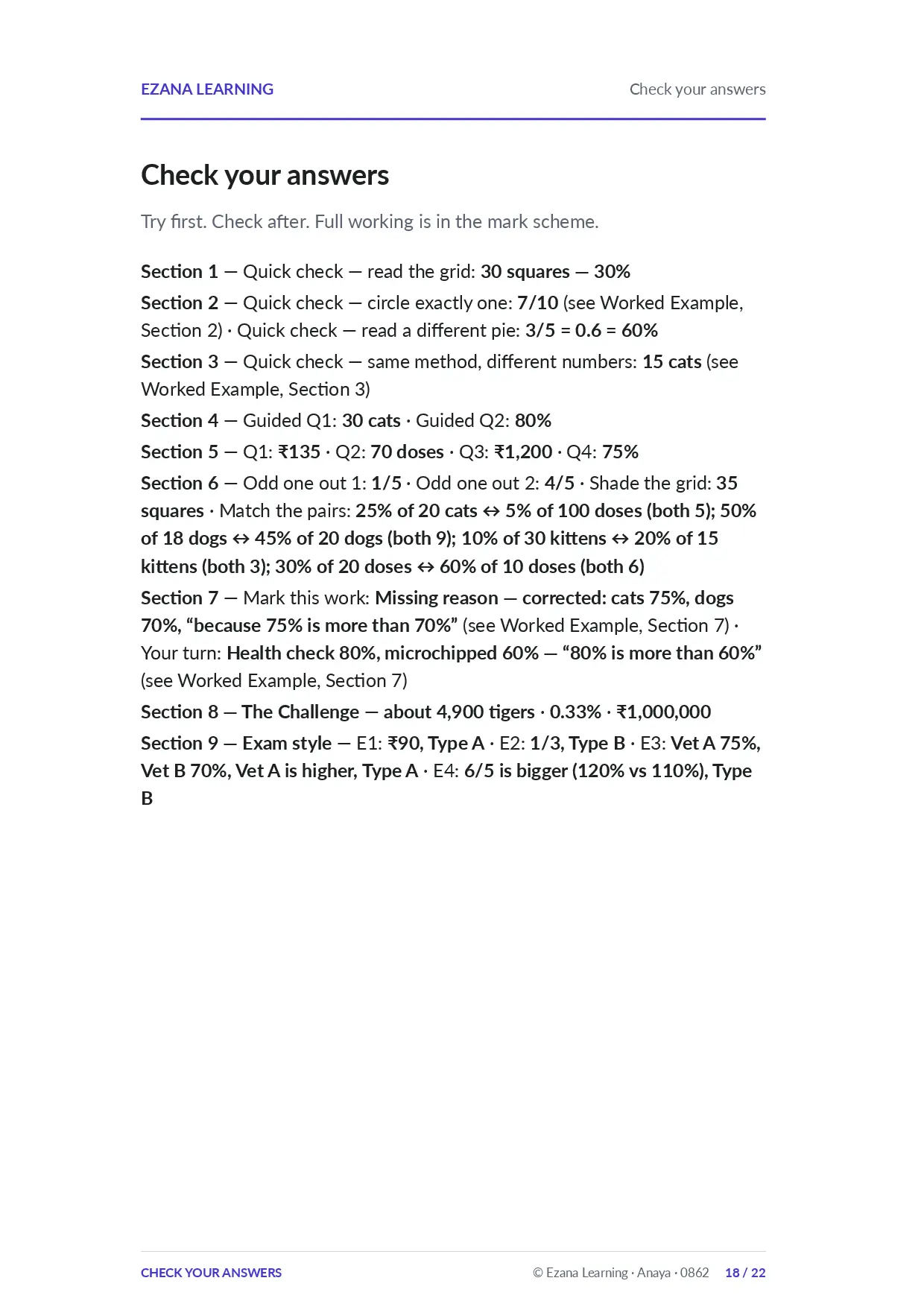
- The answers come in two pages: a quick self-check page the child can use while working, then a full worked page for the end, when an adult checks open responses and can see which step slipped (page 18) and (page 19).
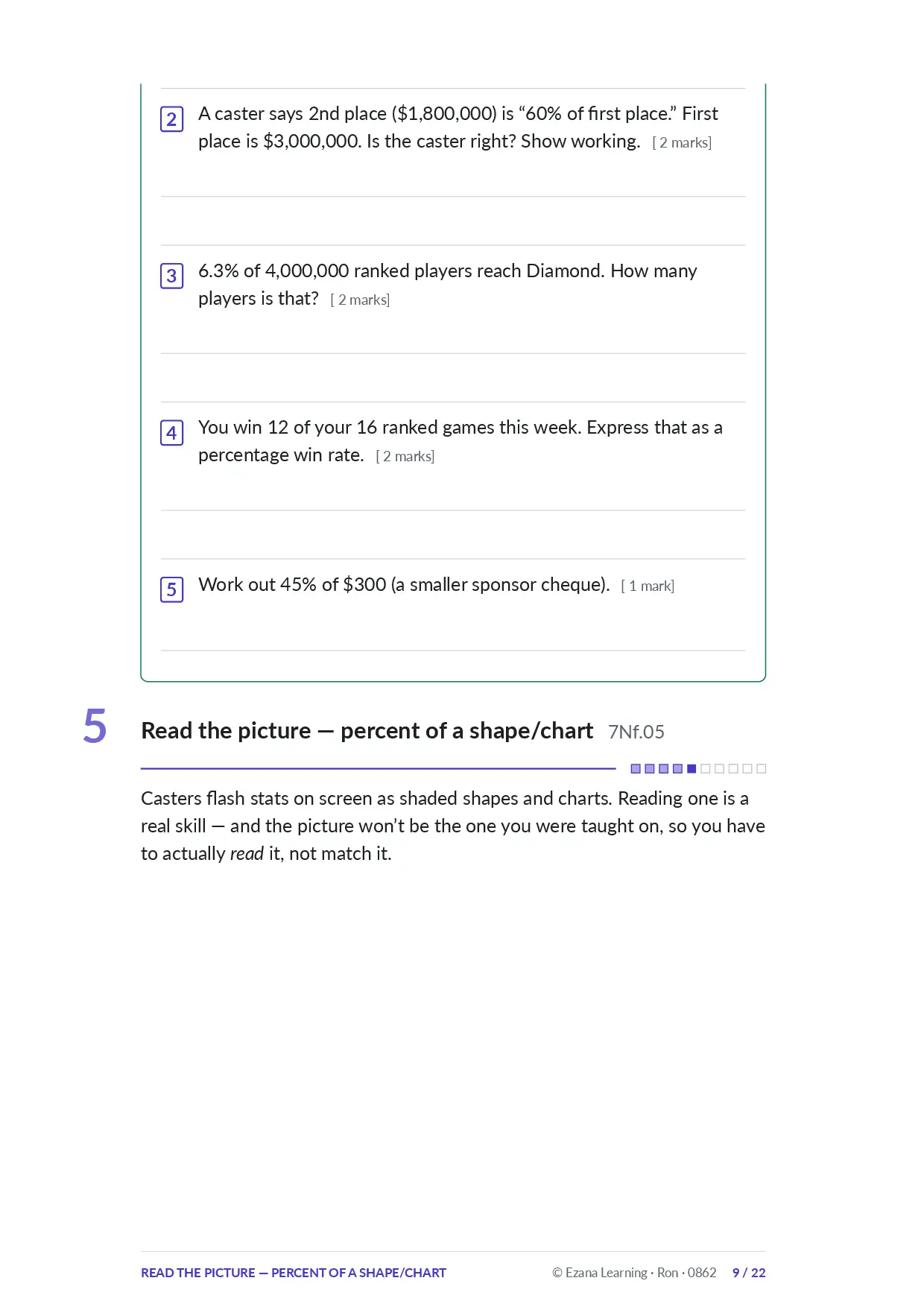
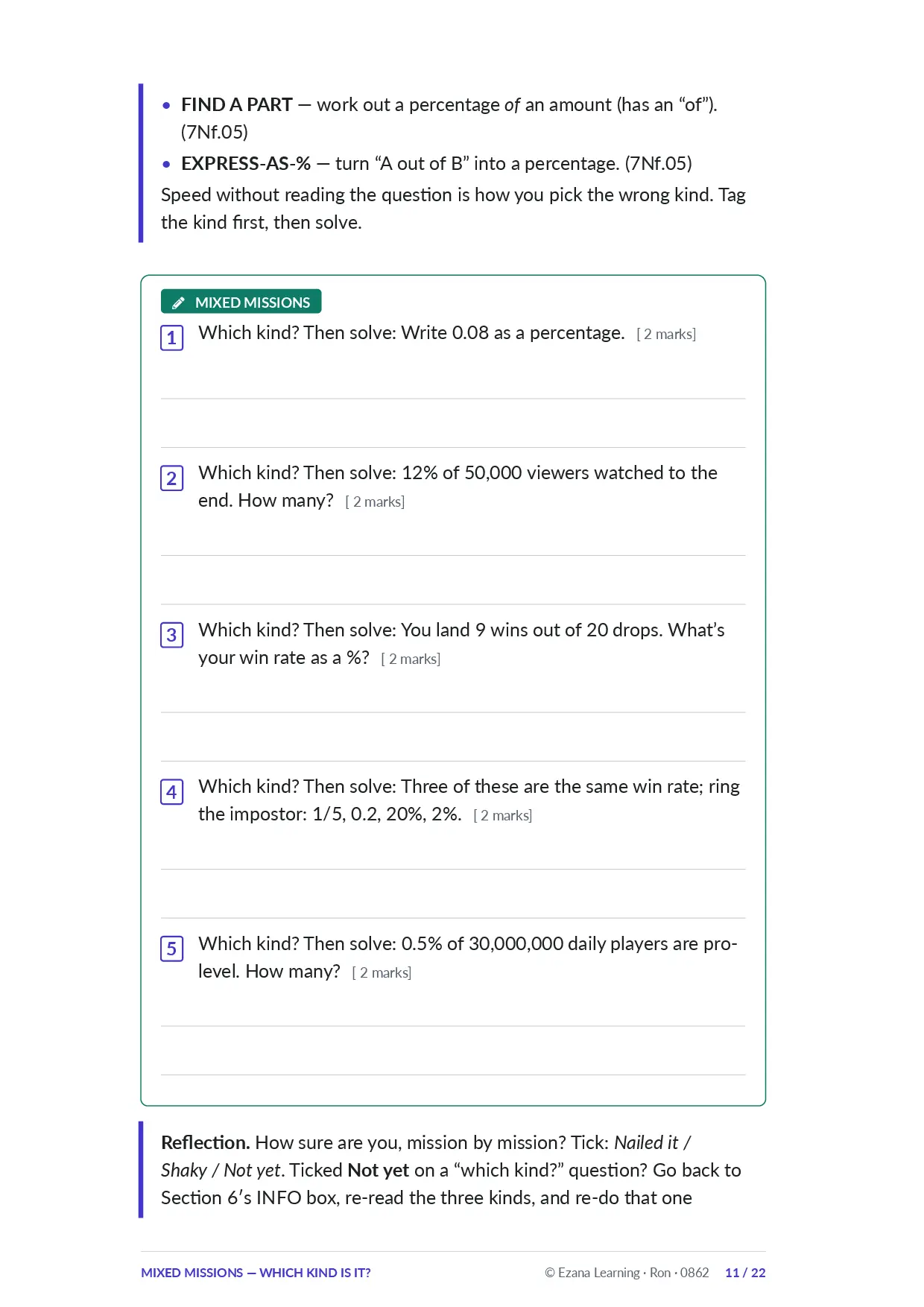
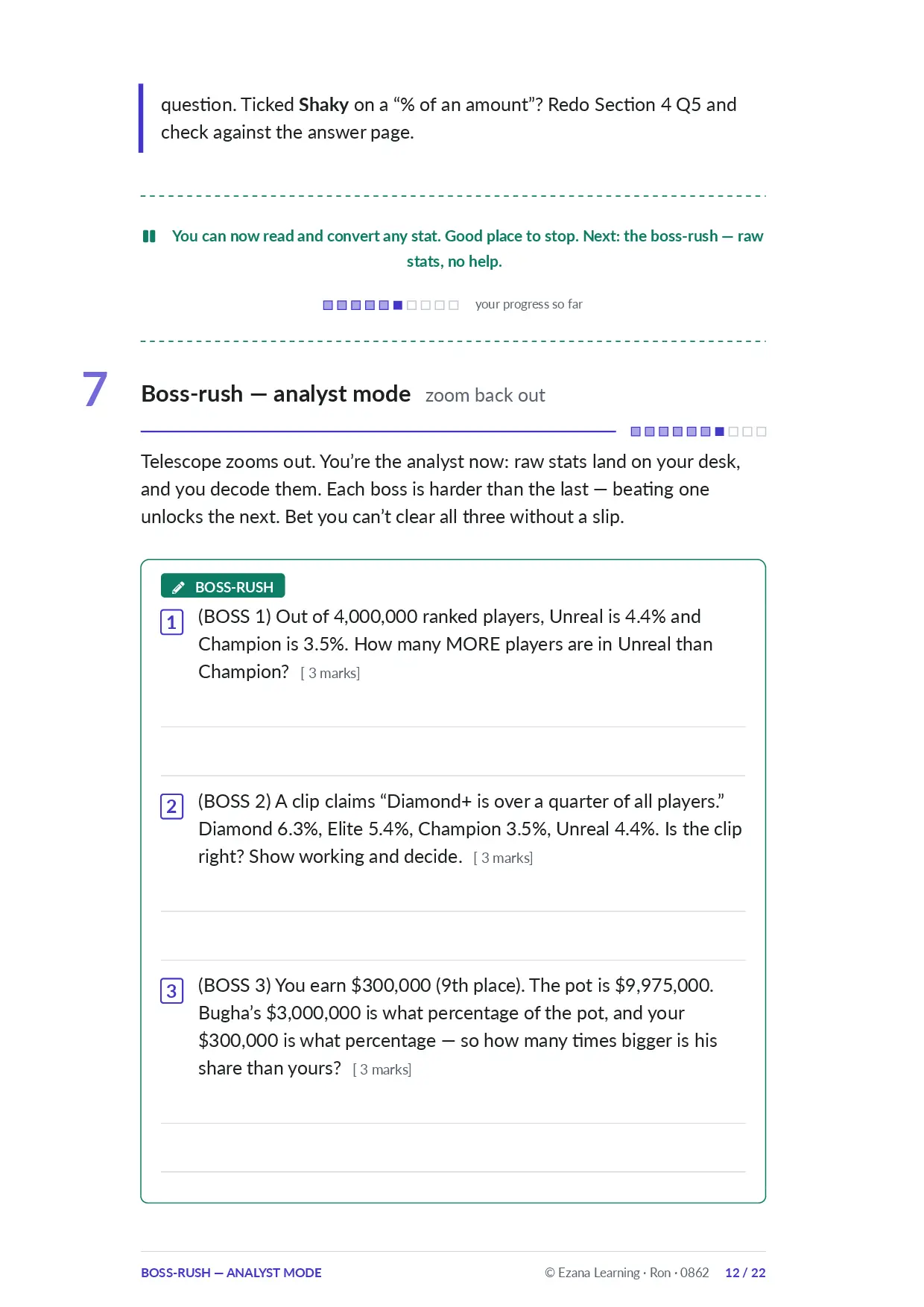
Click any page to open the reader and page through the whole kit. You can also scroll the strip sideways.
Anaya — Saturdays at the Shelter
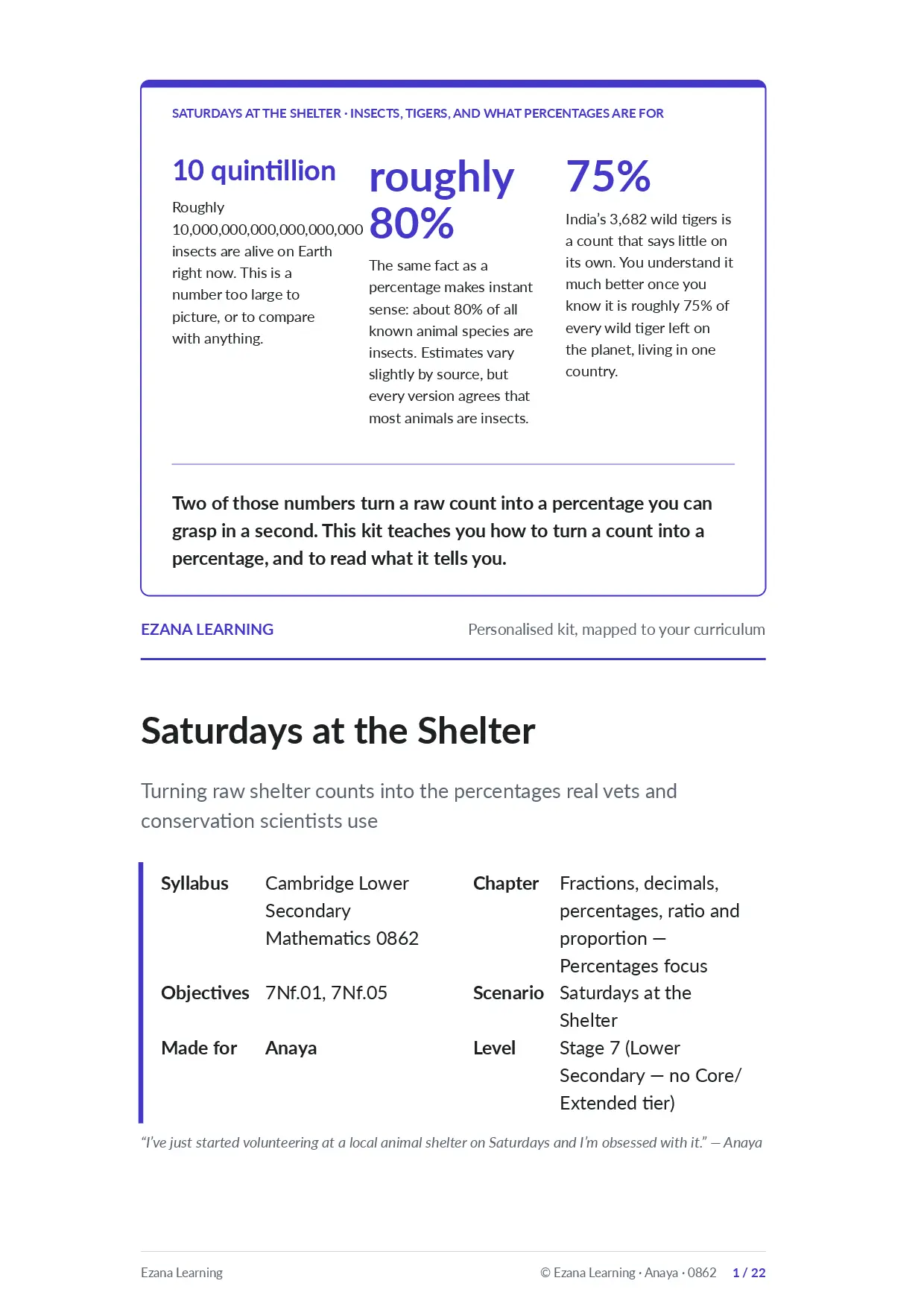
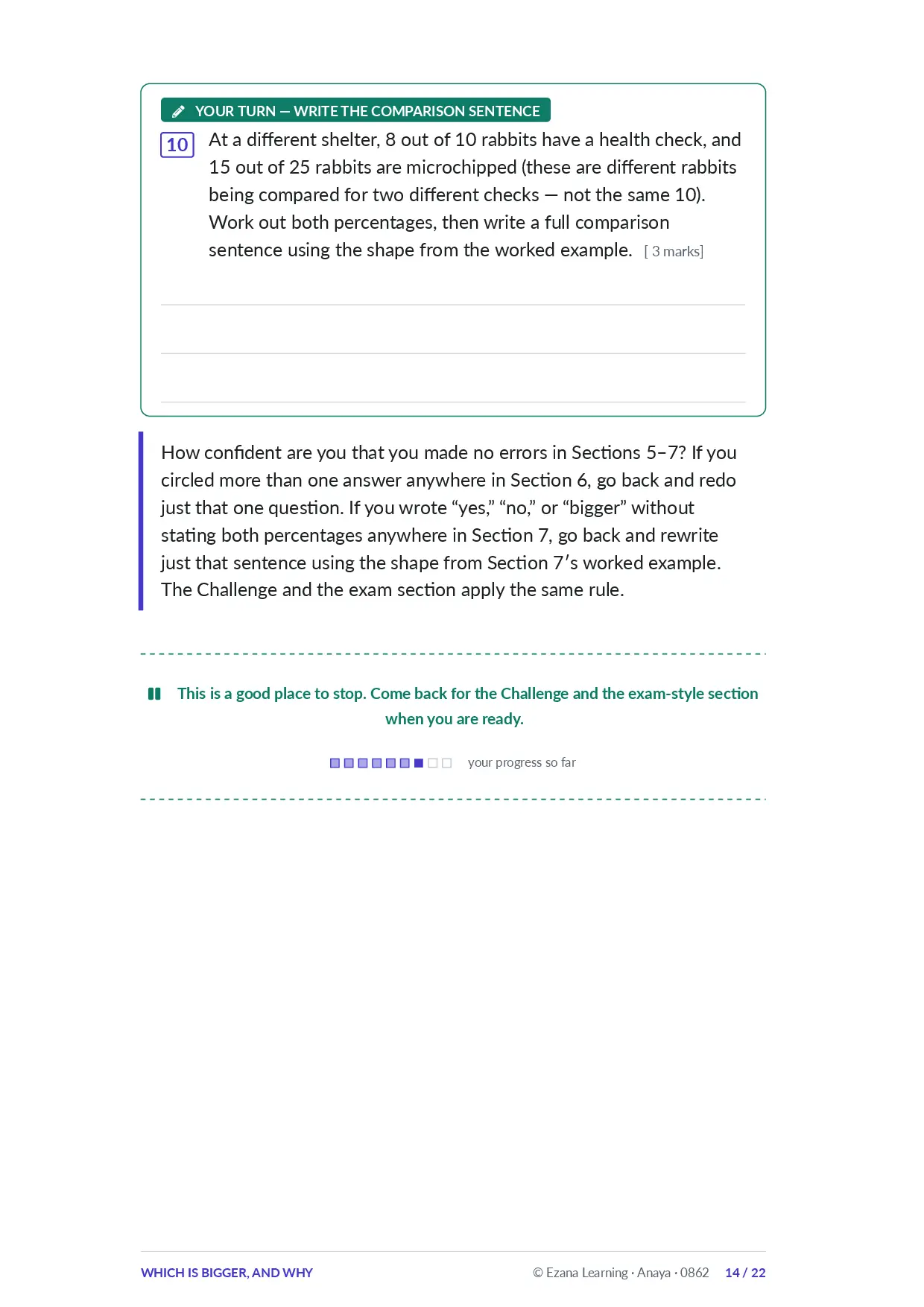
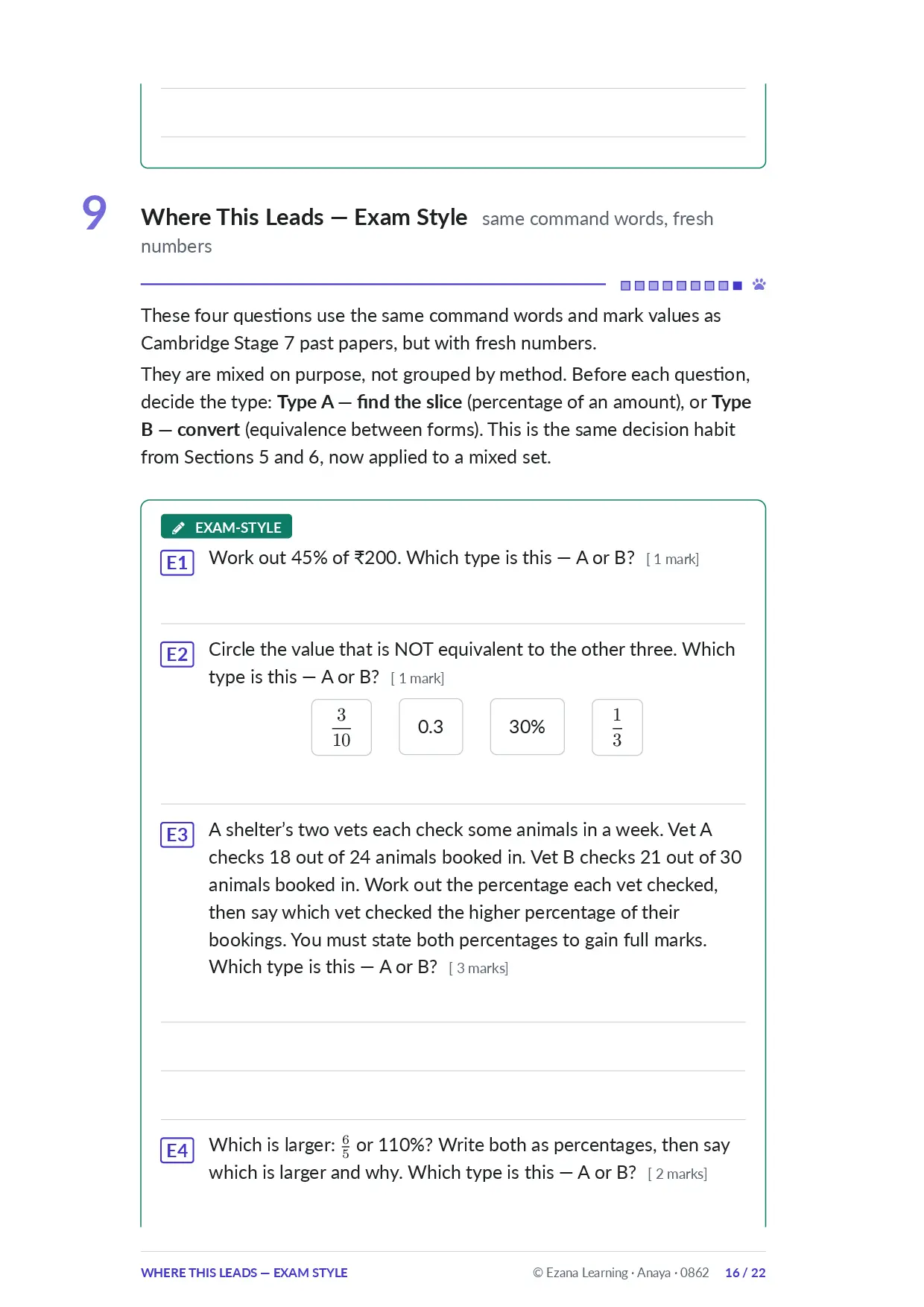
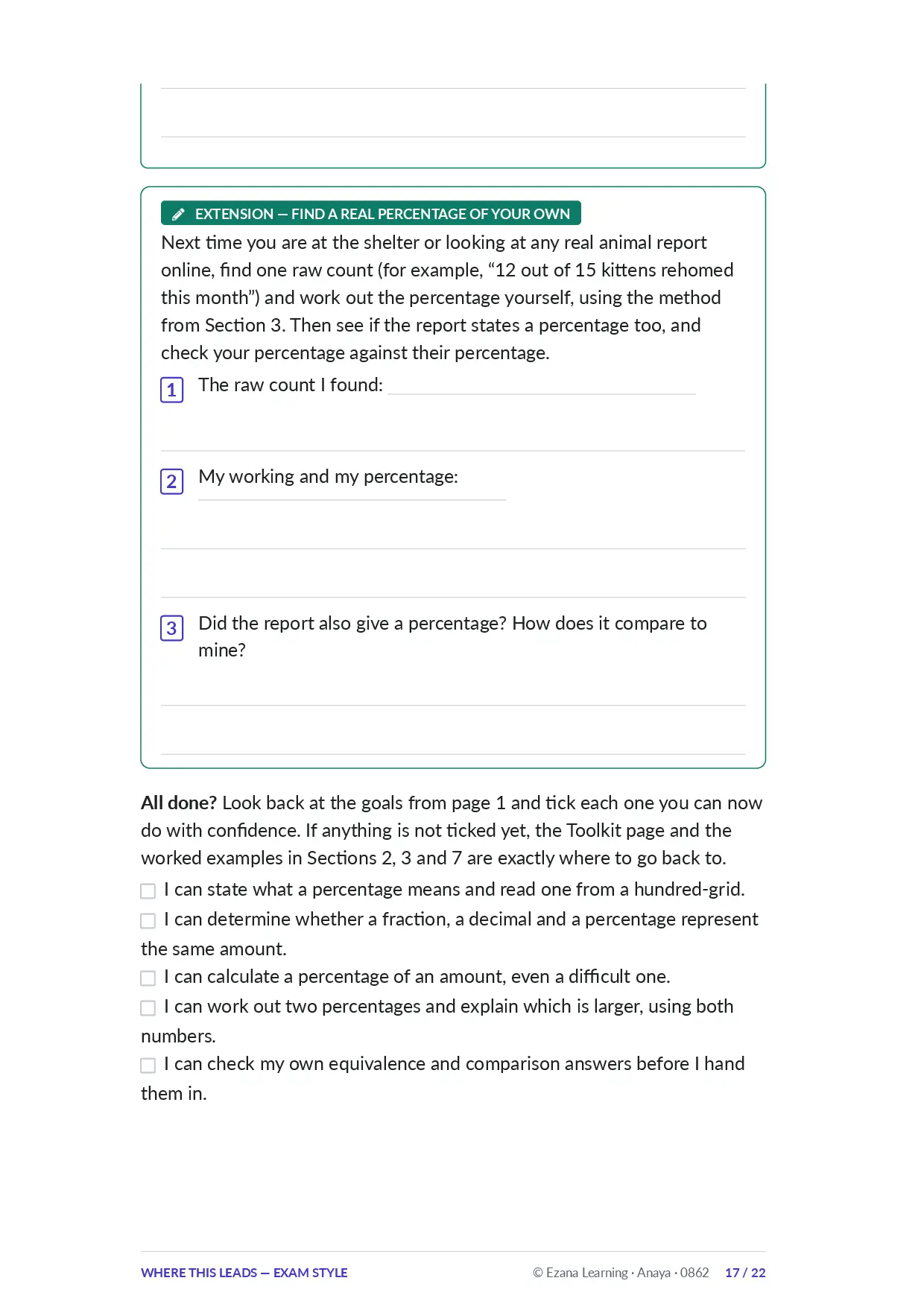
Maths 0862 · Stage 7 · Percentages · 22 pages · topic kitAnaya likes animals, art and stories, and she said timed maths makes her nervous. So this version slows the pace and shows each method in full before the first solo question. The wording stays plain, the examples stay concrete, and each check comes soon after teaching so she does not carry confusion for pages before finding out.
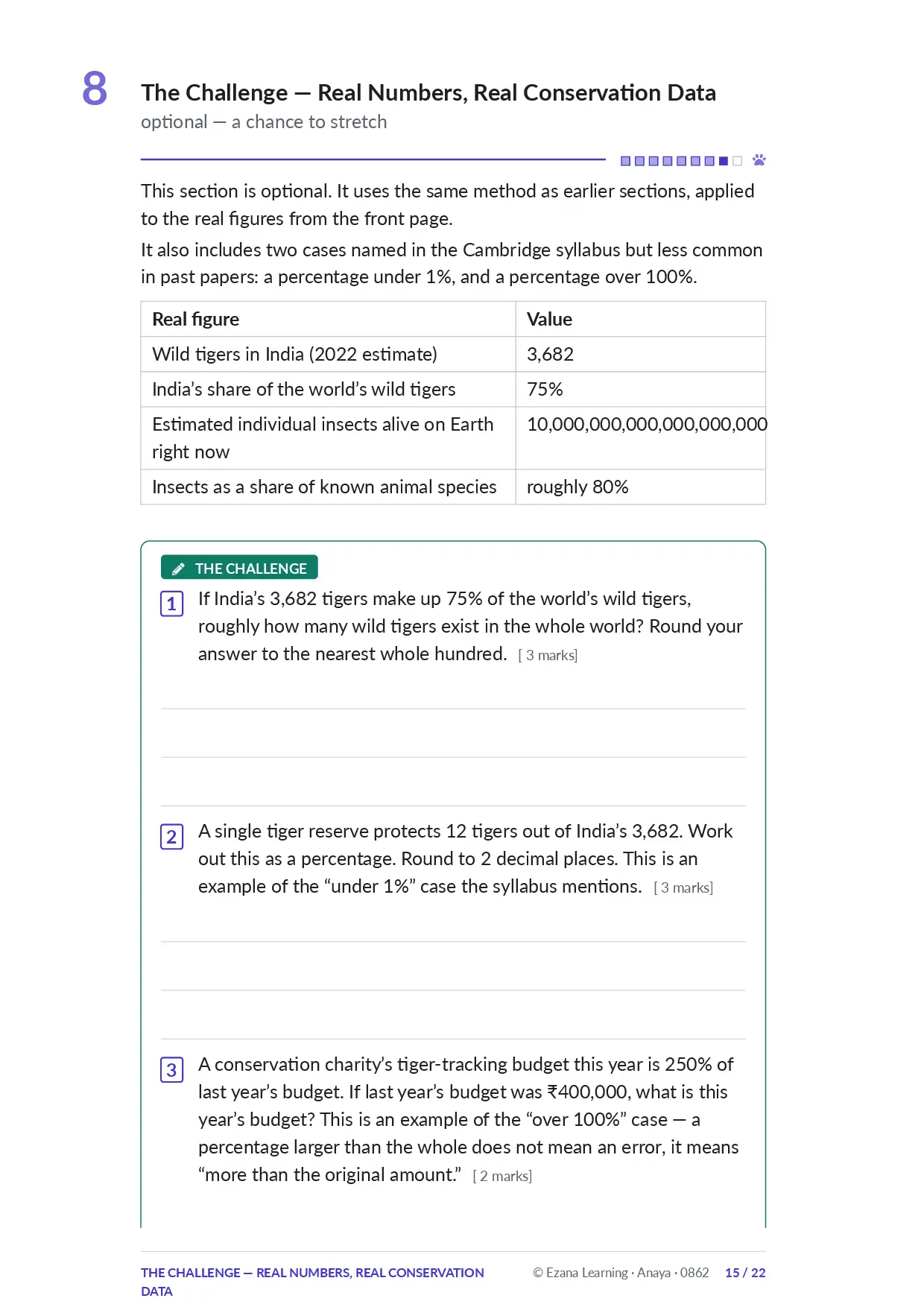
- Page 1 opens with two sourced facts: 75% of wild tigers live in India, and about 80% of animal species are insects. That shows what a percentage tells you before any calculation starts (page 1).
- The answer layout matches Ron's kit: one quick self-check page for the child while working, then one full worked page for the final end check. That keeps the comparison fair while still protecting independent work during the lesson (page 18) and (page 19).
Click any page to open the reader and page through the whole kit. You can also scroll the strip sideways.
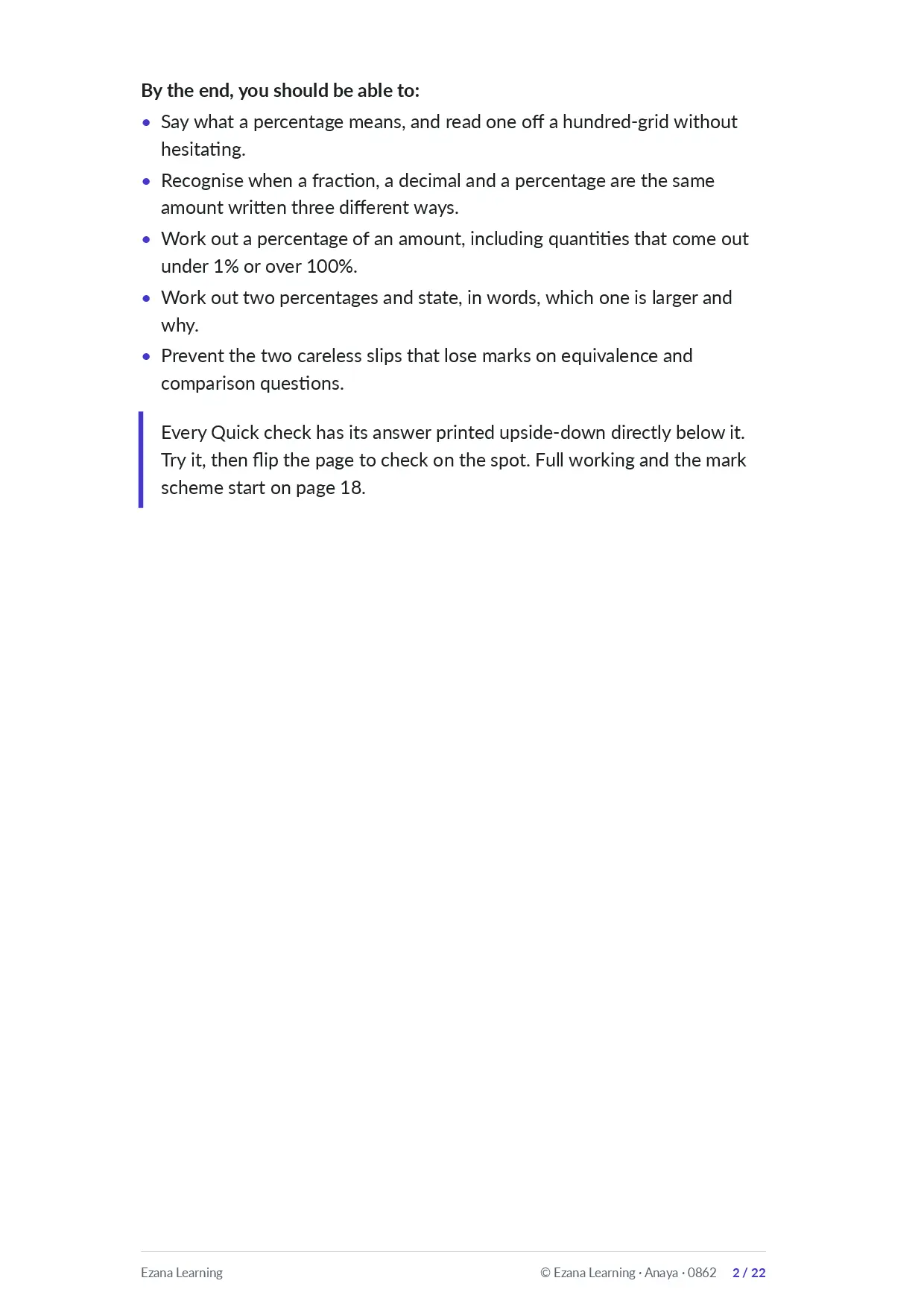
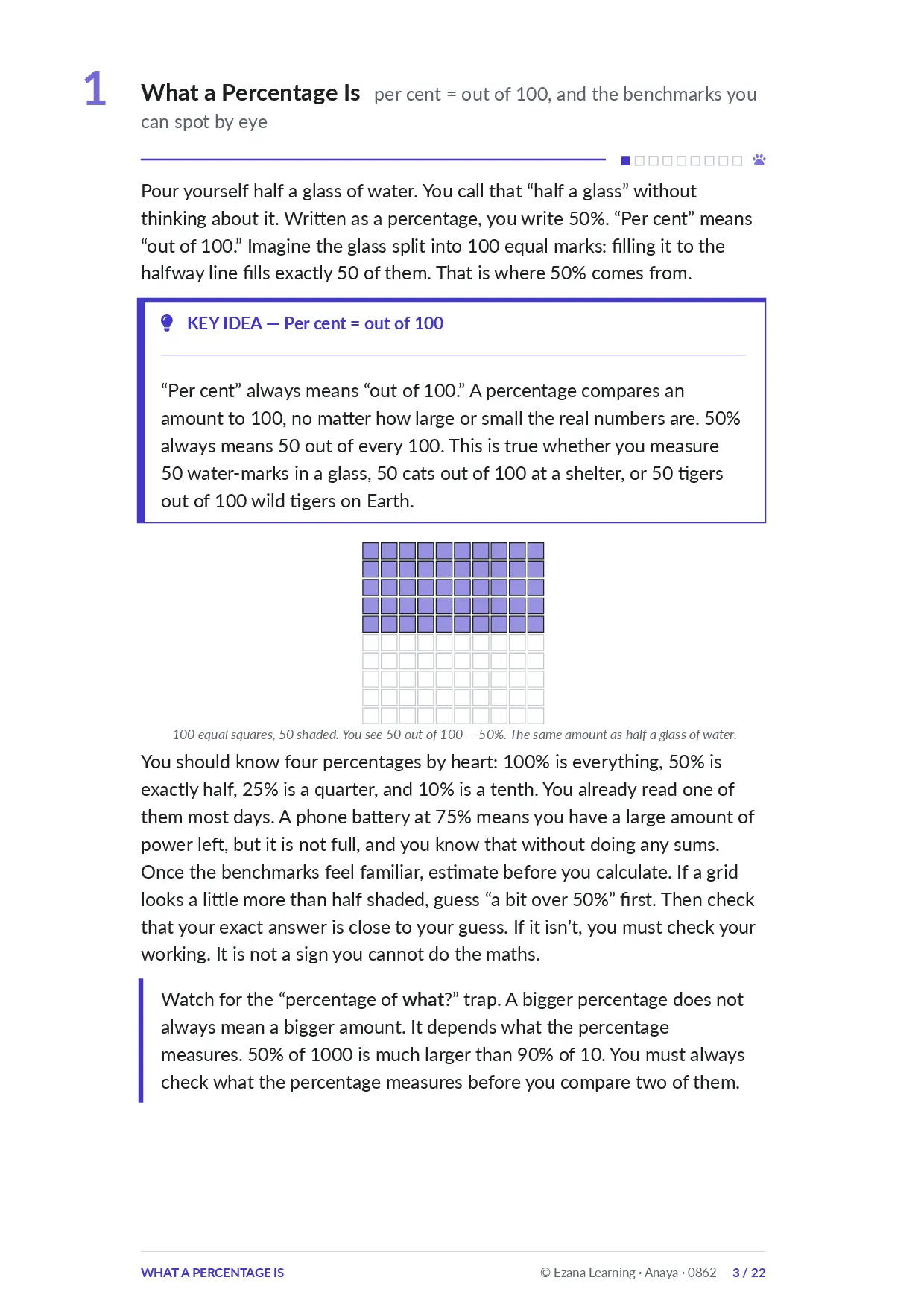
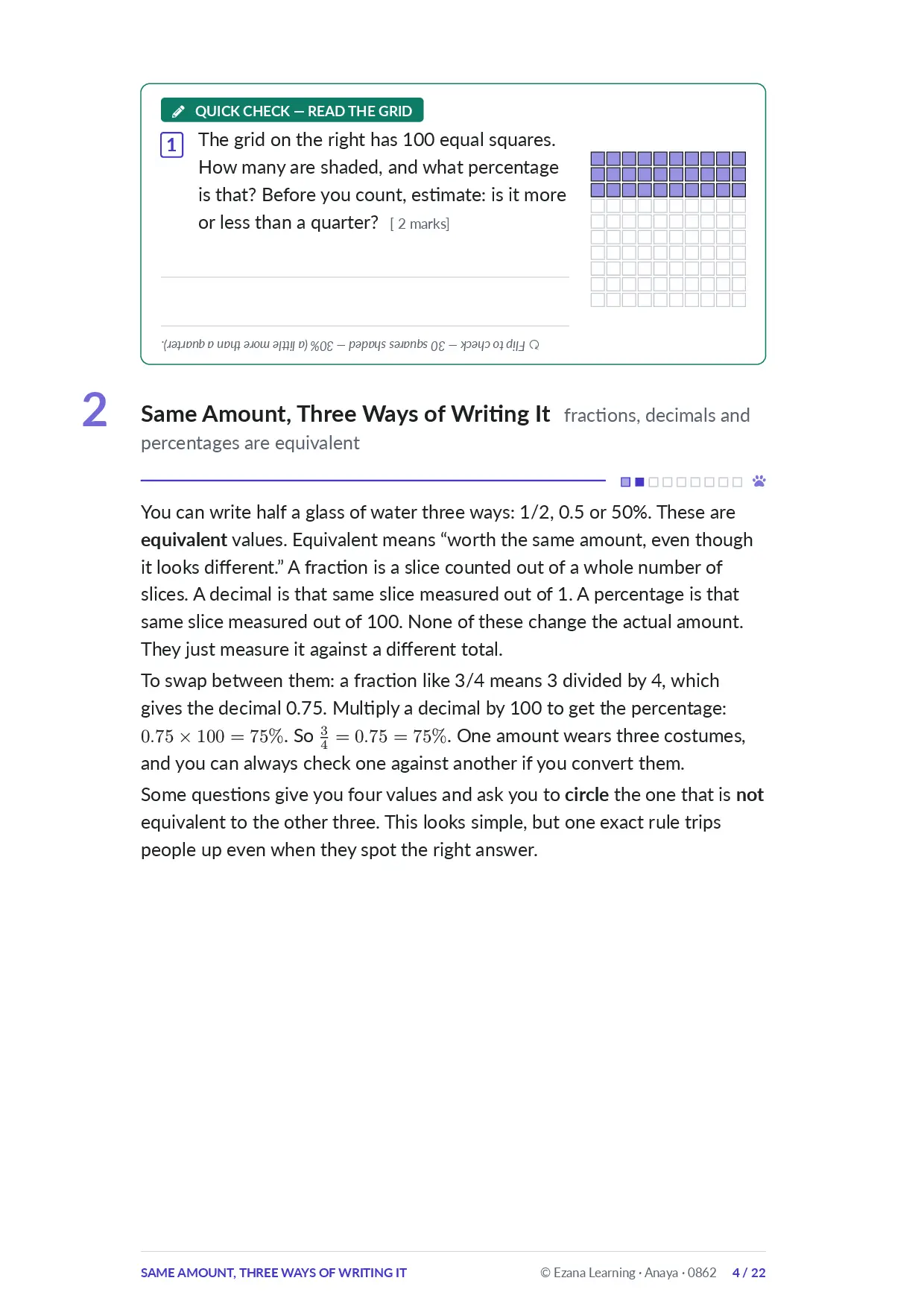
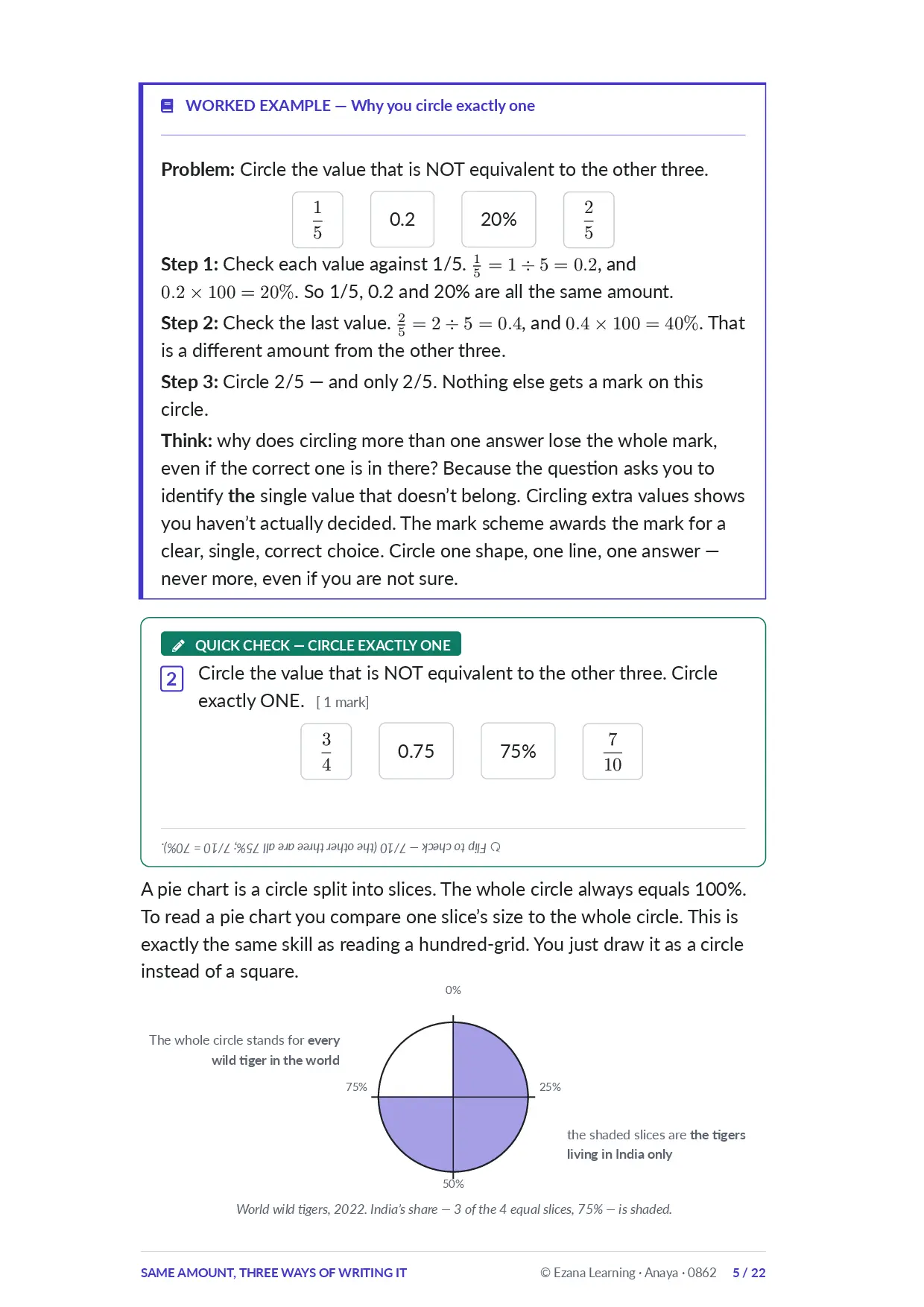
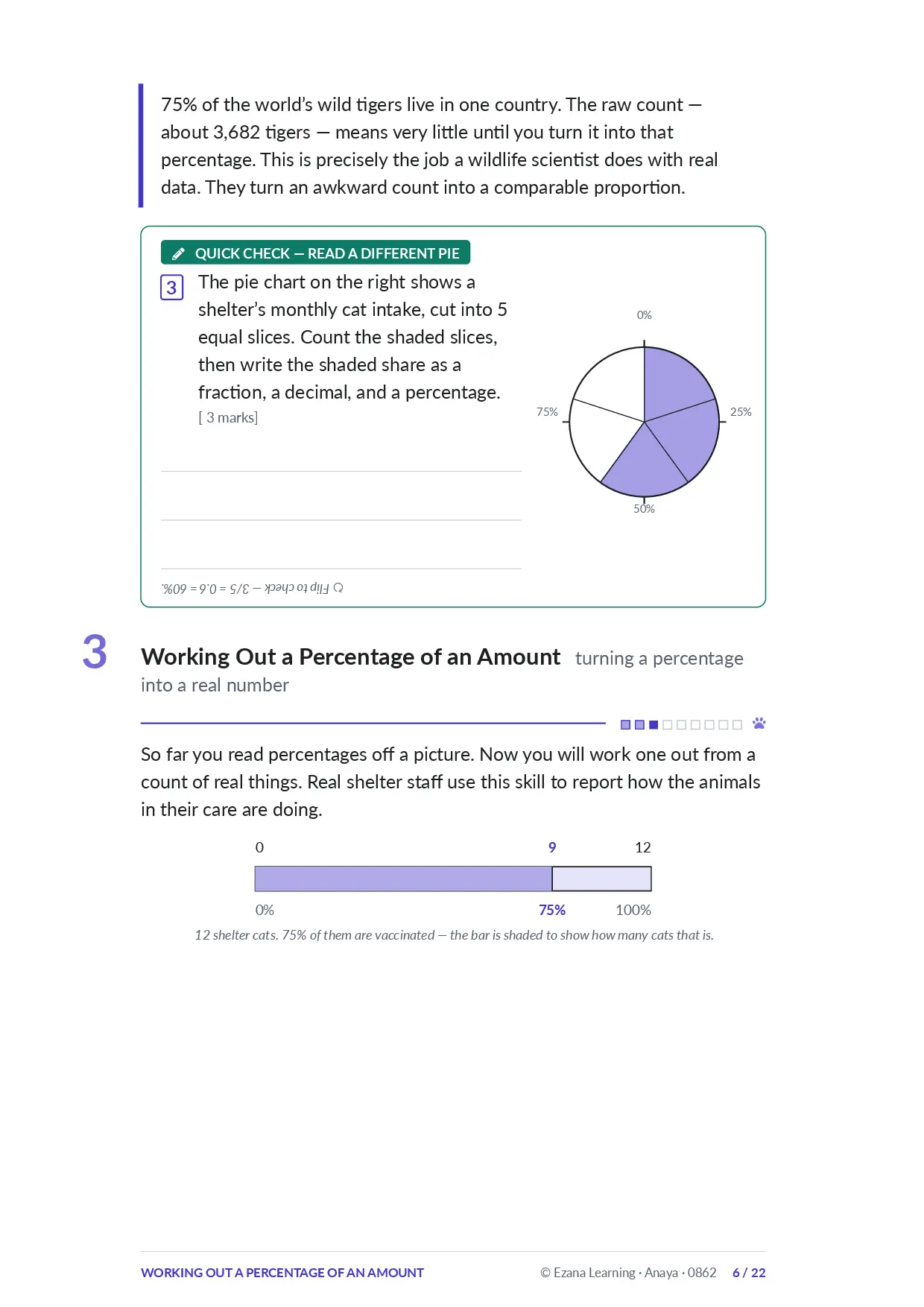
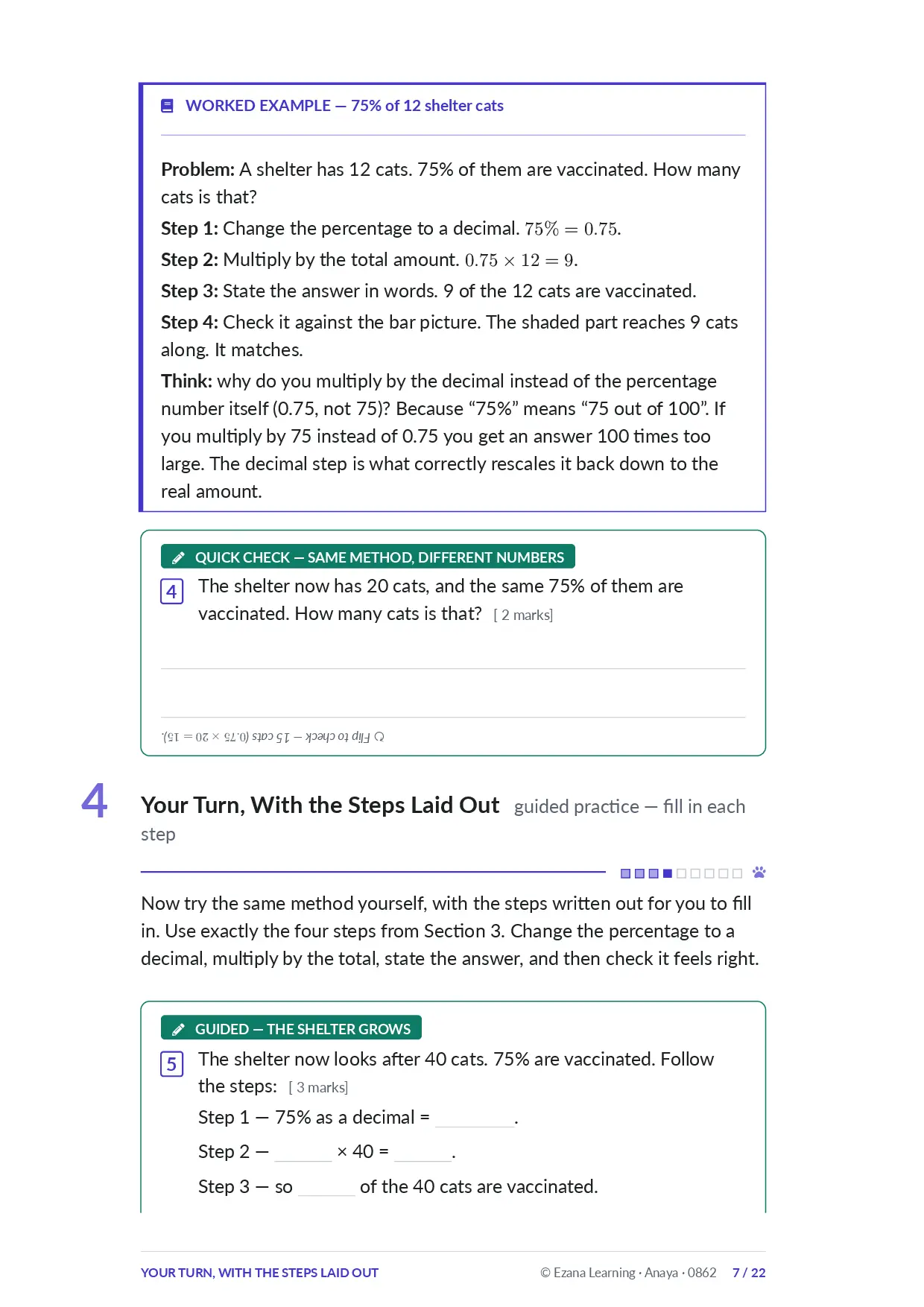
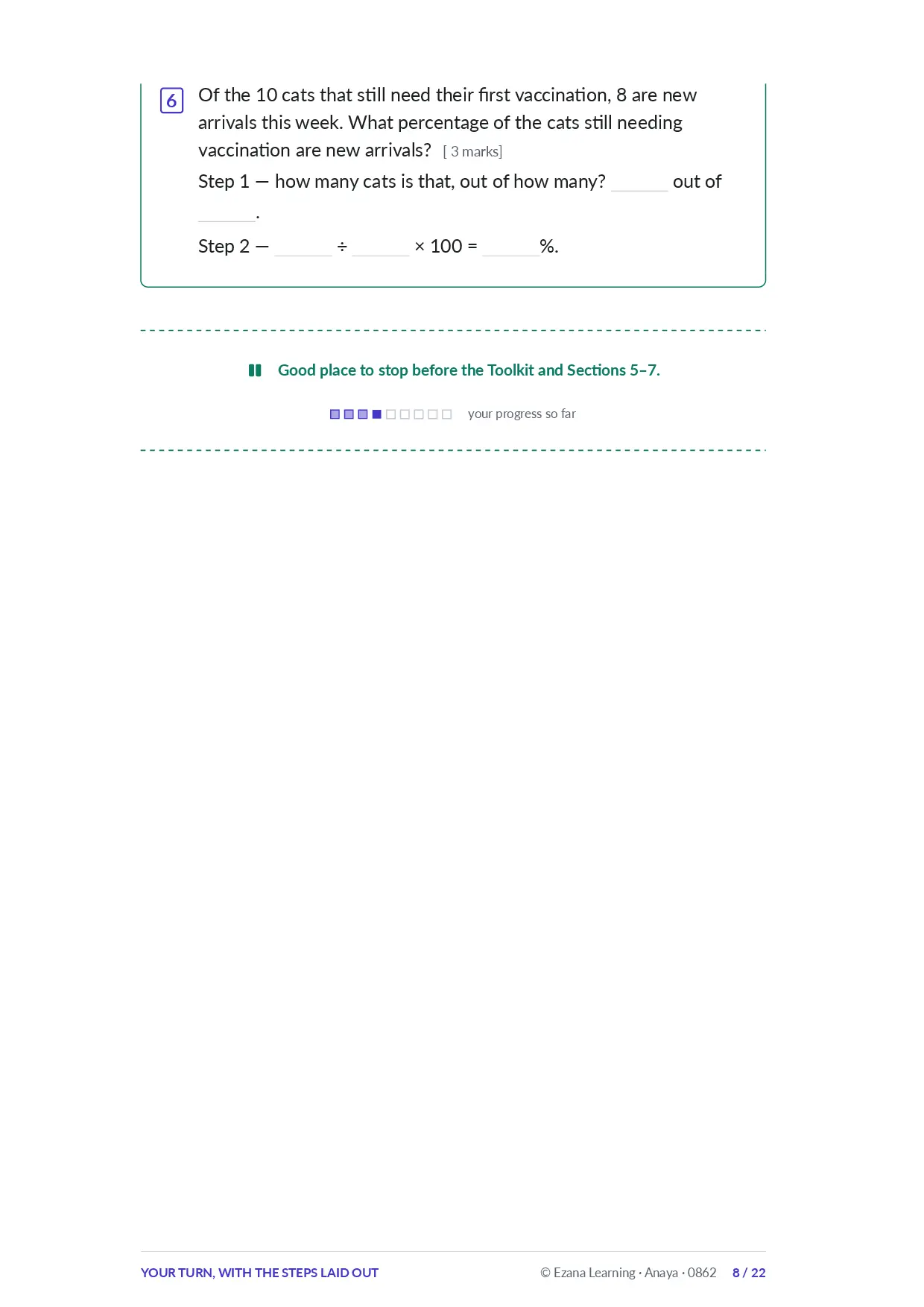
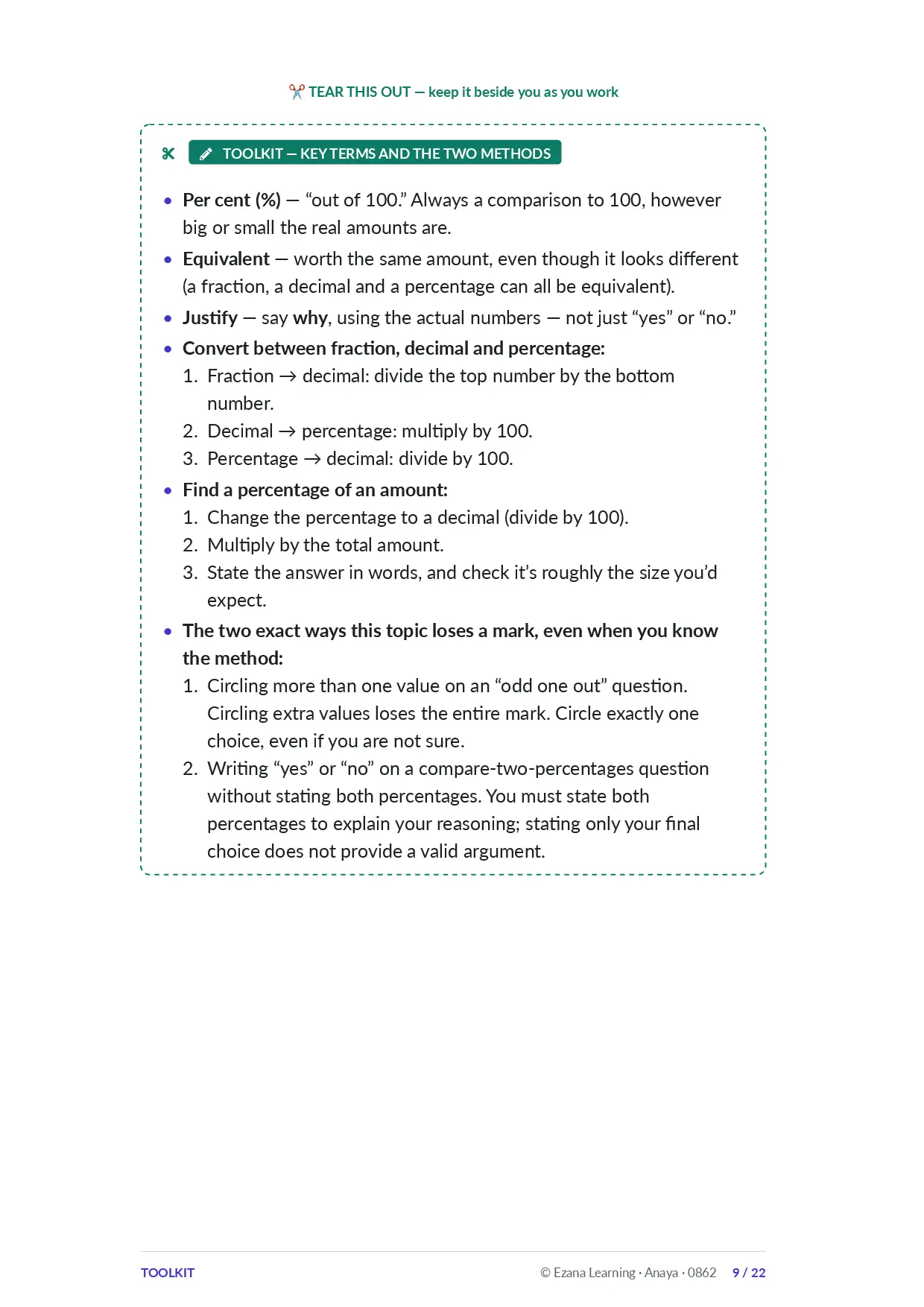
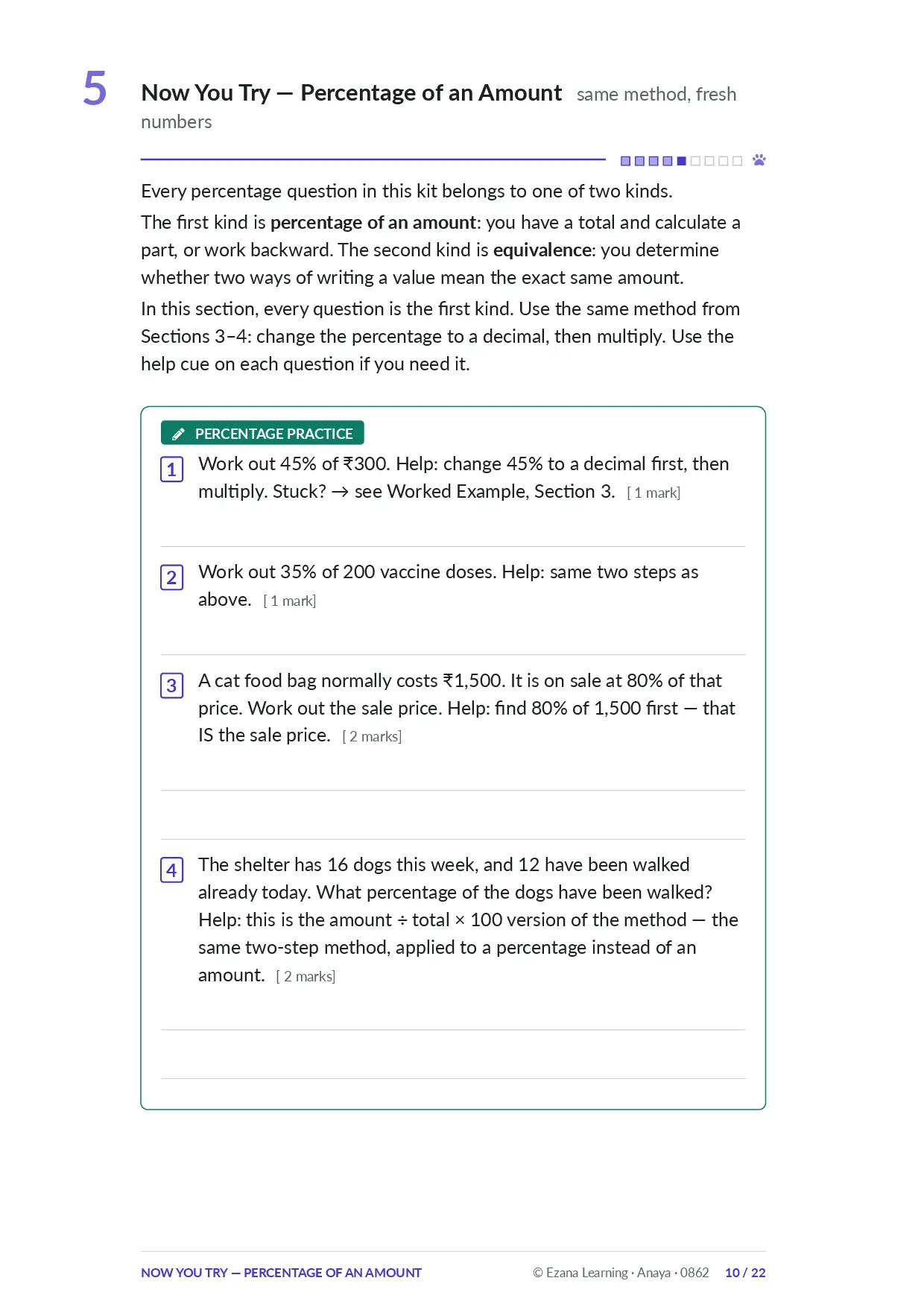
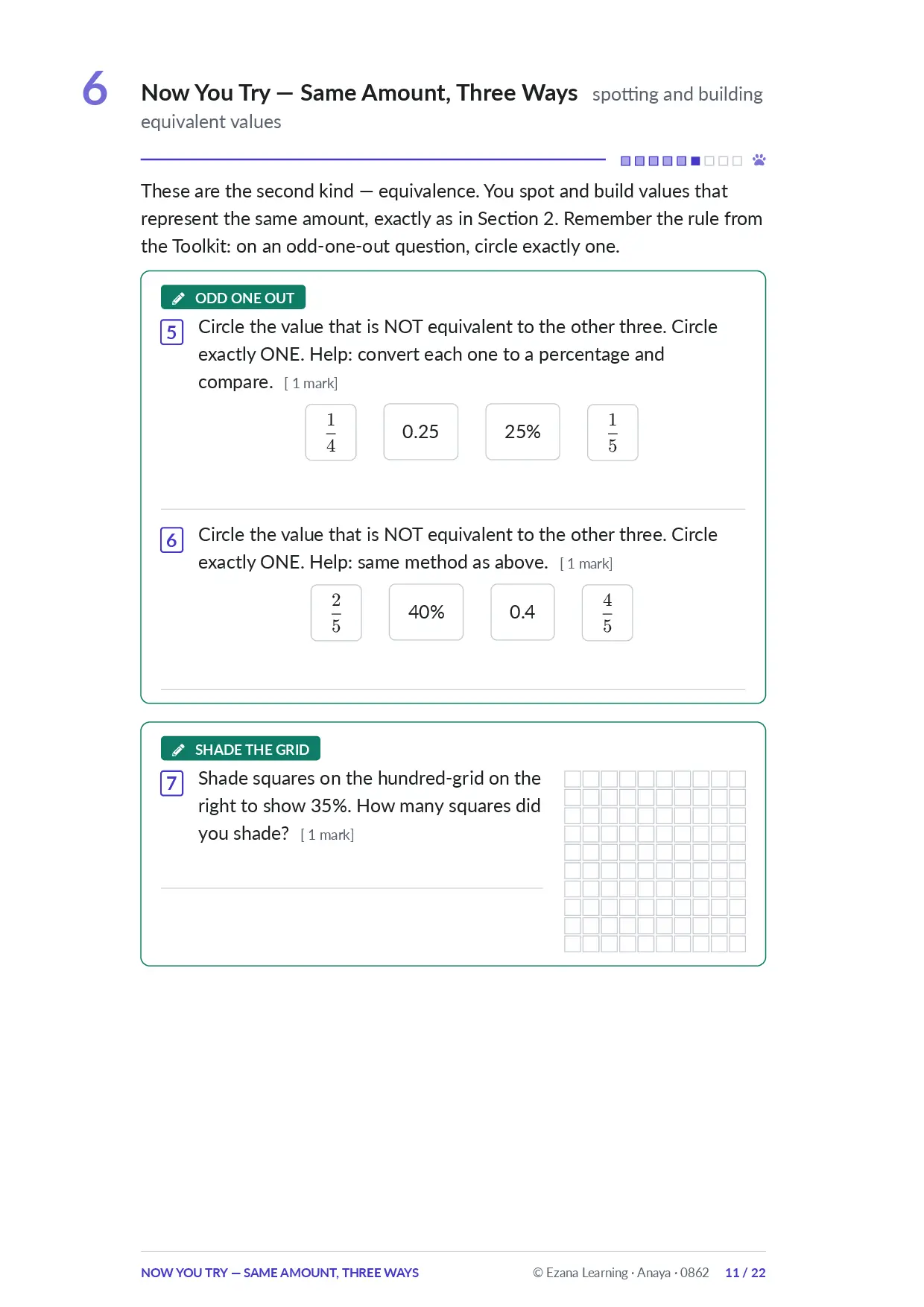
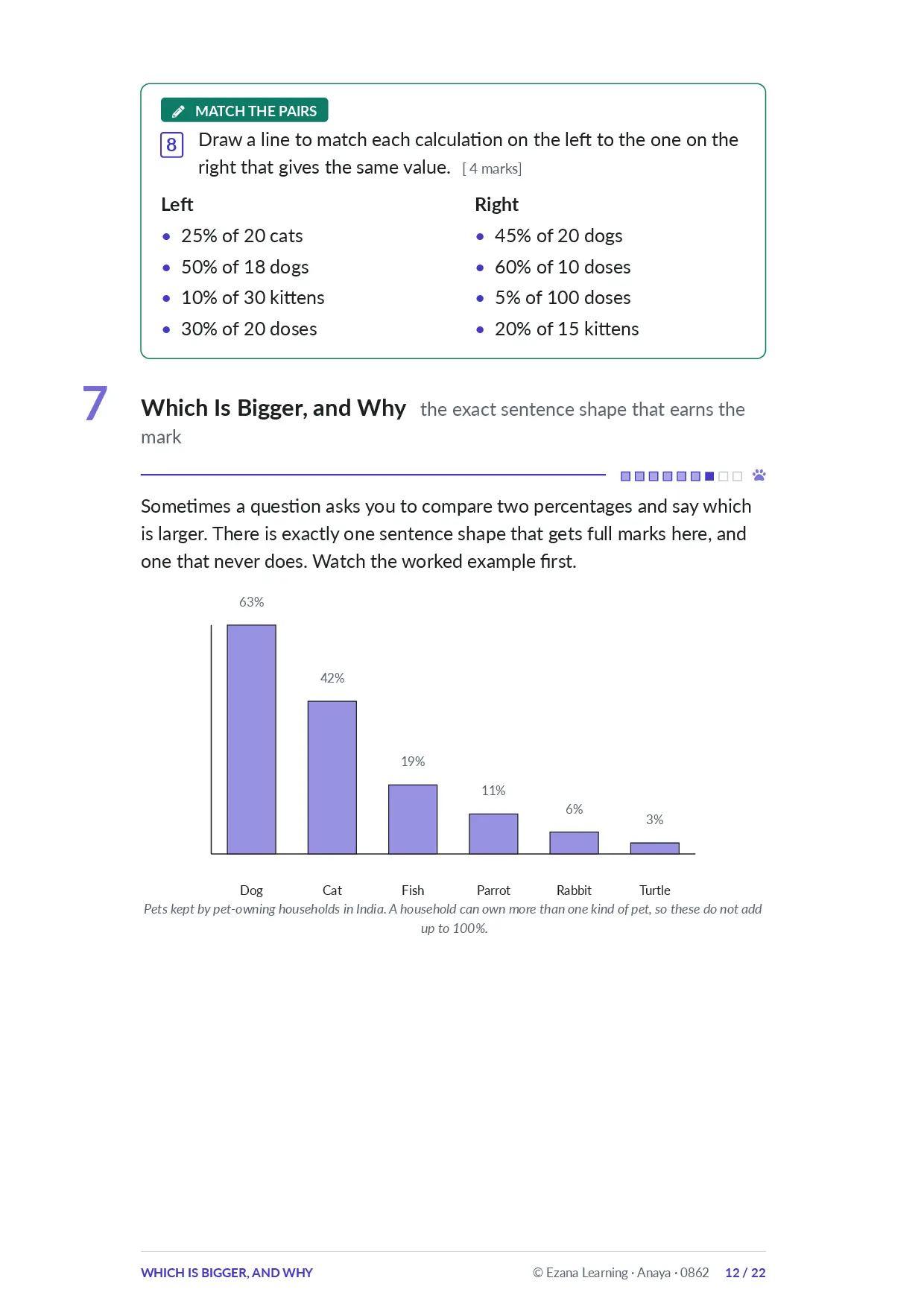
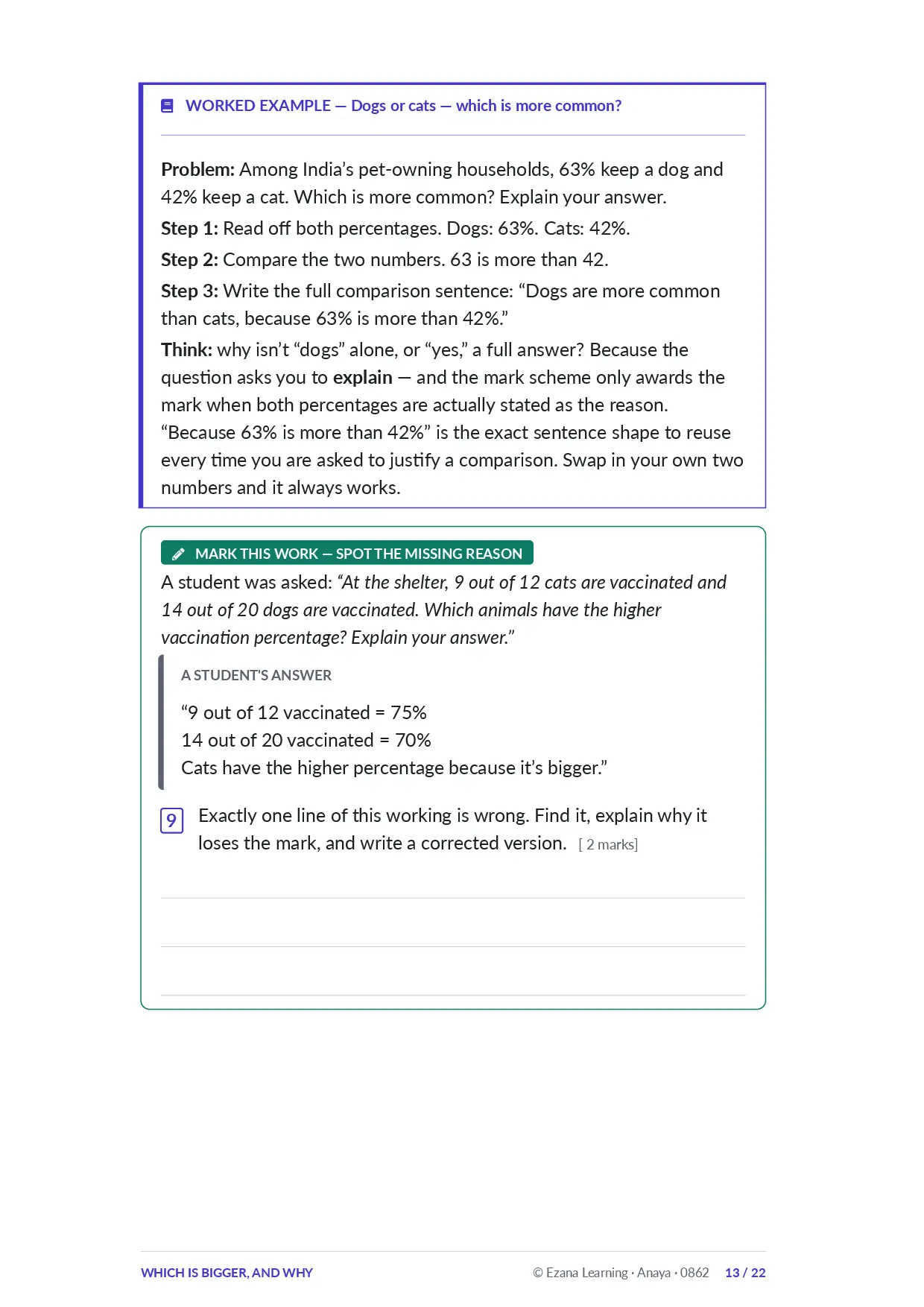
- Same: objective codes, core maths ideas, check points, and answer pages.
- Different context: Ron works with Fortnite data; Anaya works with shelter and wildlife counts.
- Different step detail: Anaya gets more fully worked examples; Ron moves to solo work sooner.
- Different tone: Ron's pages are competitive; Anaya's pages are warm and steady.
- Same promise in both: the child should be able to complete the kit alone and know, page by page, if they are on track.
The same care at IGCSE level
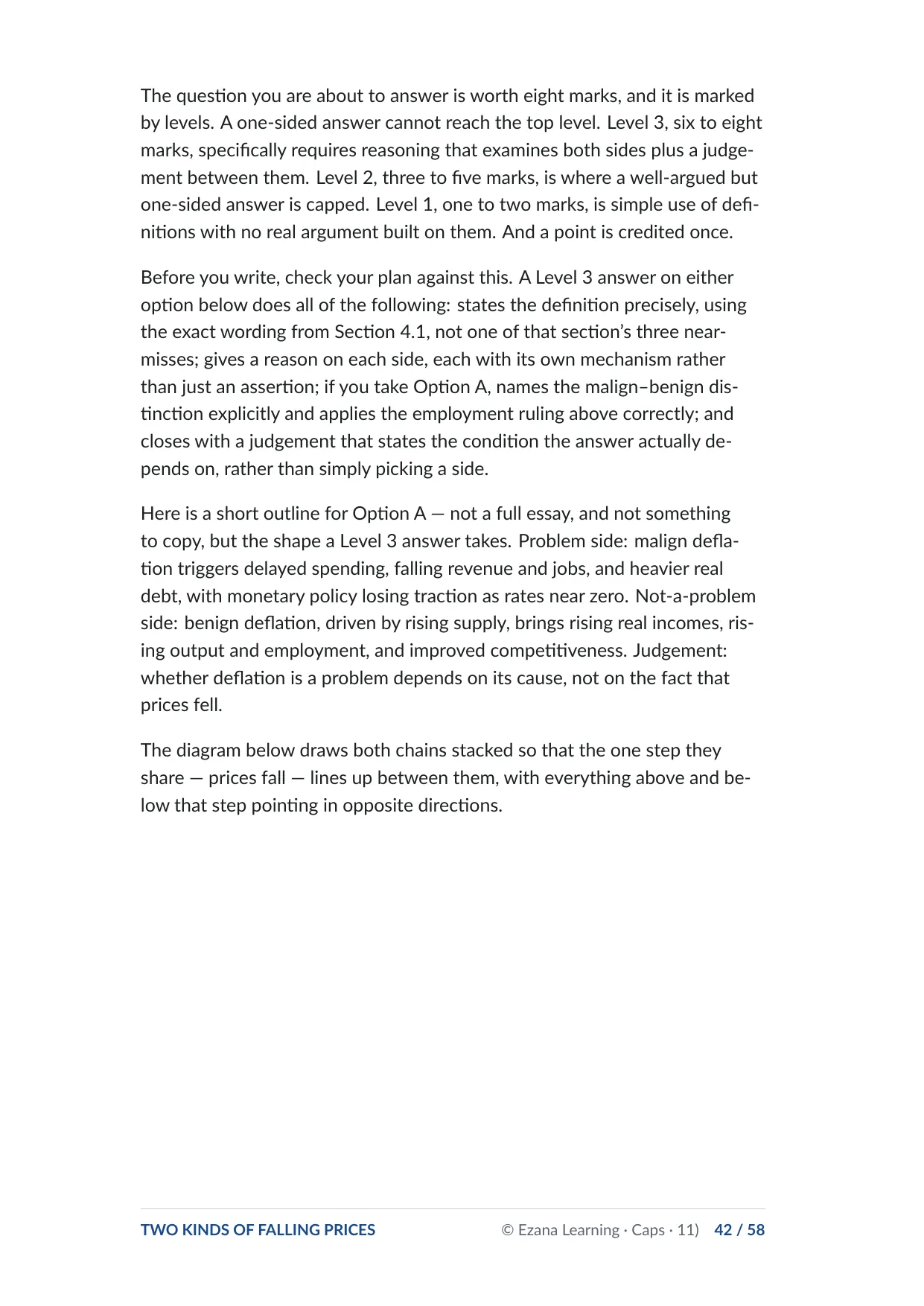
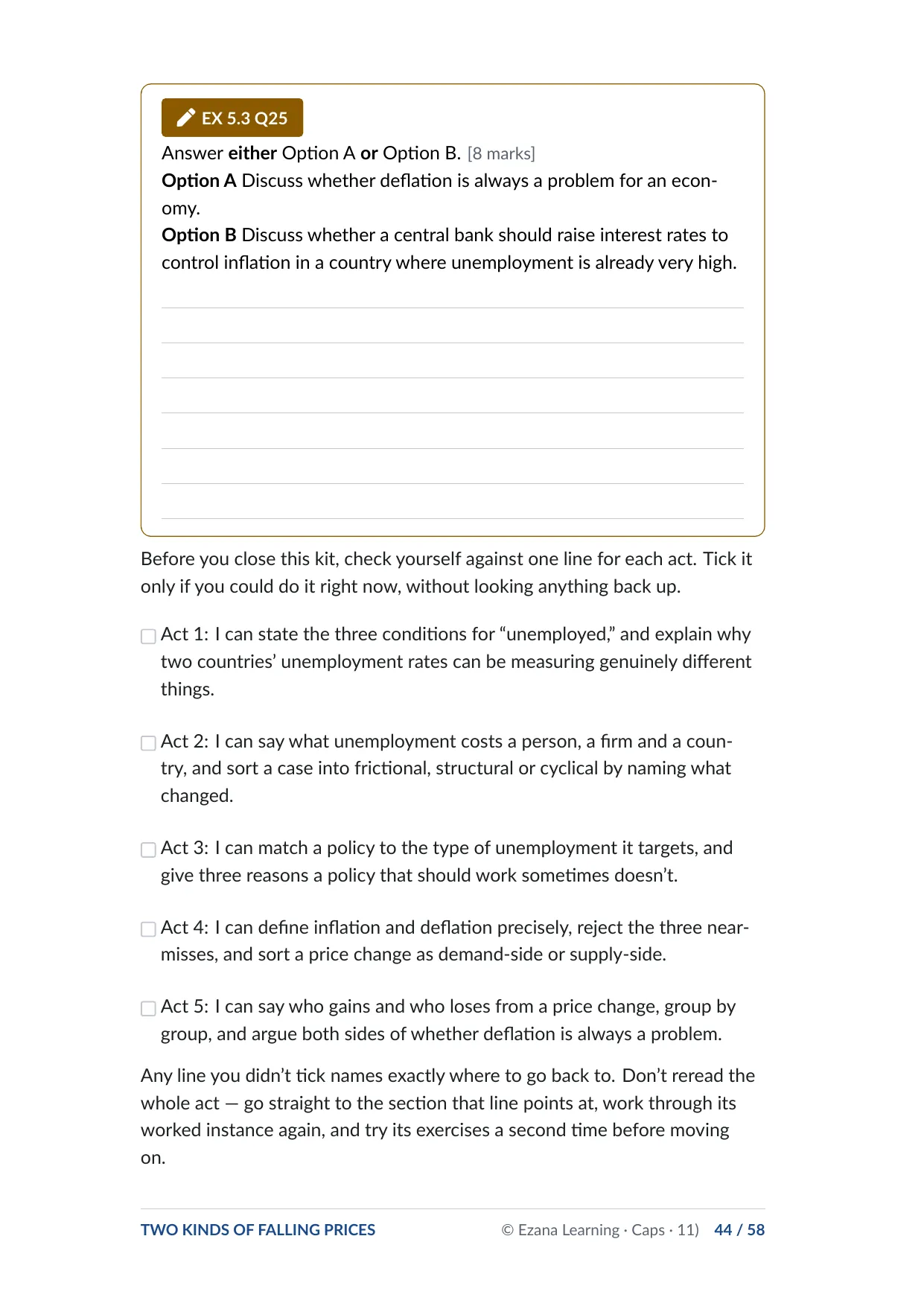
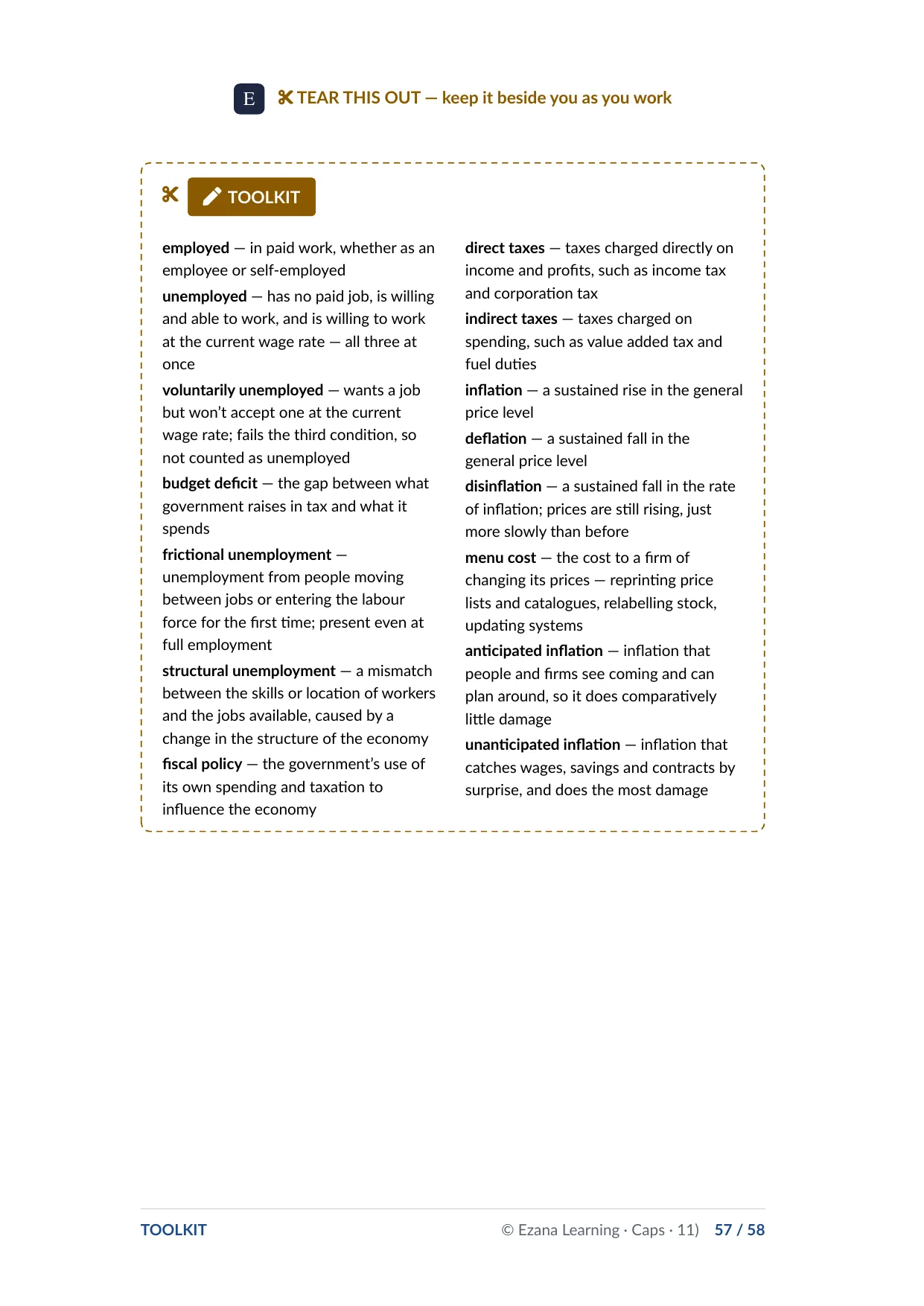
A chapter kit is longer than a topic kit, but the writing and teaching rules stay the same. This one covers two Cambridge IGCSE Economics 0455 sections (employment and unemployment, inflation and deflation). It still follows the same pattern: teach clearly, check soon, then return to a real question the student cares about.
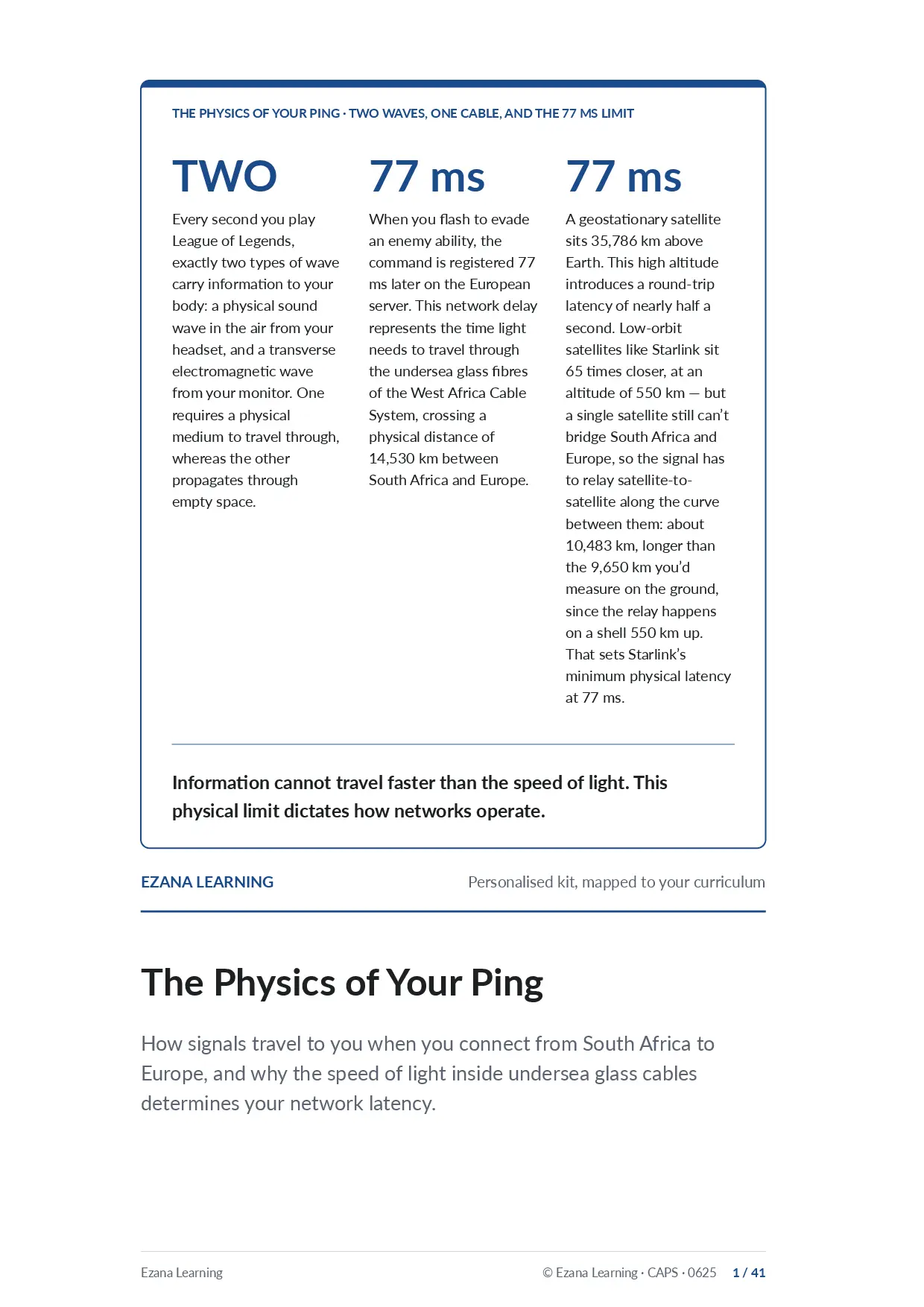
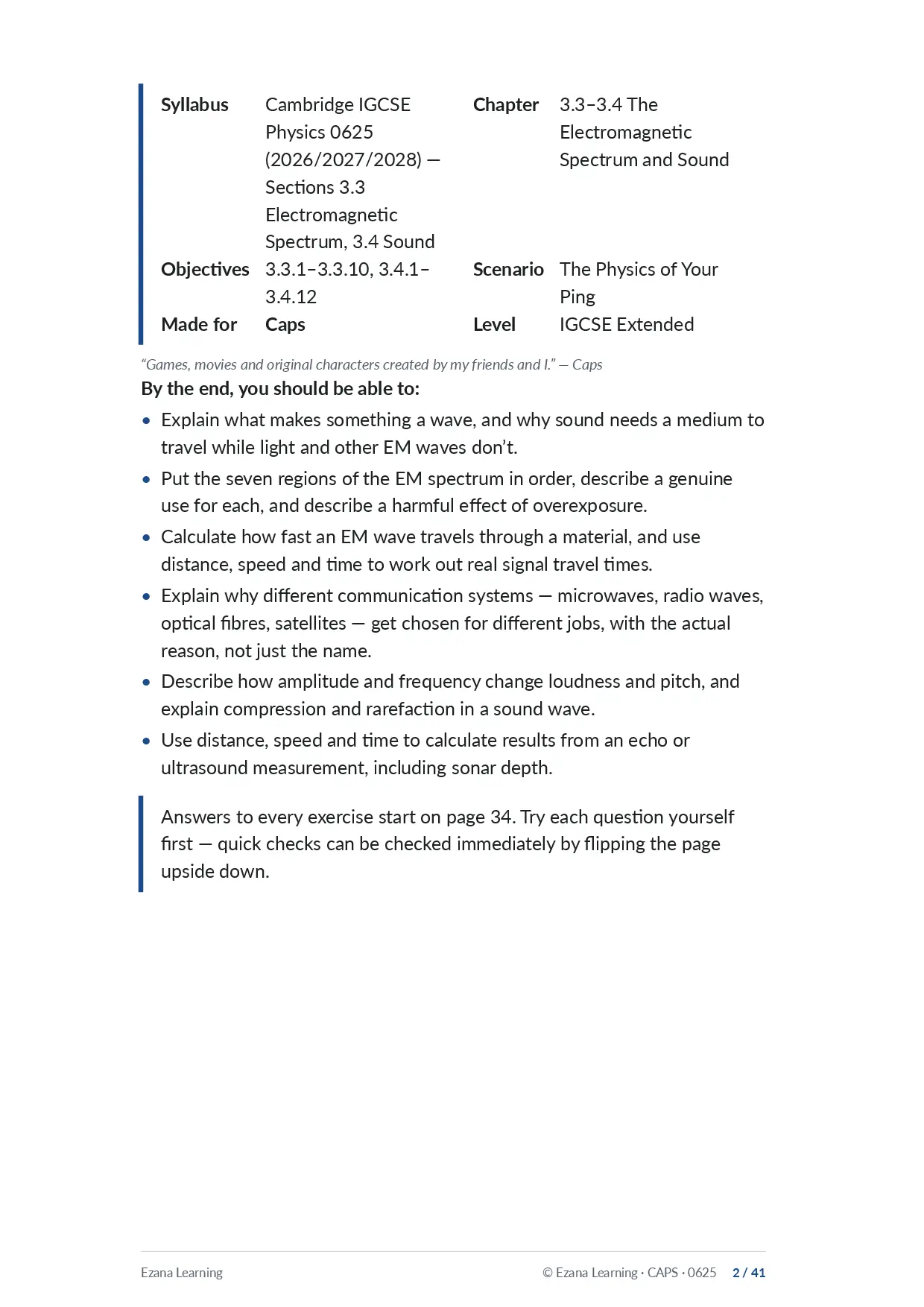
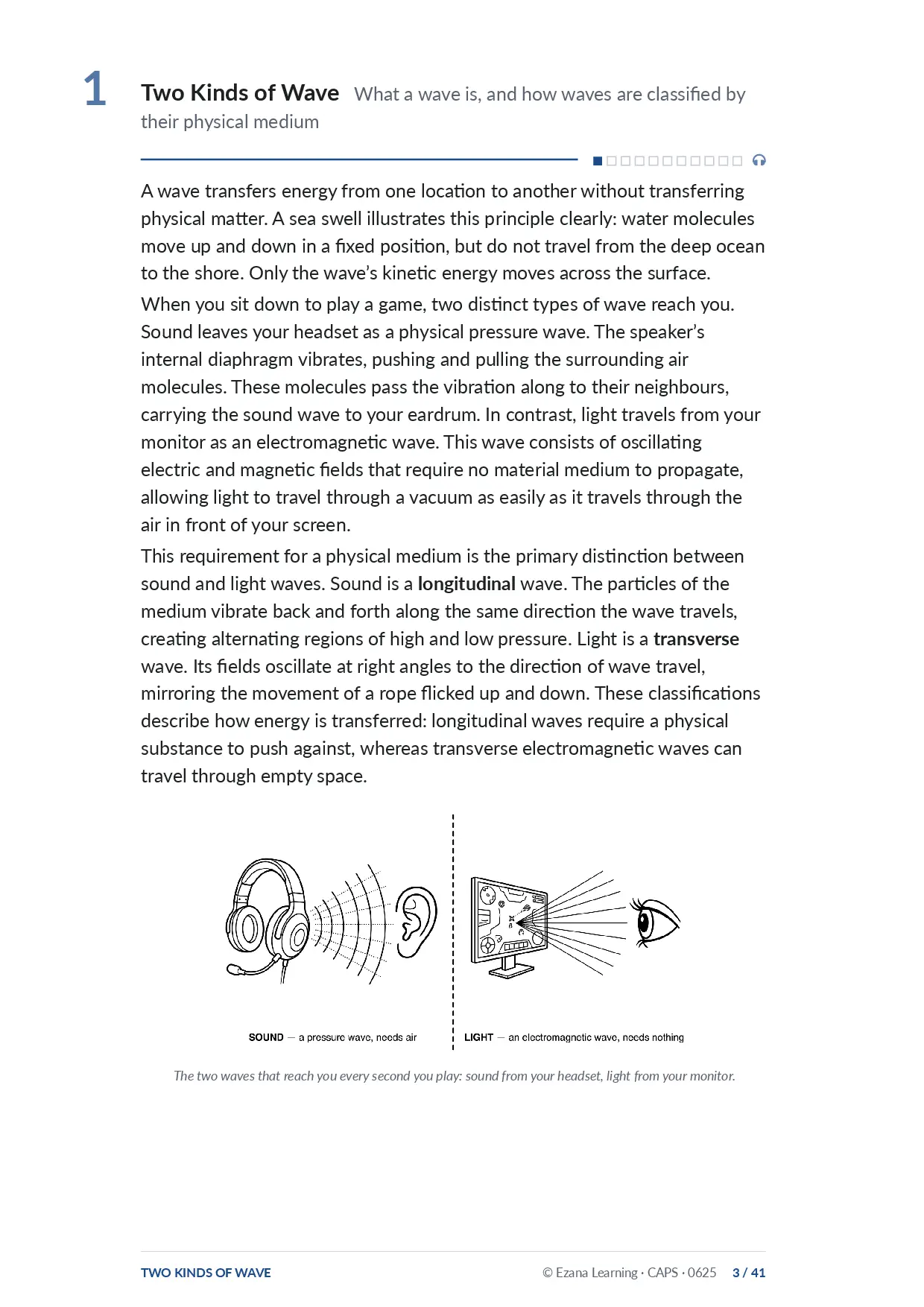
Caps — Economics: Employment & Unemployment
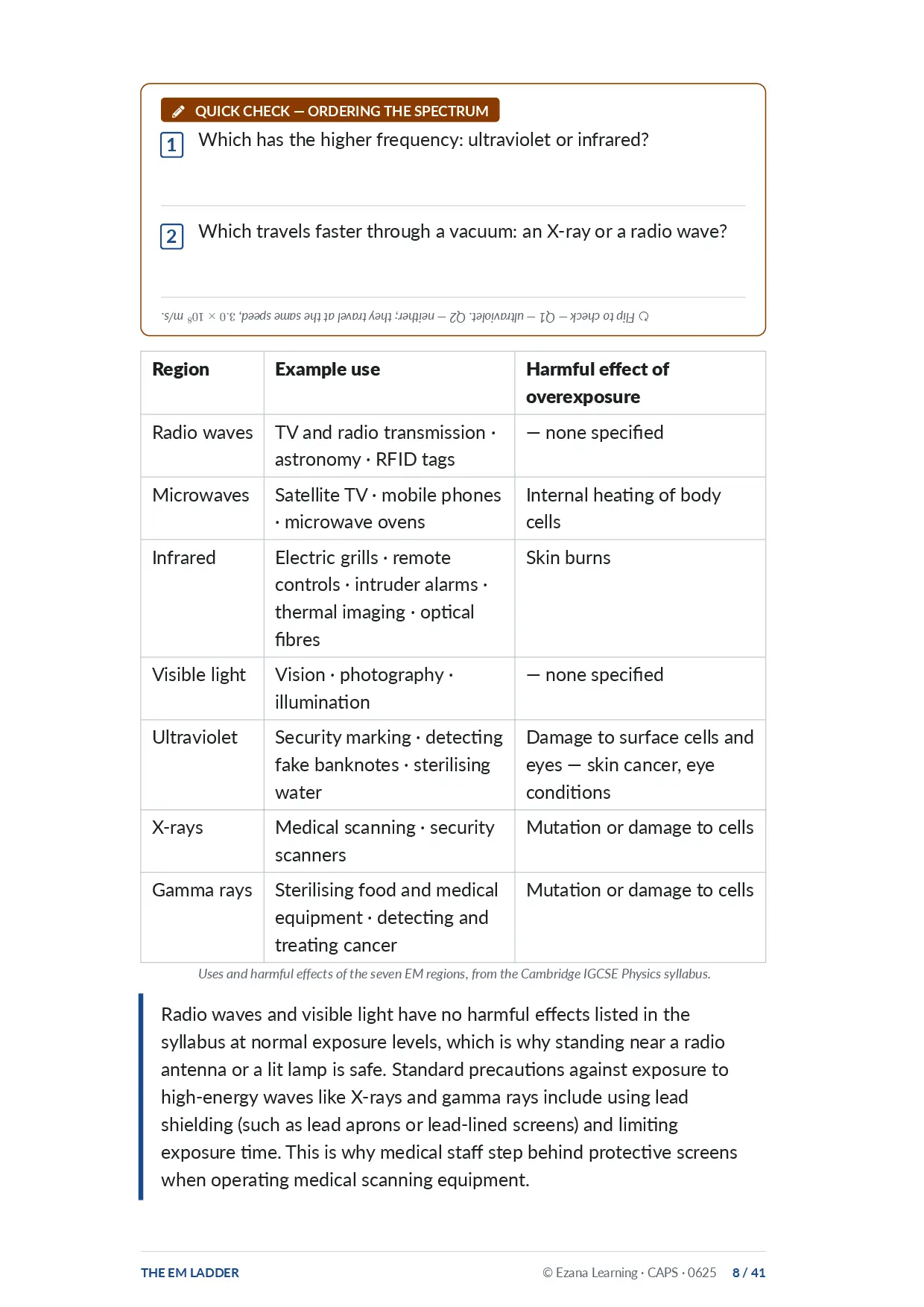
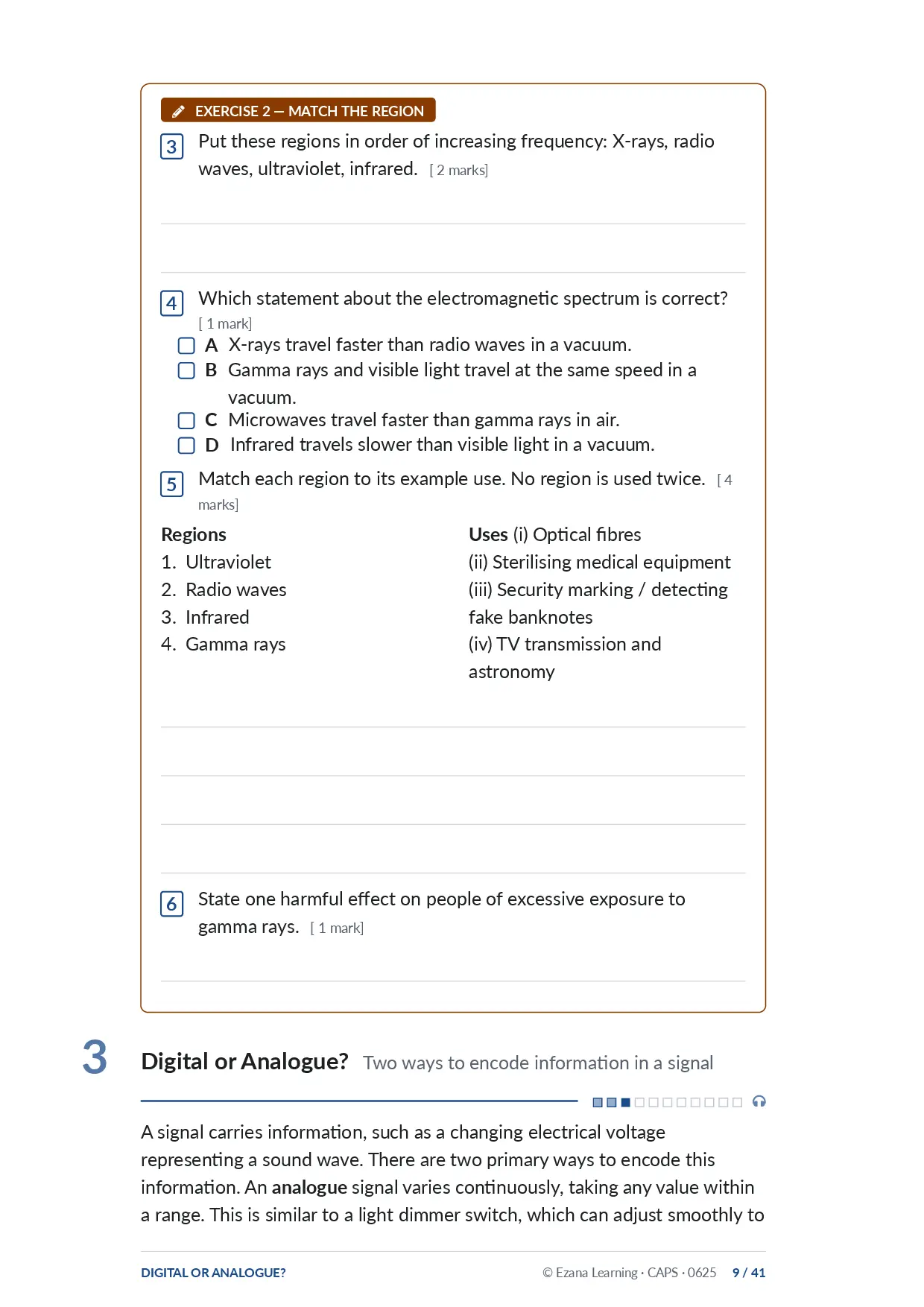
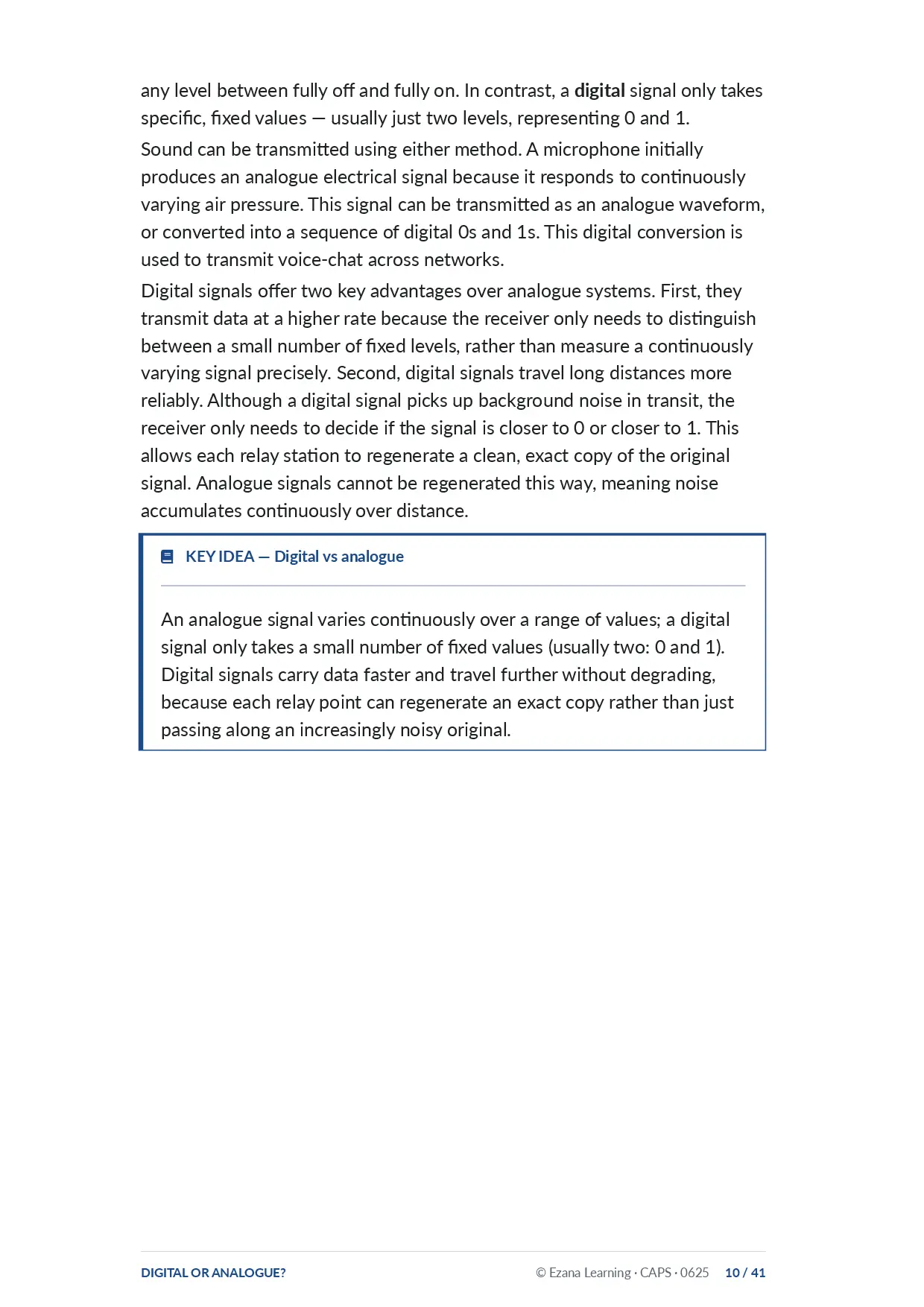
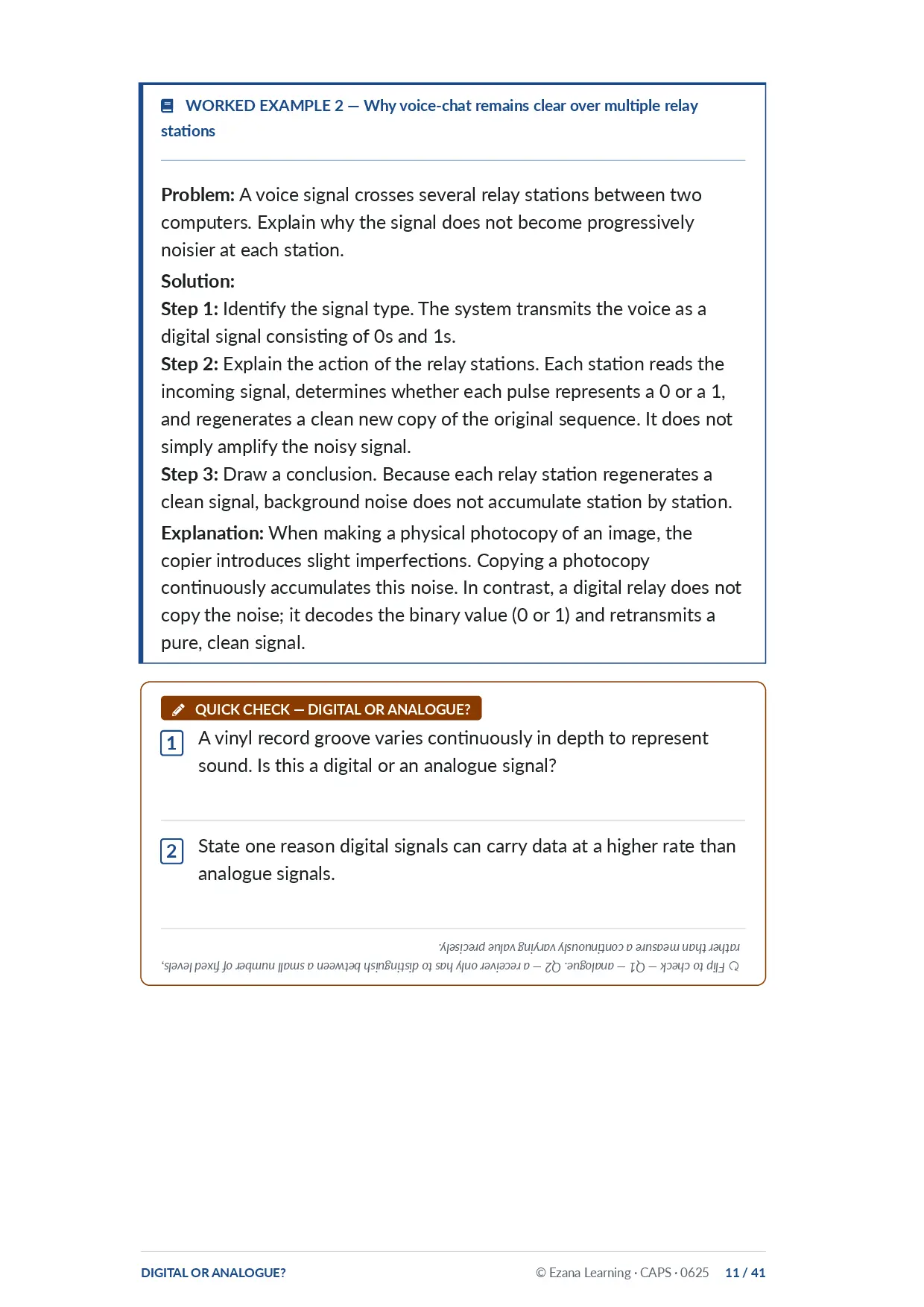
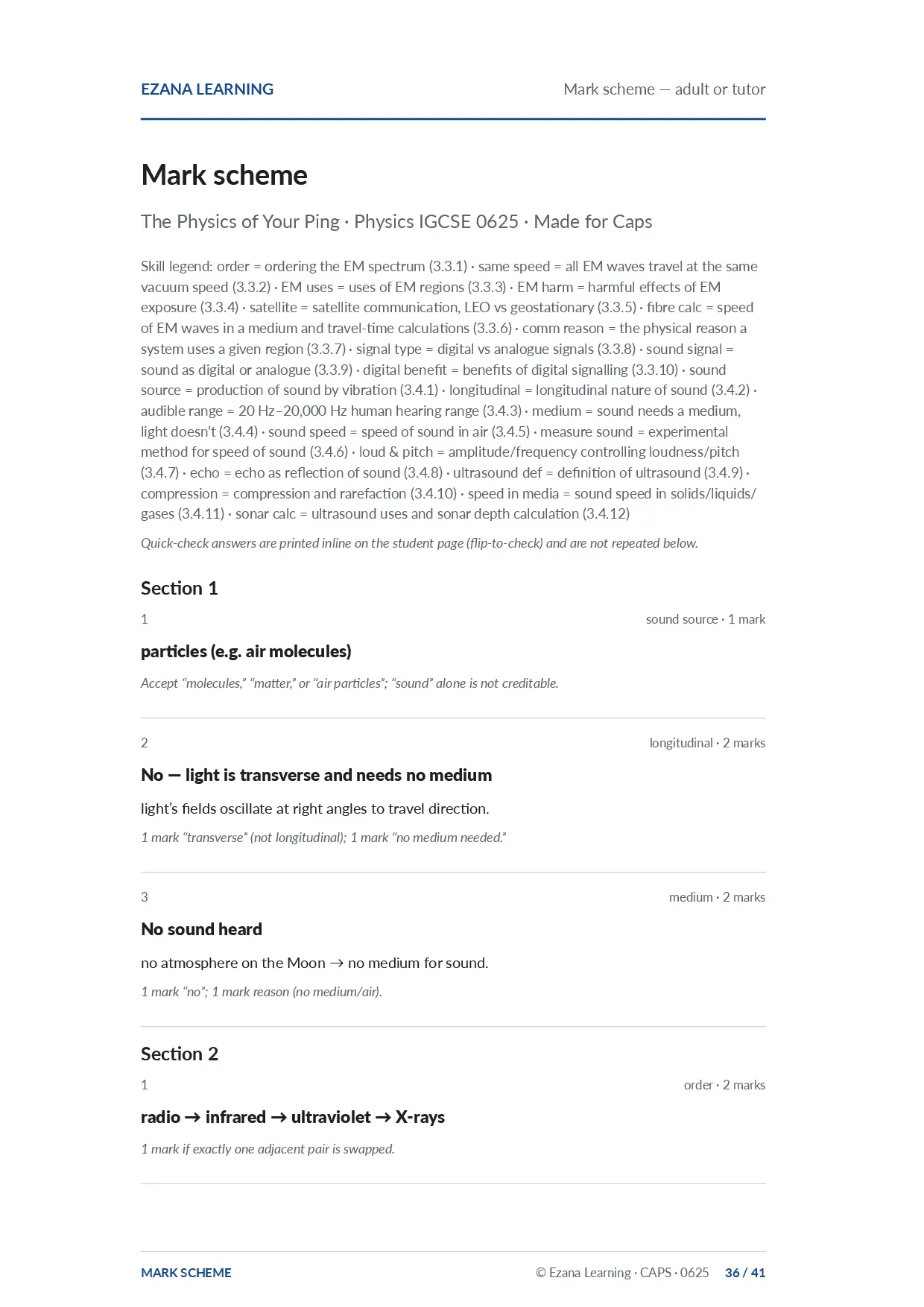
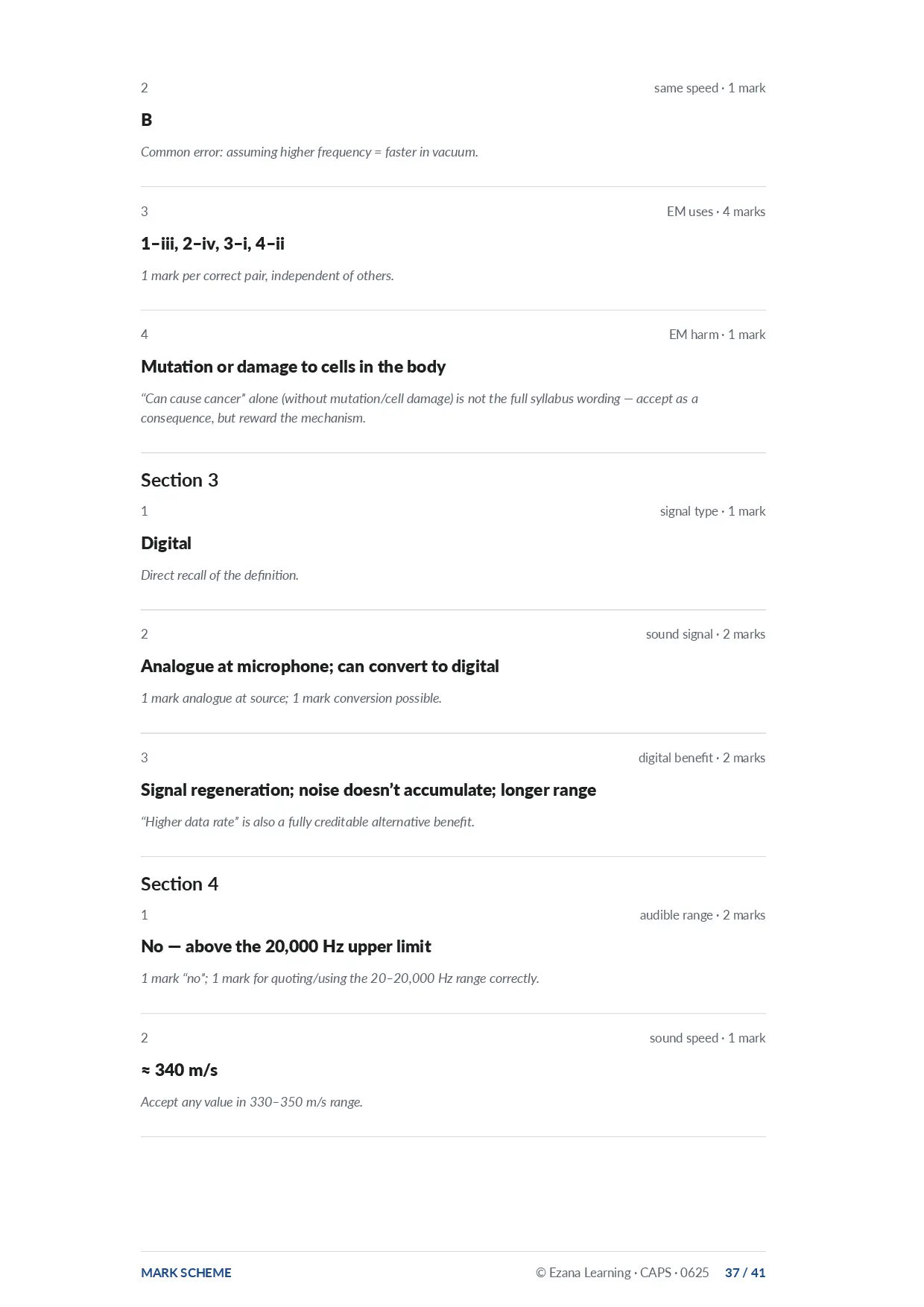
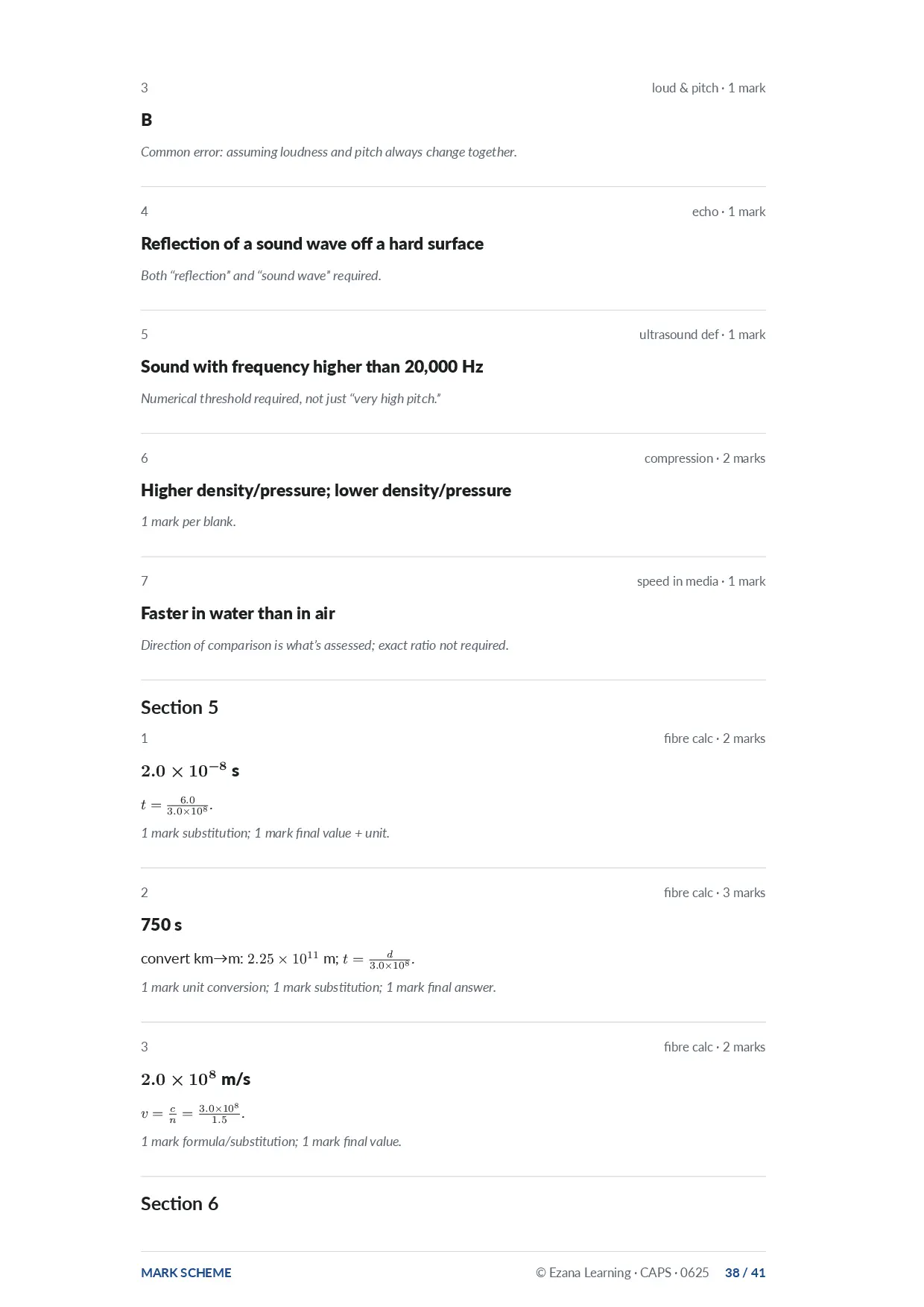
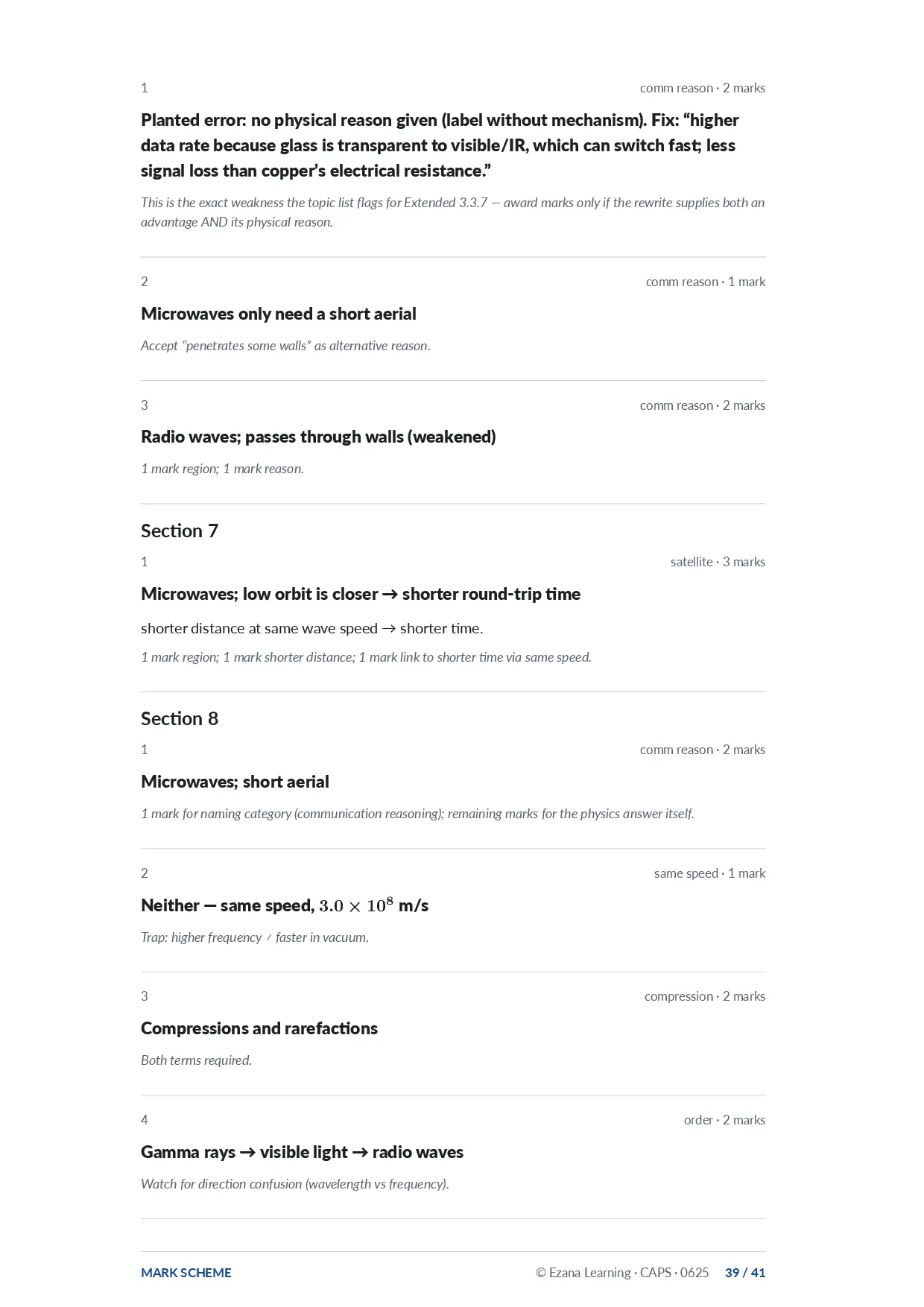
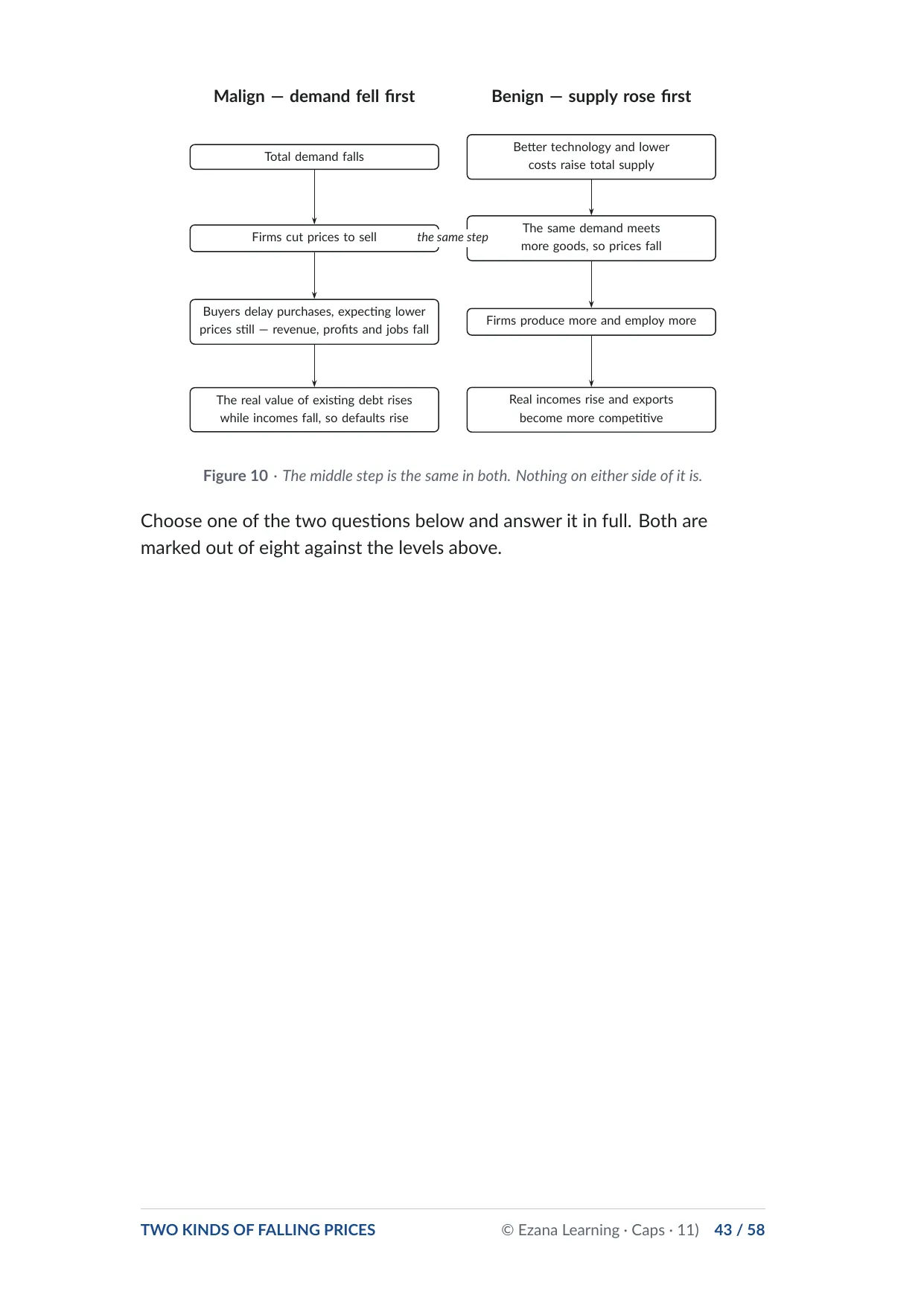
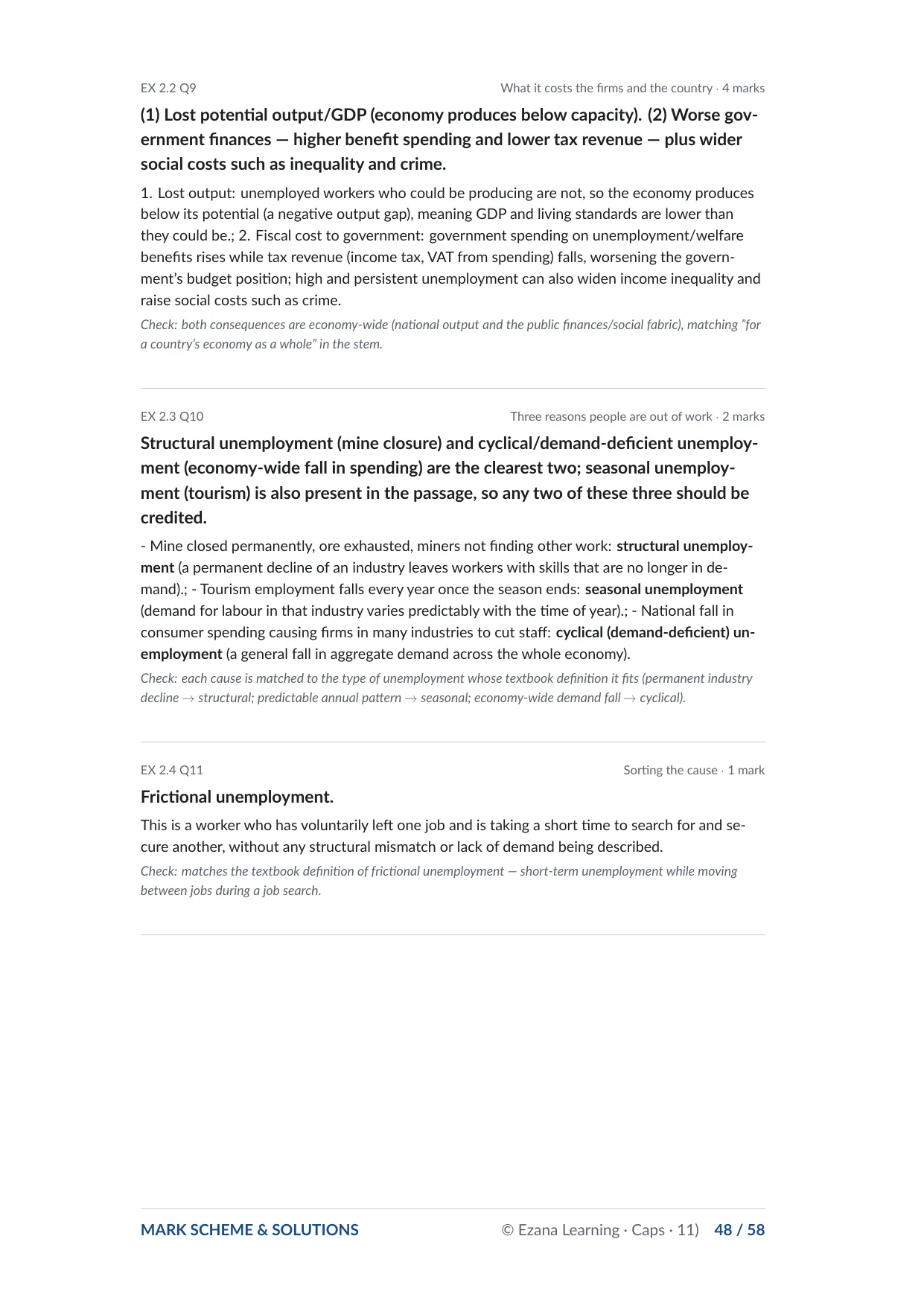
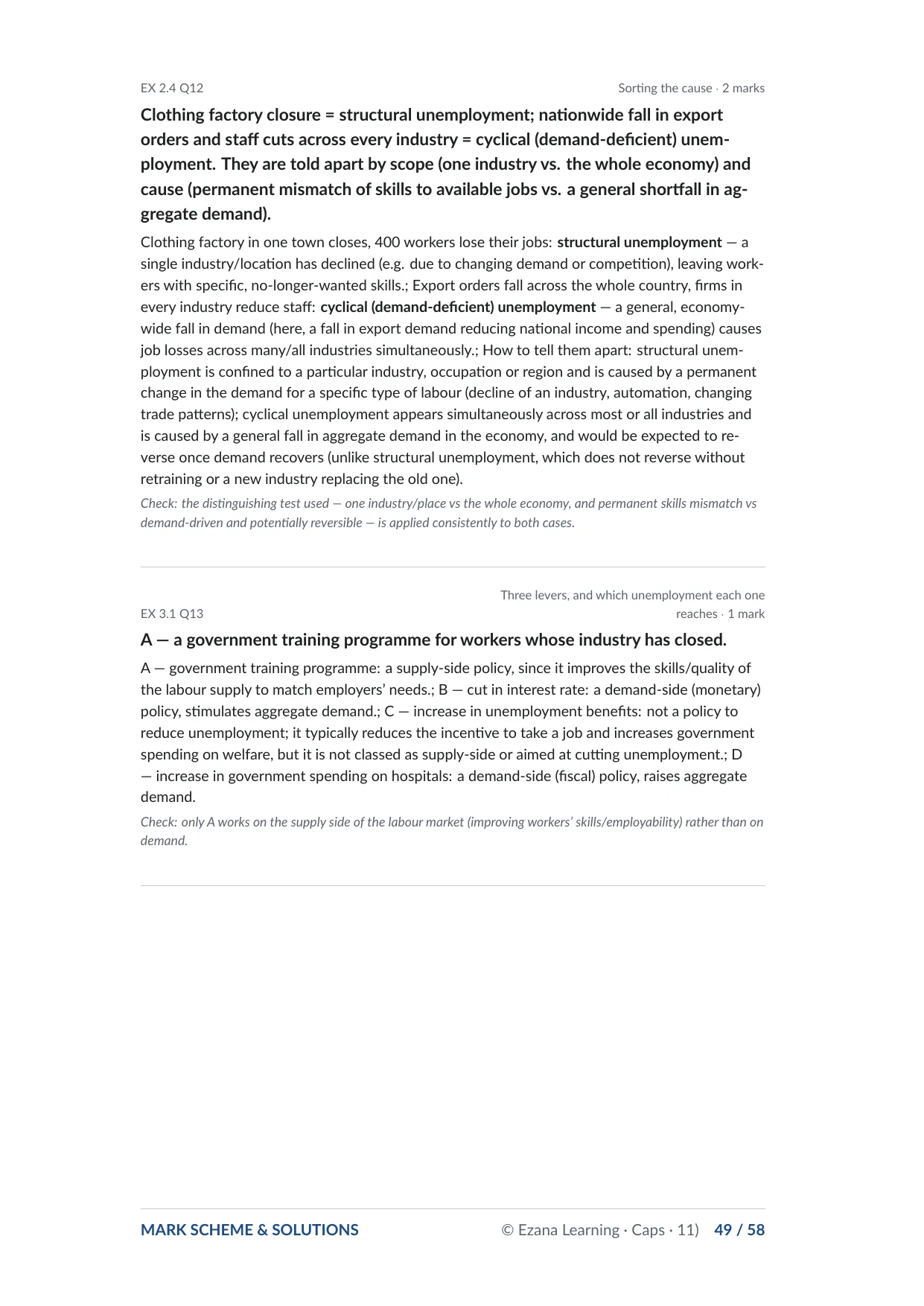
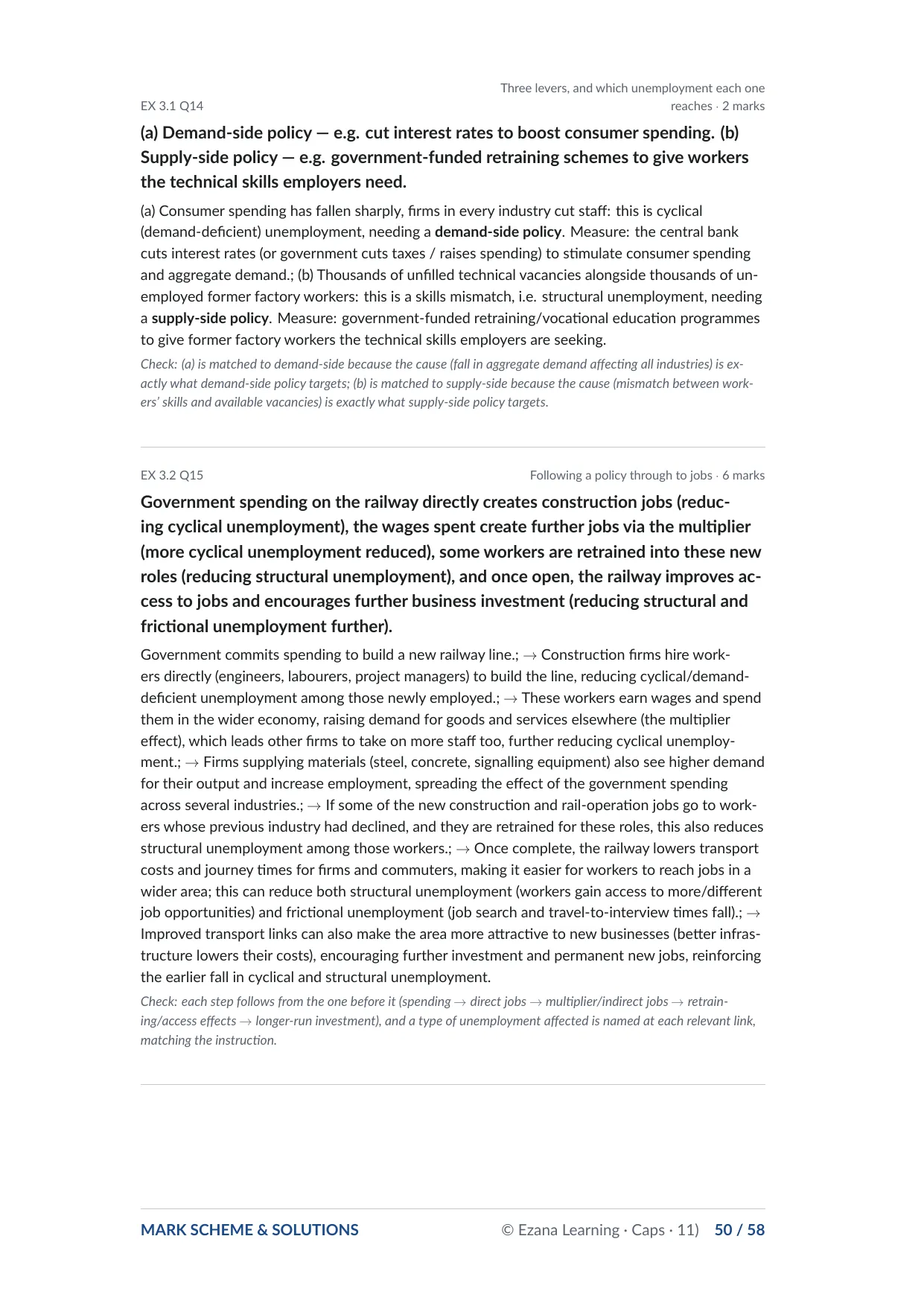
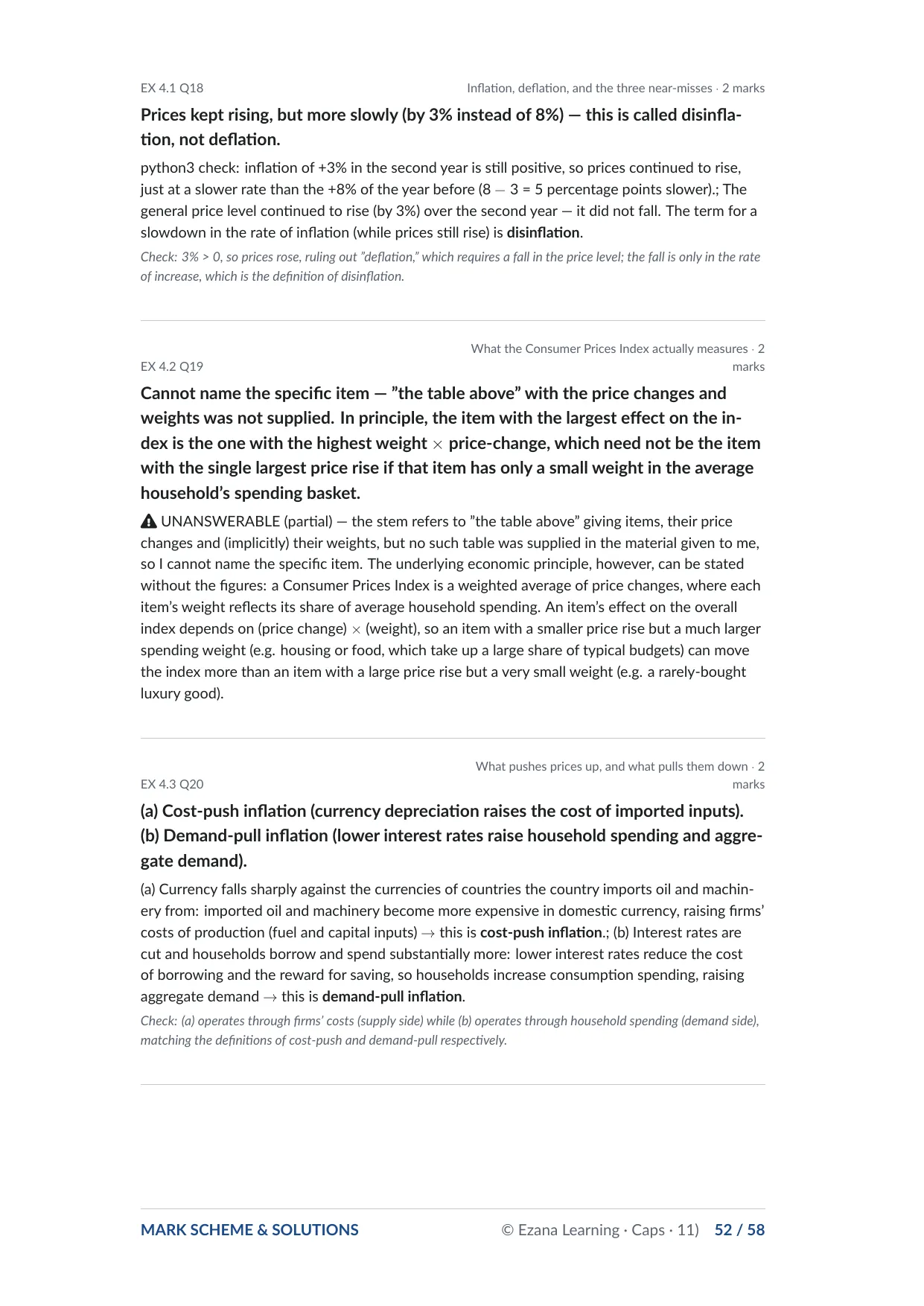
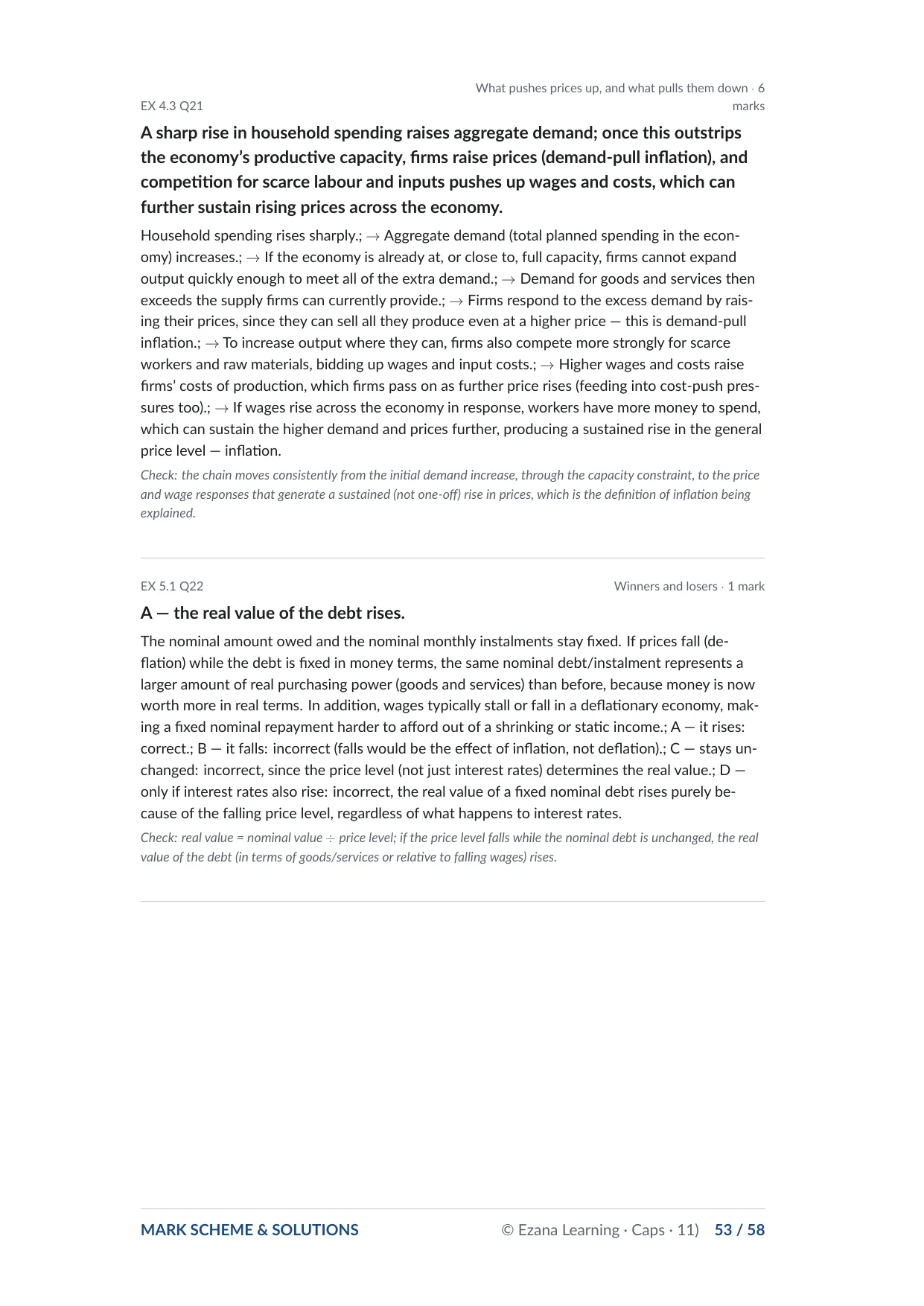
Economics 0455 · IGCSE · Employment, unemployment, inflation & deflation (4.7–4.8) · 58 pages · chapter kitCaps is 17 and asked for rigour rather than reassurance — mature arguments, no timed sections, and answers he can check himself. So this Economics chapter kit works through the whole unemployment and inflation unit using real comparative data, building from “Is unemployment bad, and if so why?” to its causes, its cures, and how inflation and deflation are actually measured.
- Page 1 opens with three real unemployment paradoxes — Malawi reporting lower unemployment than the UK, one country publishing two different rates, and Zimbabwe’s rate moving without anyone gaining or losing a job — each one explained before the section ends (page 1).
- The whole topic is anchored in real comparative data — South Africa’s structural and youth unemployment set against the UK, USA, Malawi and Zimbabwe — so a student sees why the same policy doesn’t work everywhere, and why two countries measuring the same thing report different numbers.
Click any page to open the reader and page through the whole kit. You can also scroll the strip sideways.
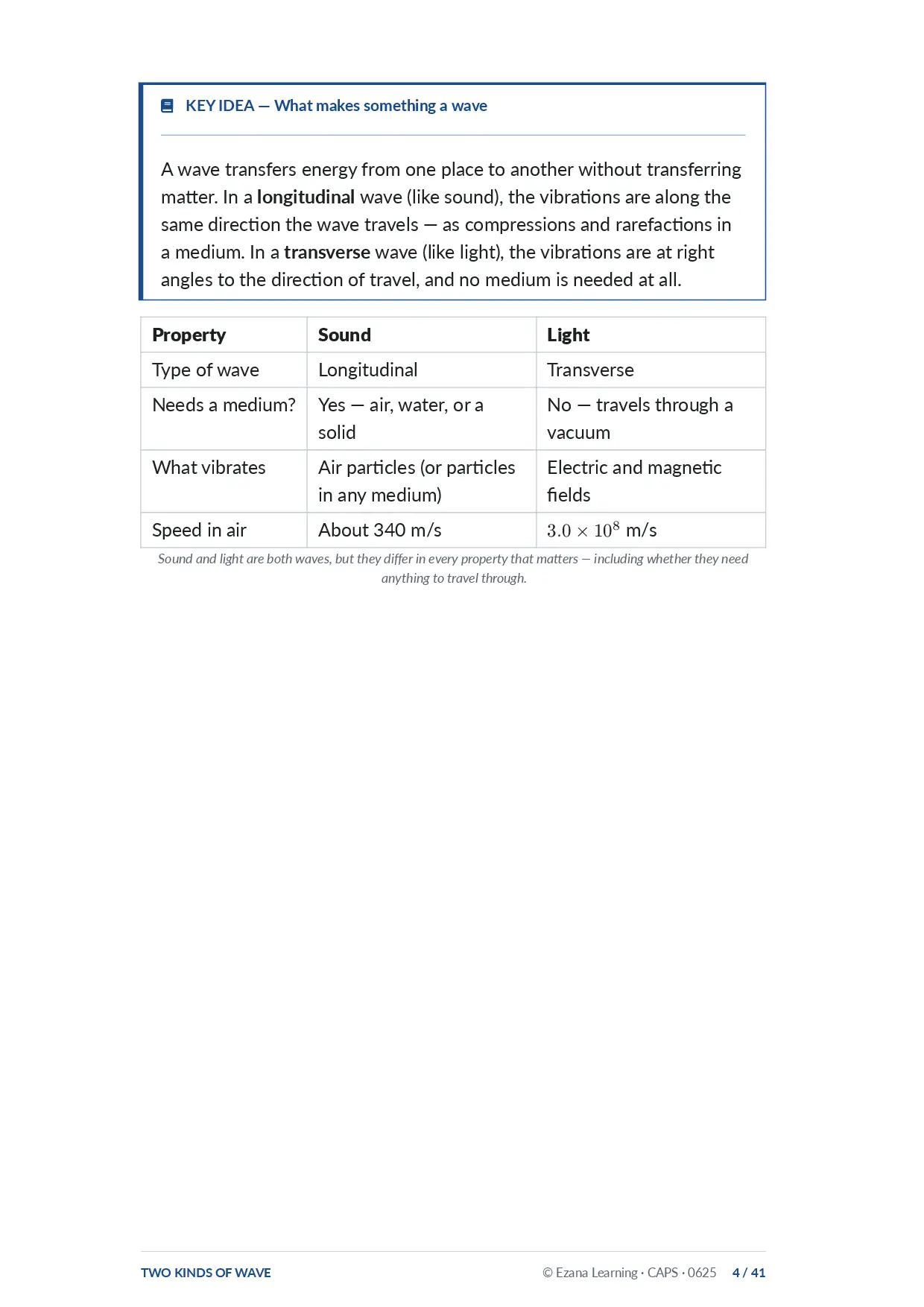
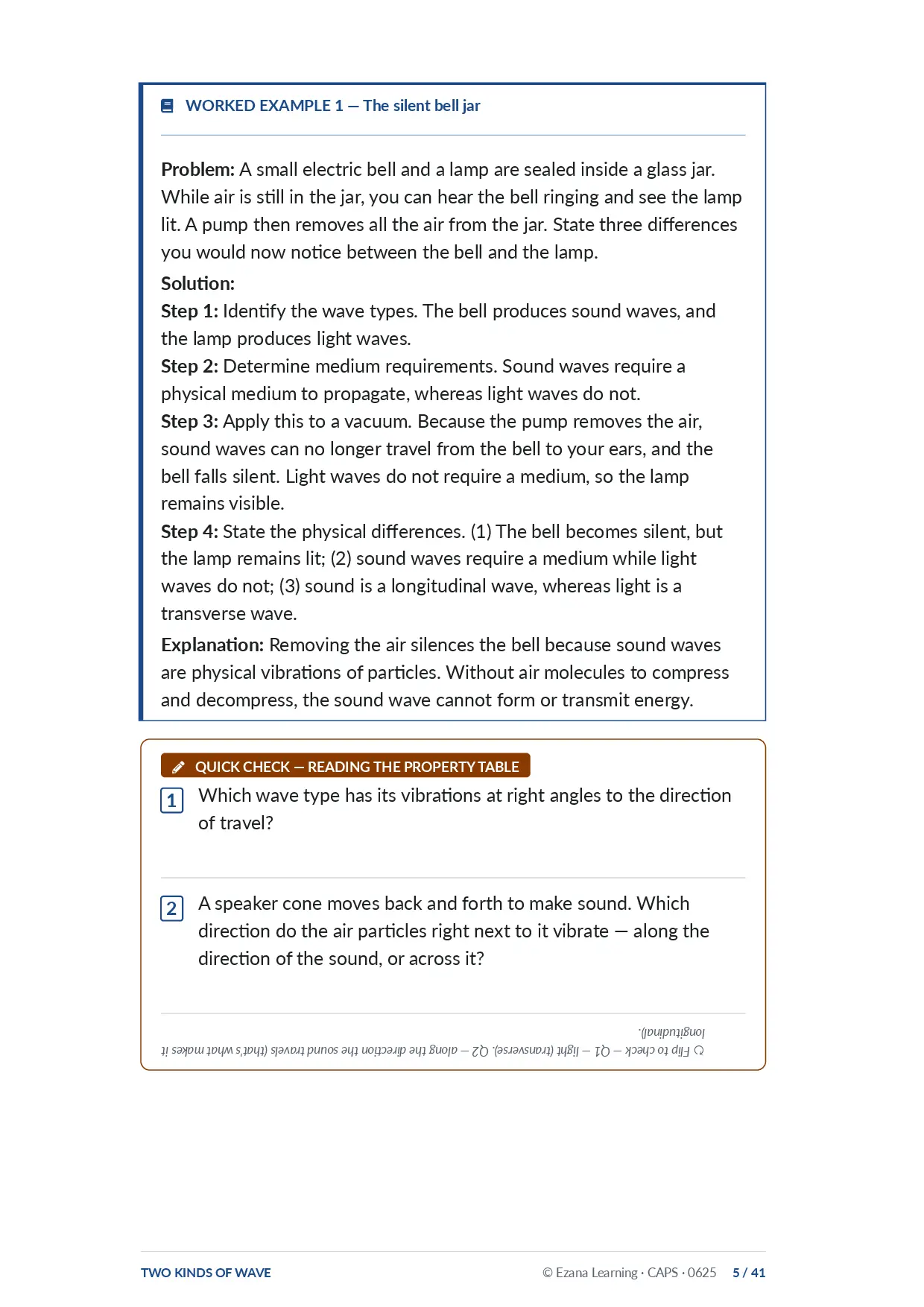
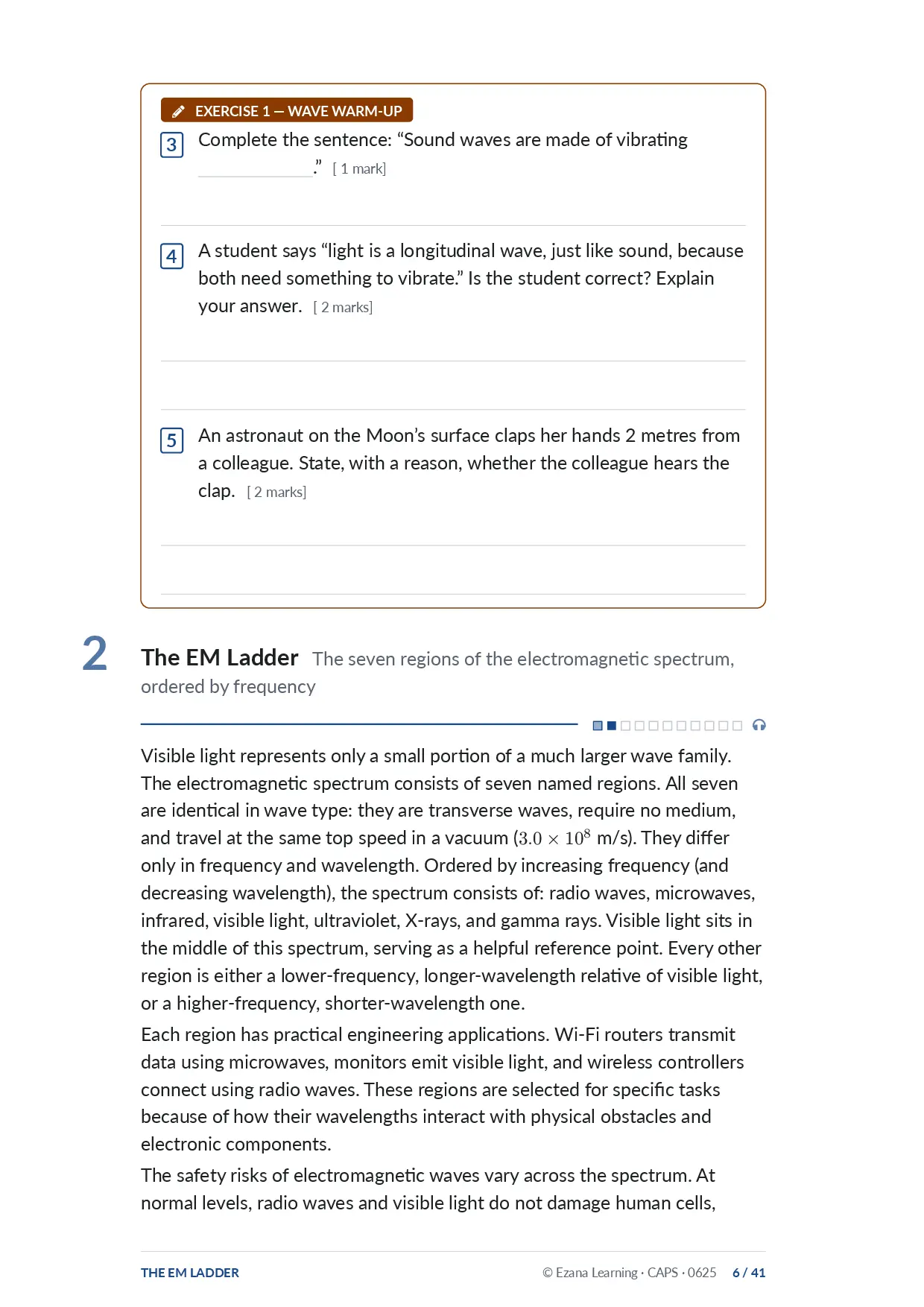
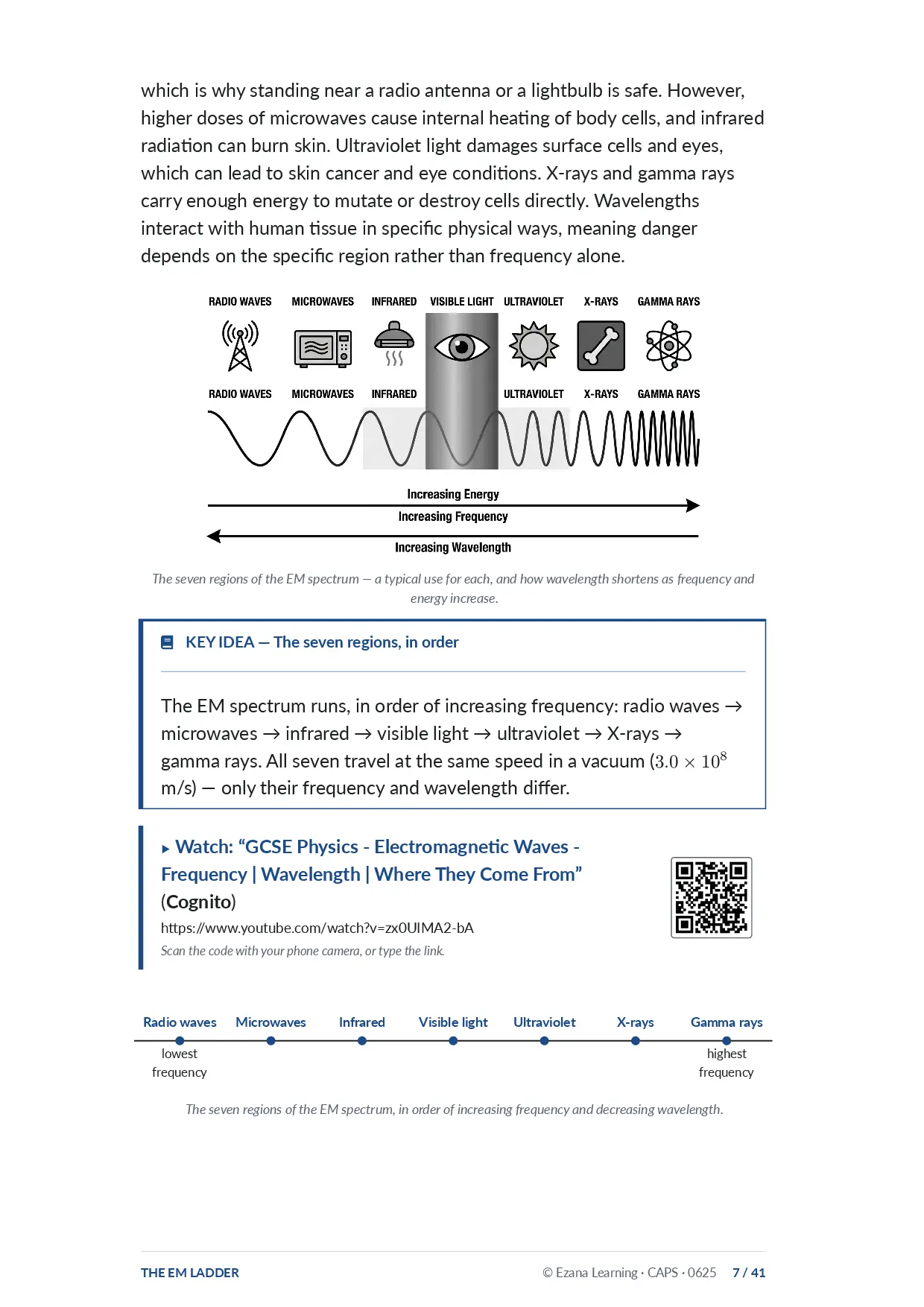
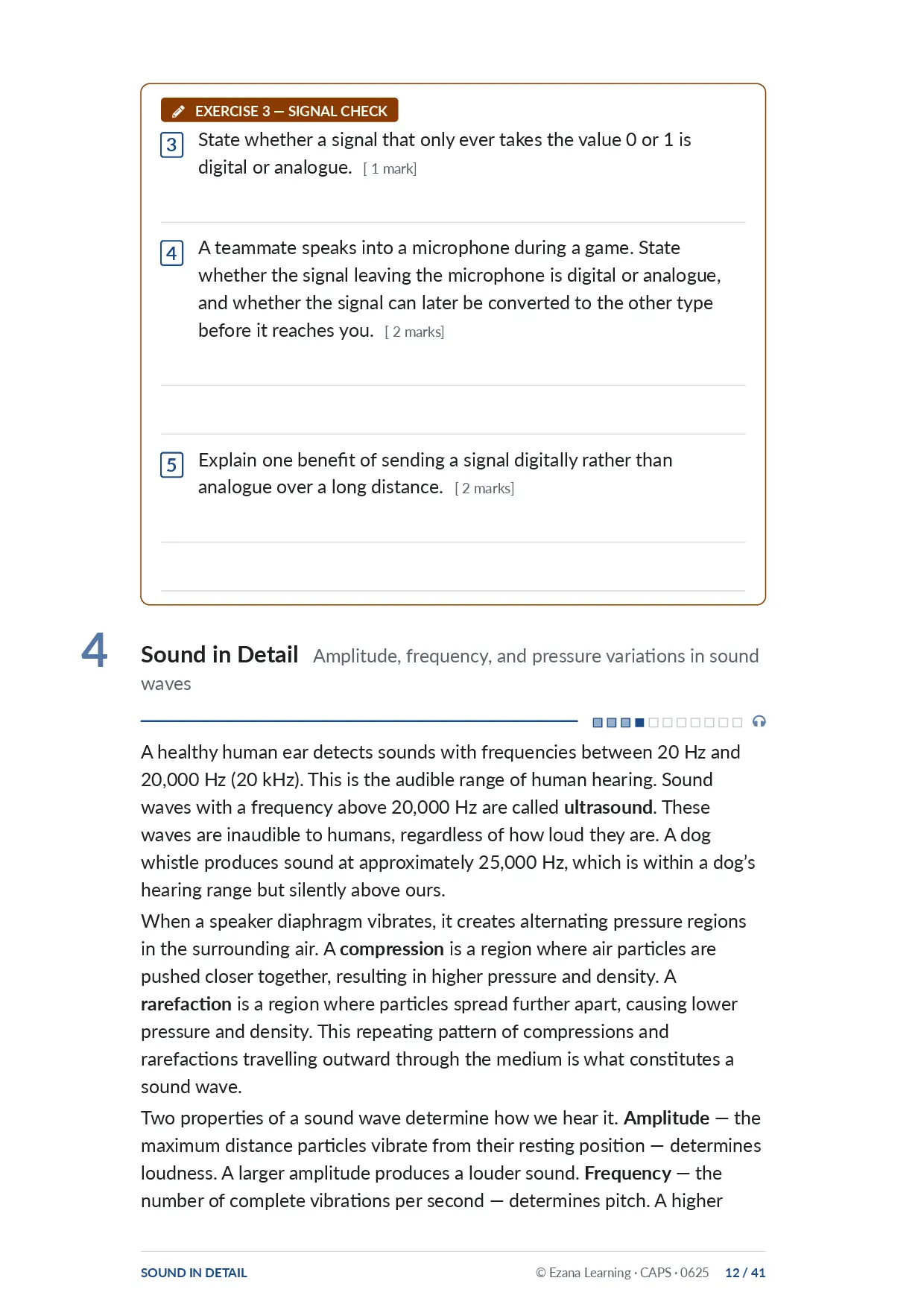
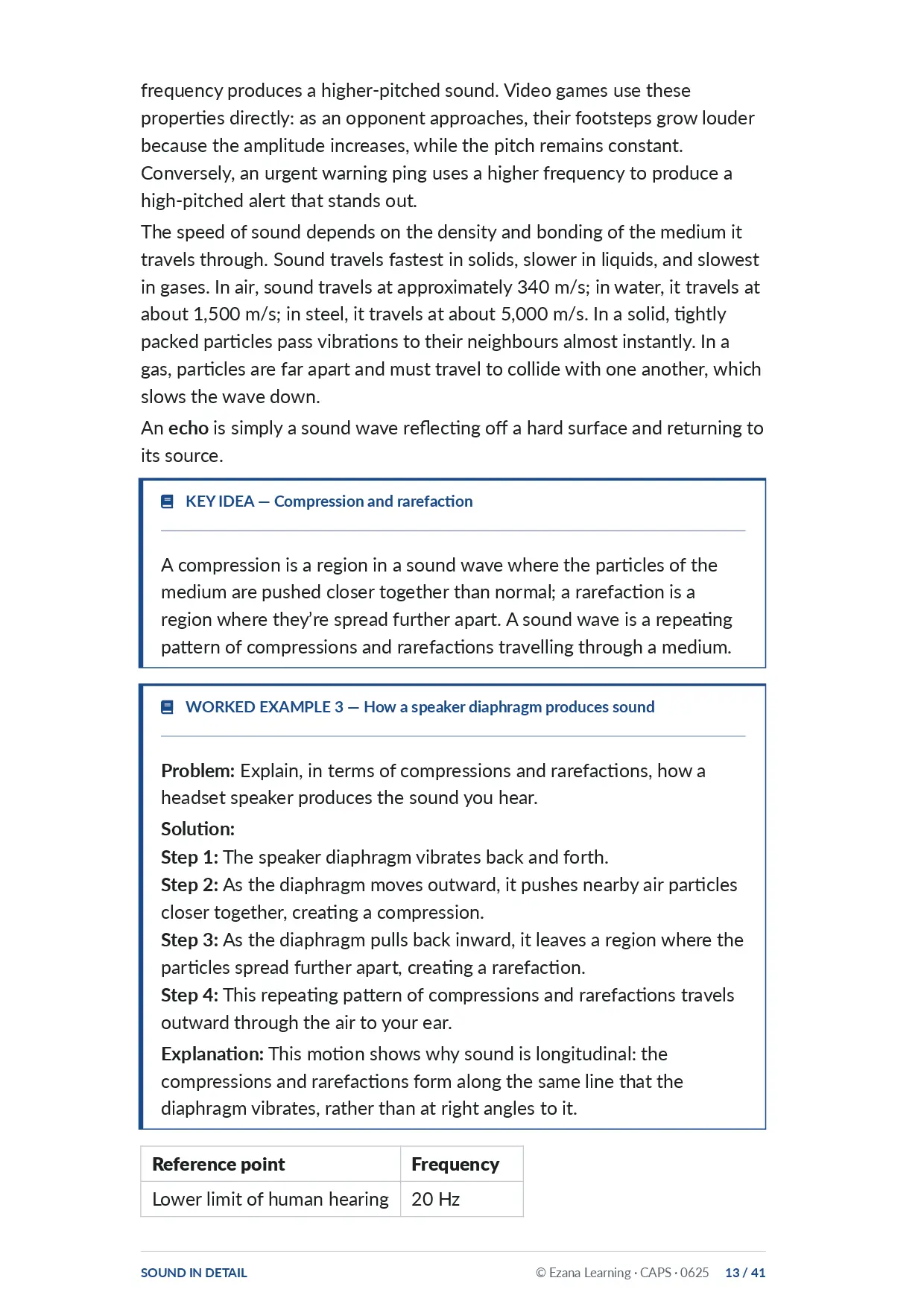
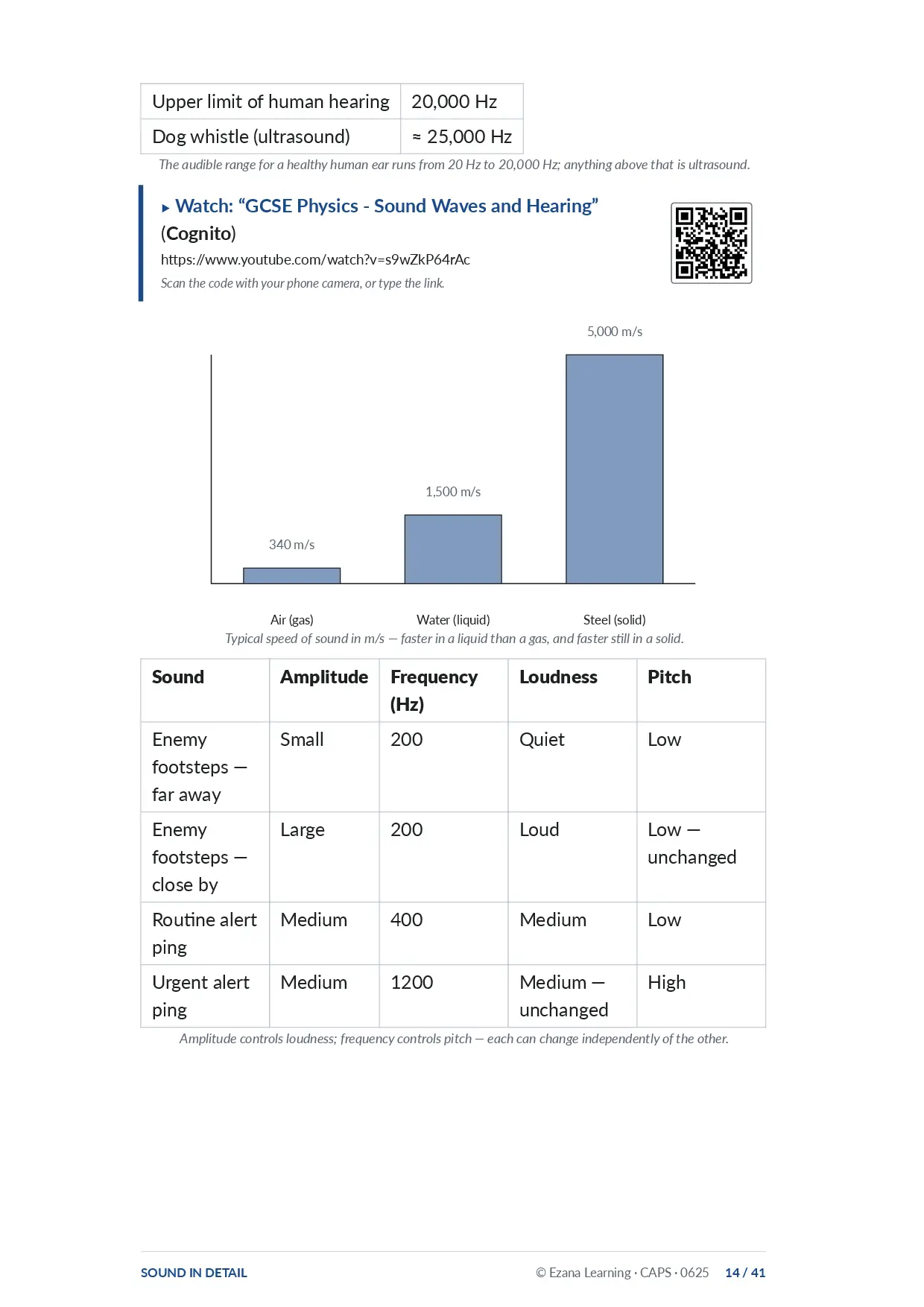
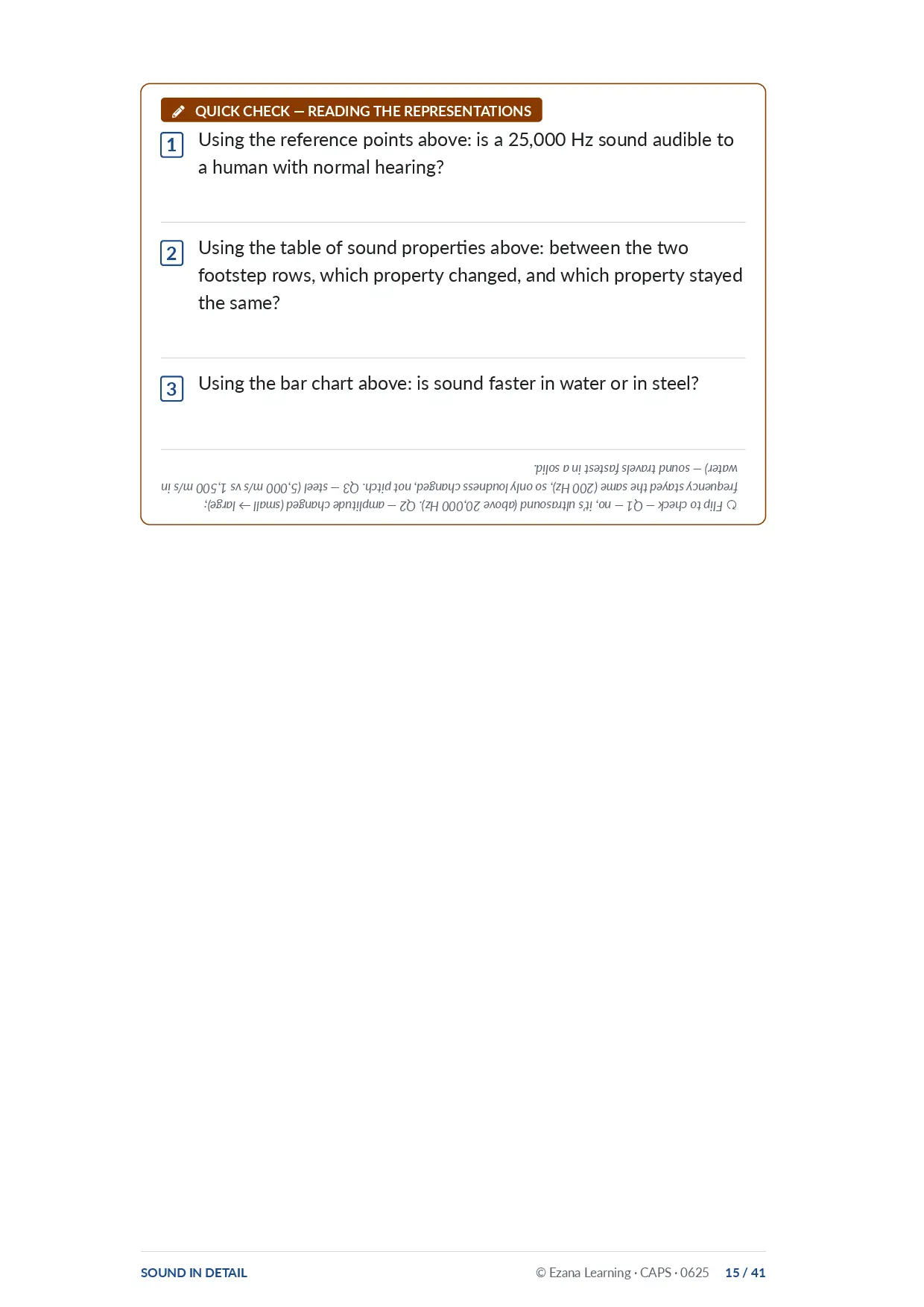
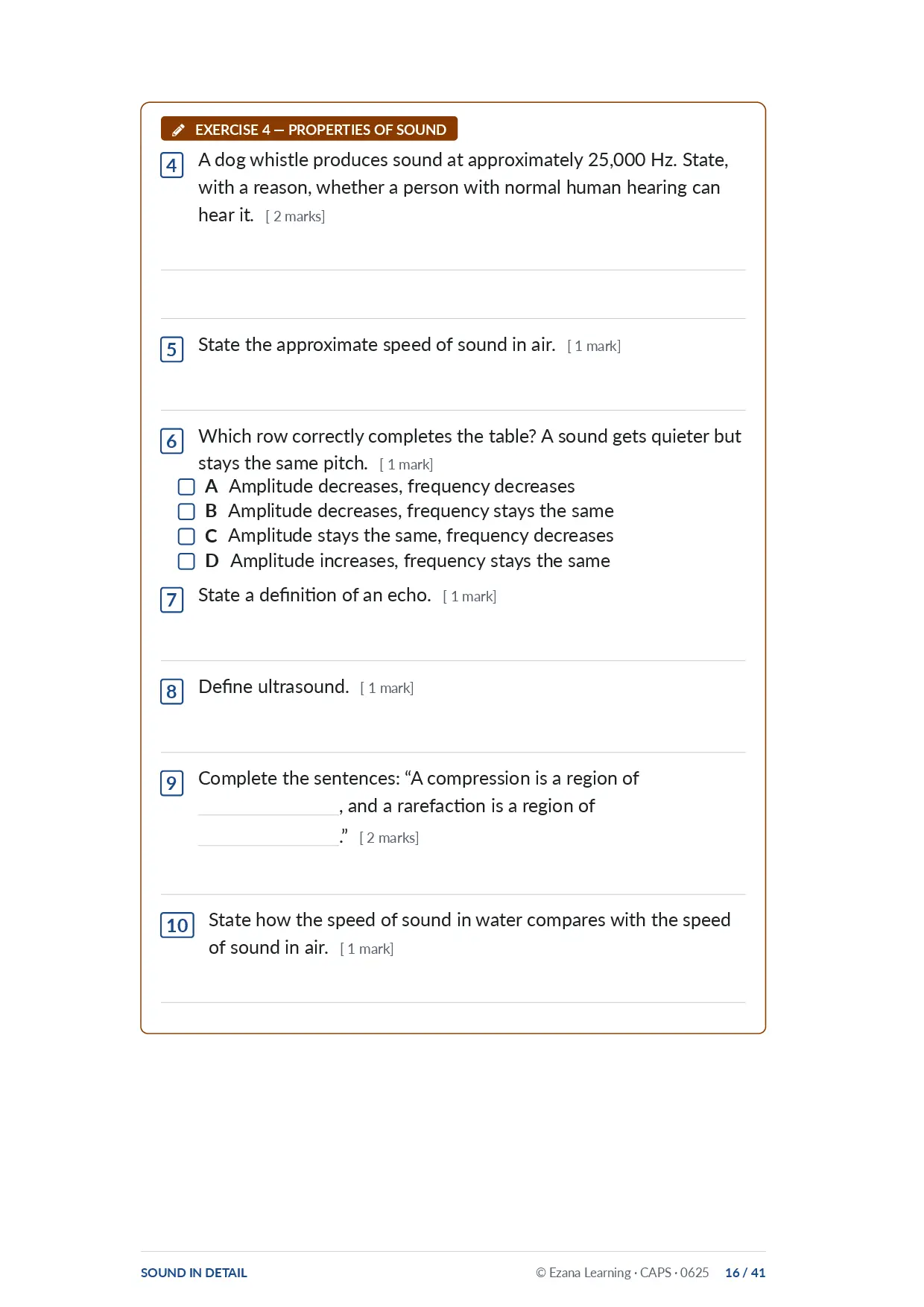
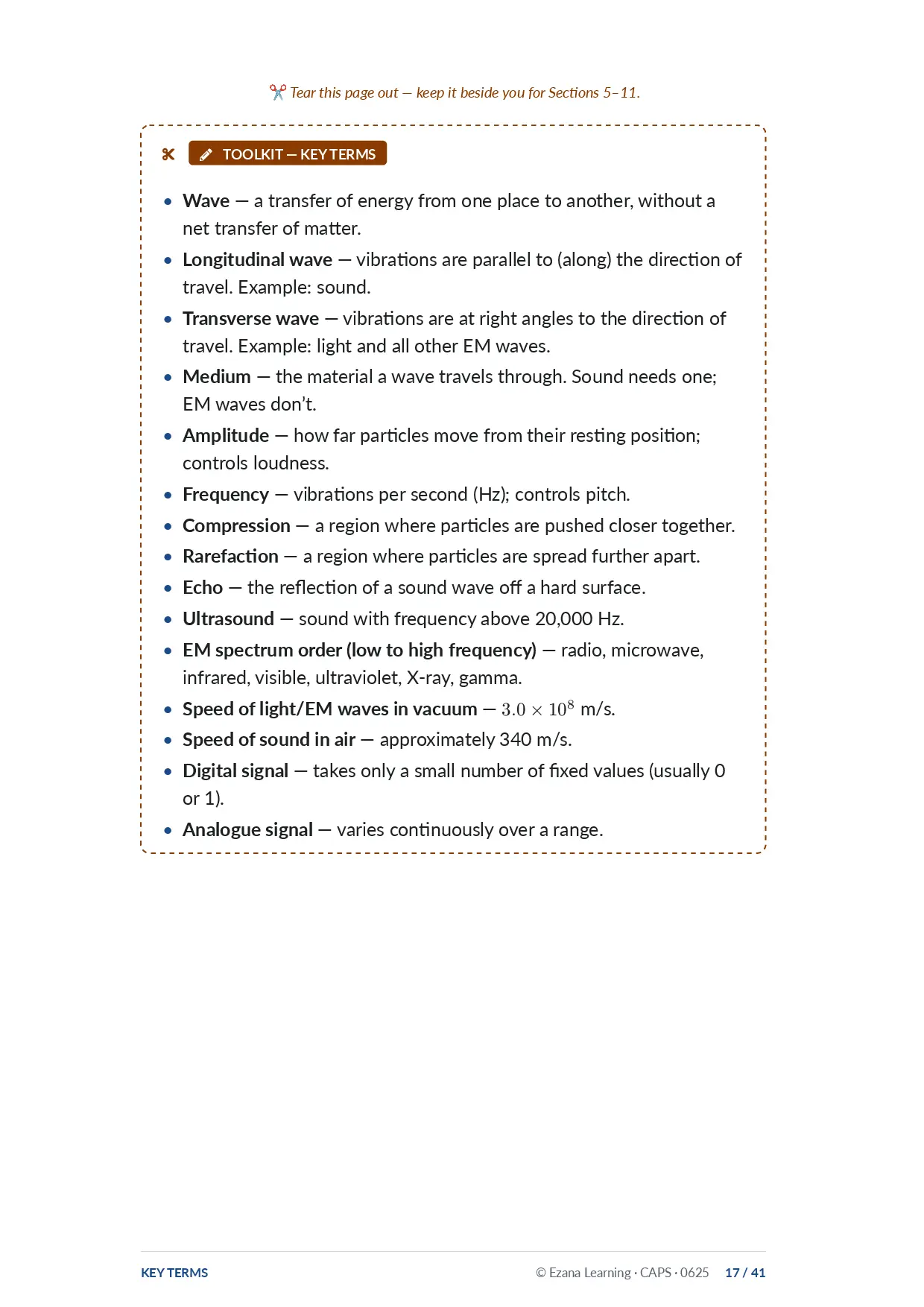
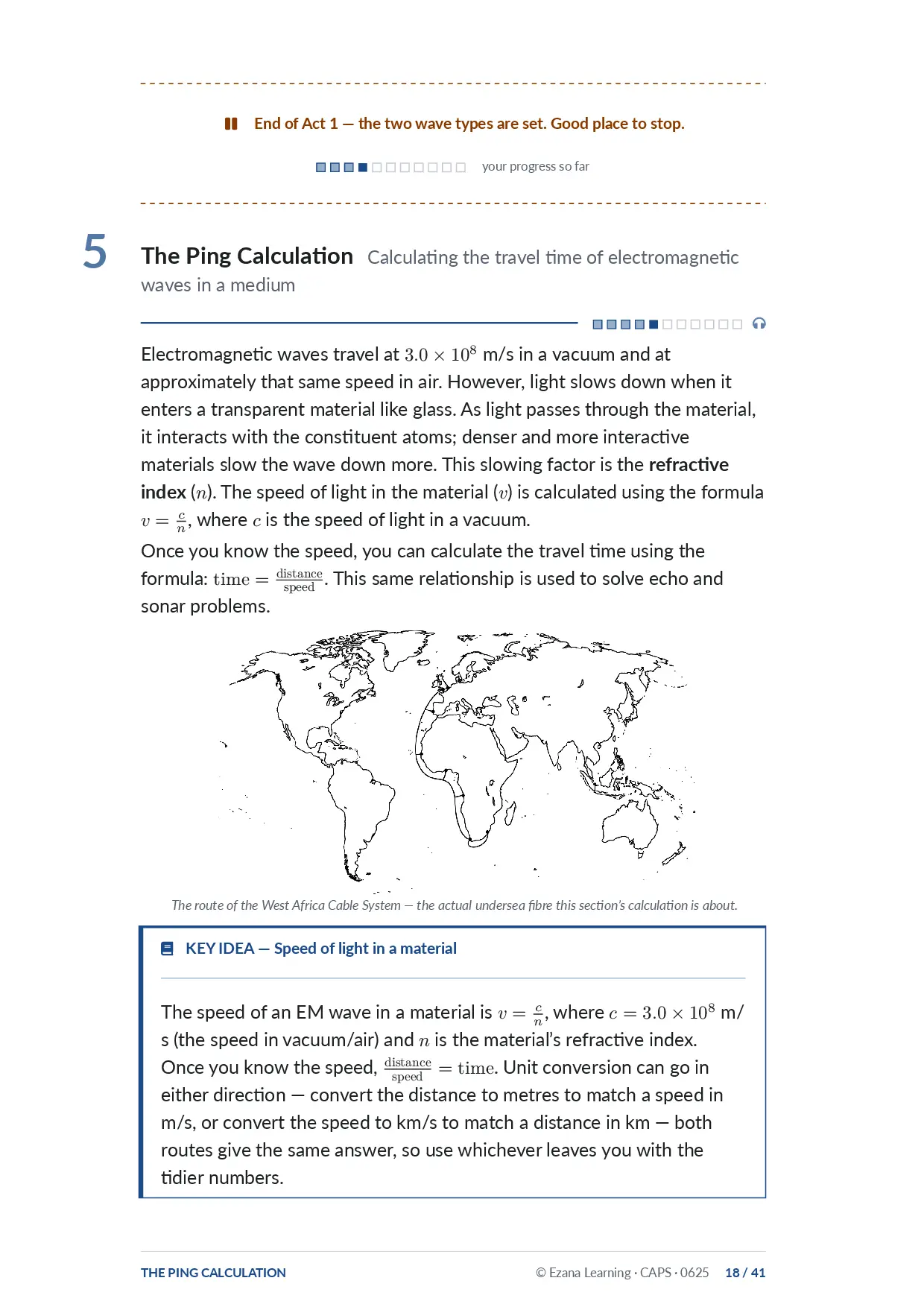
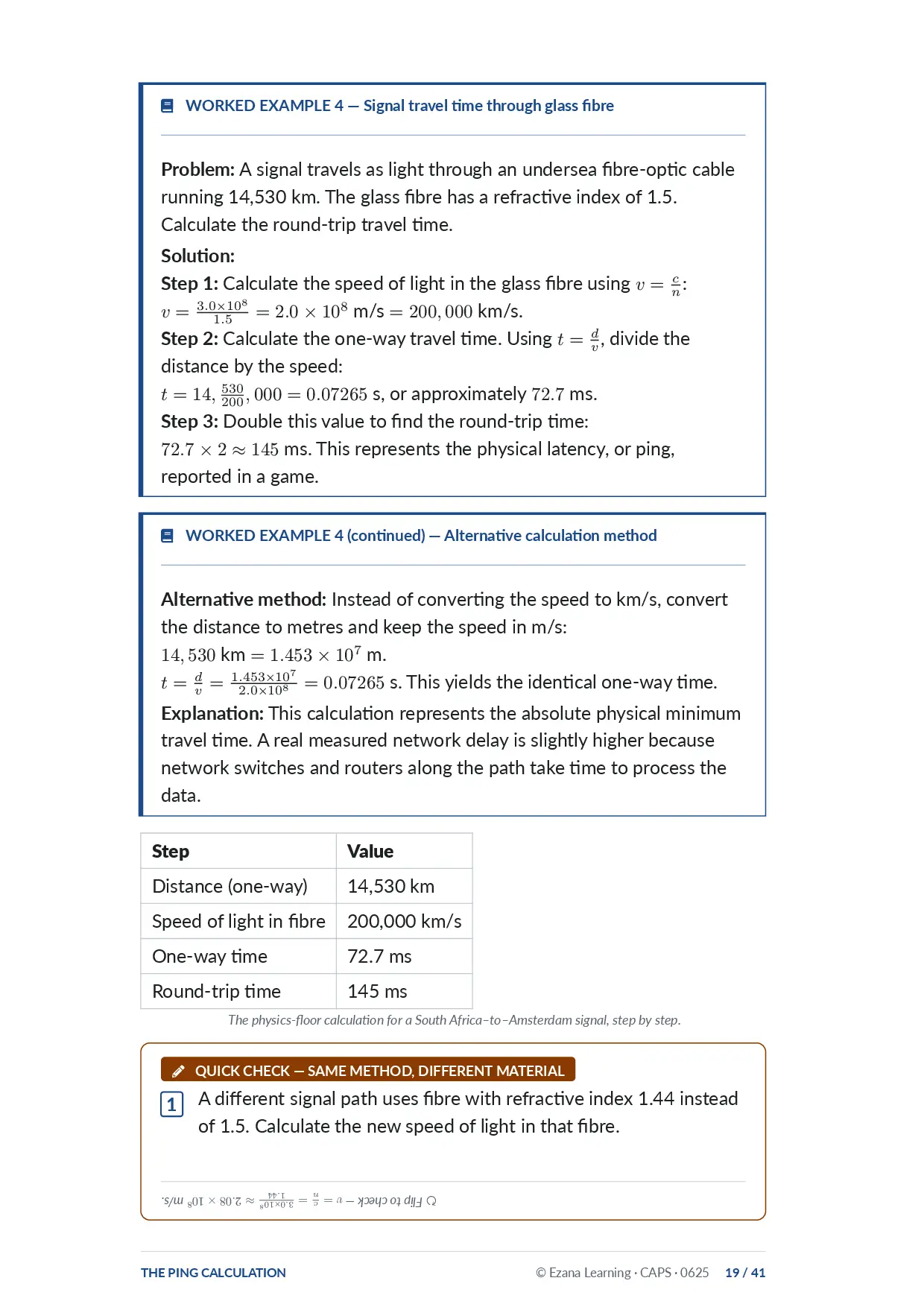
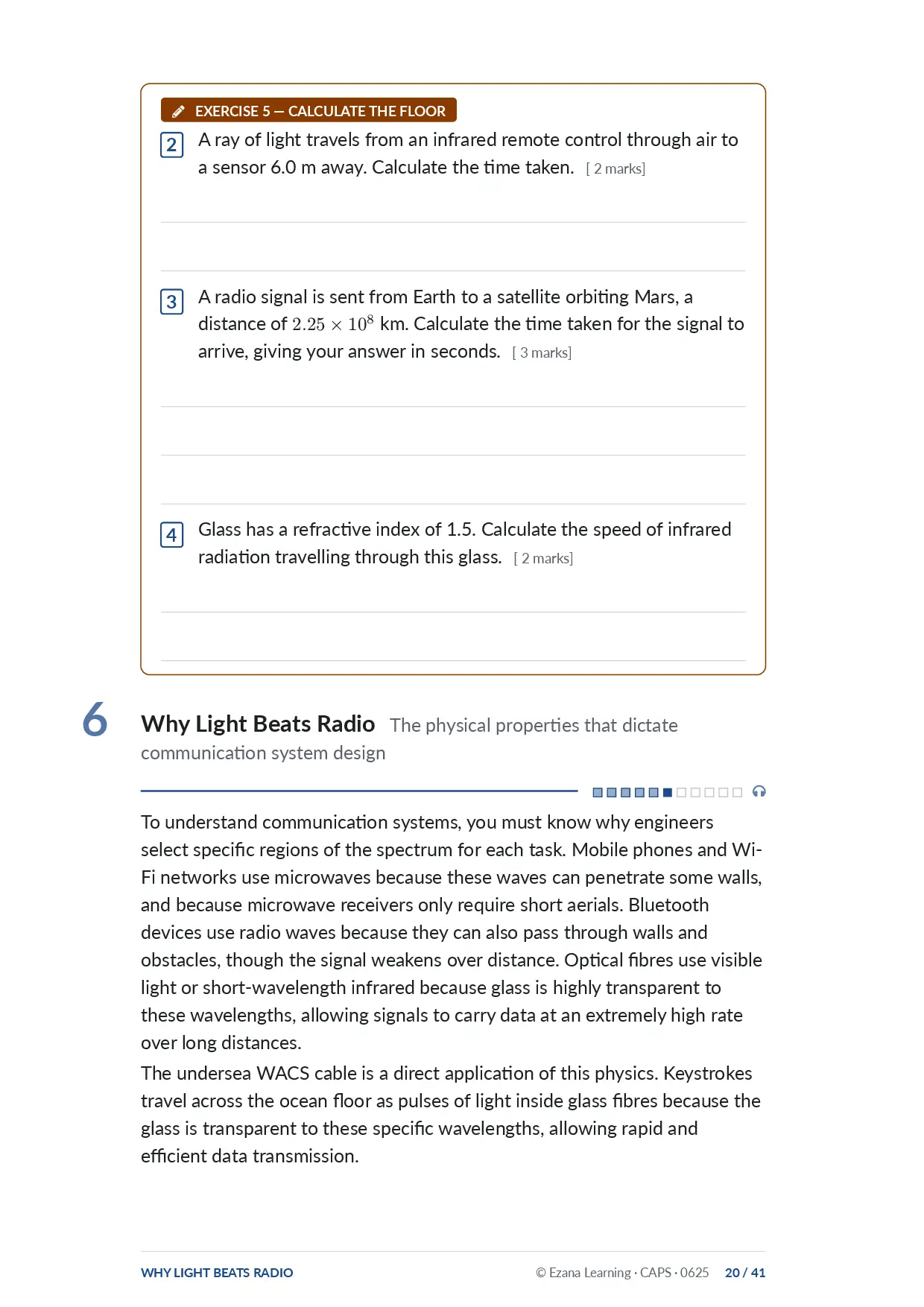
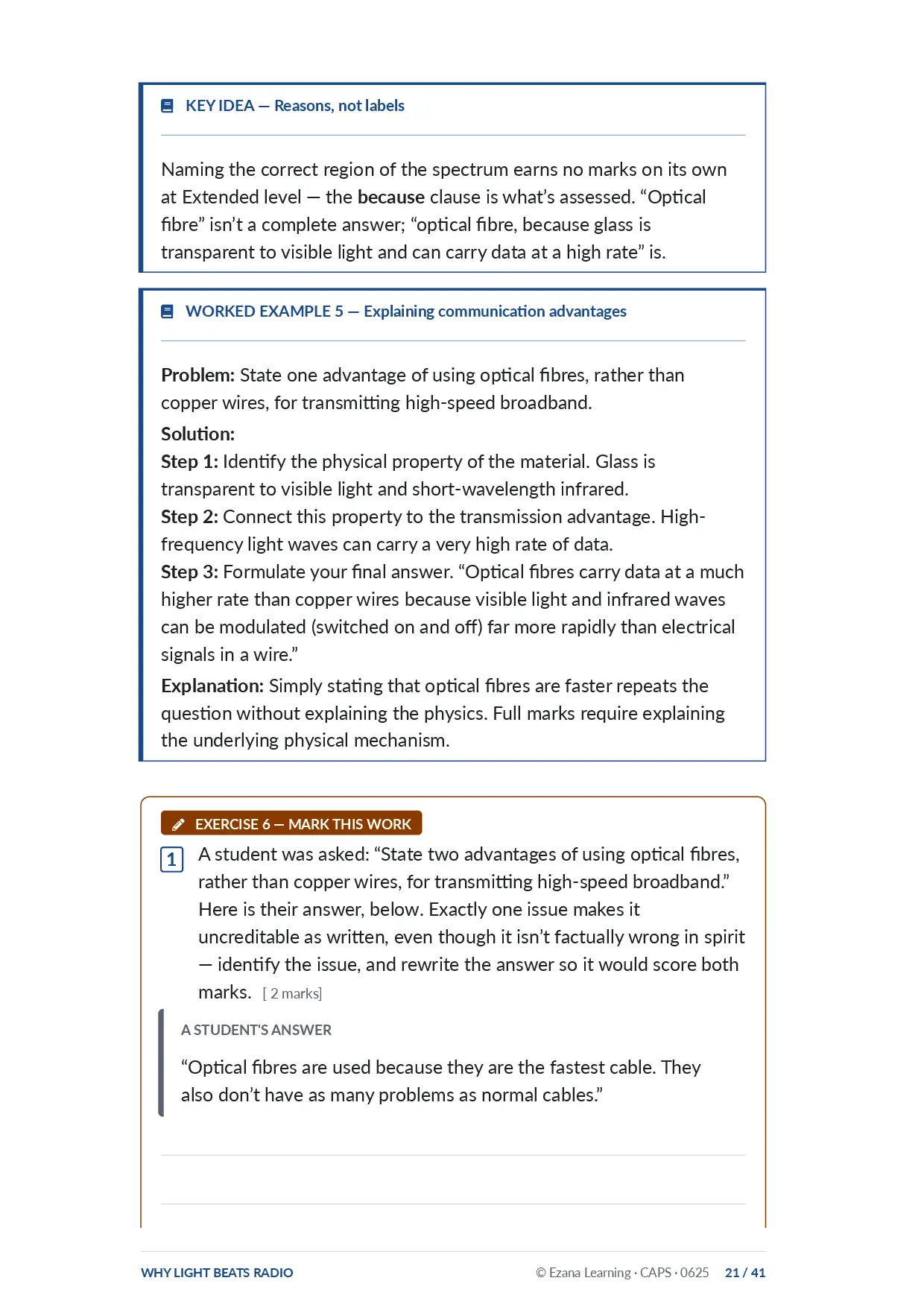
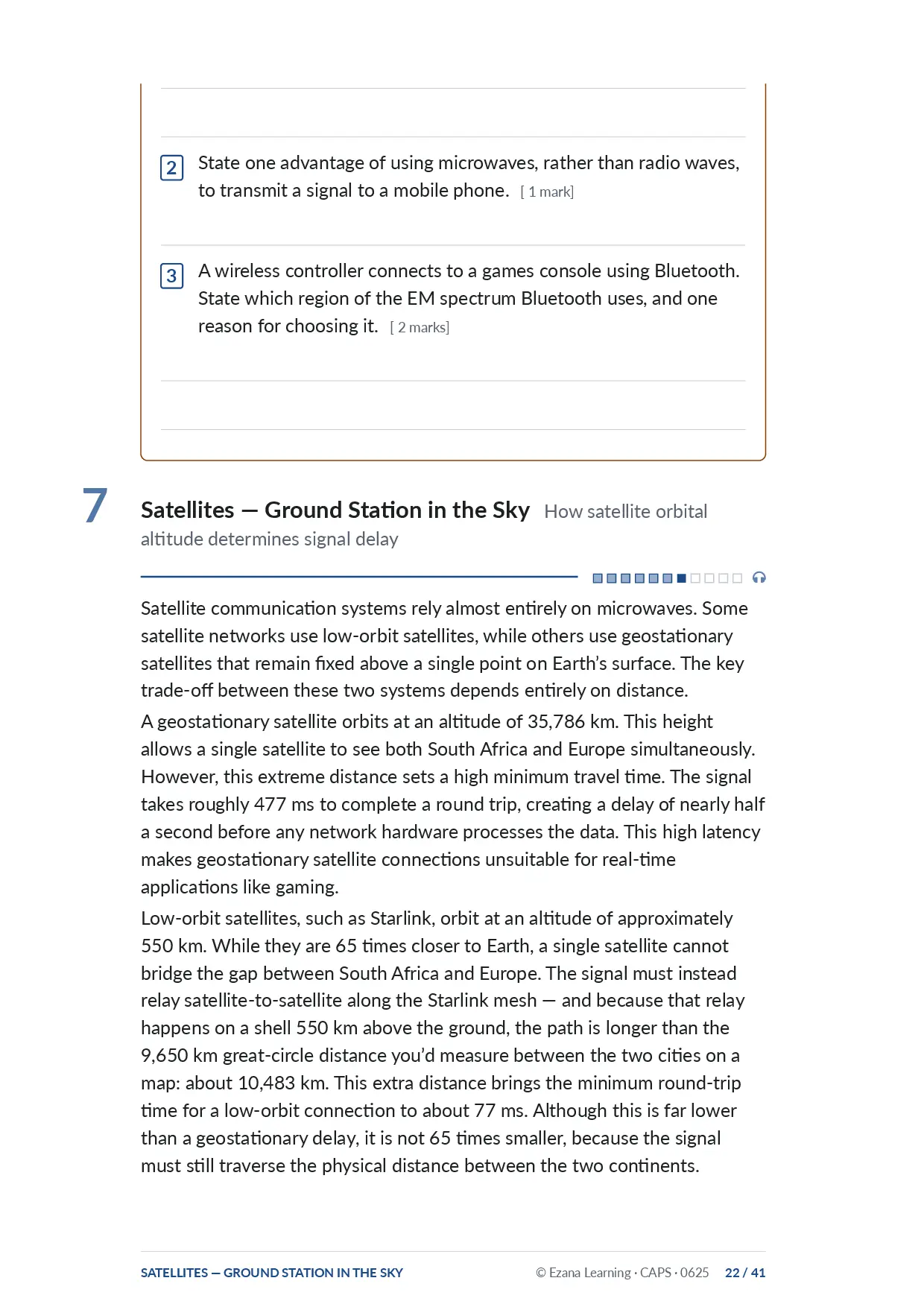
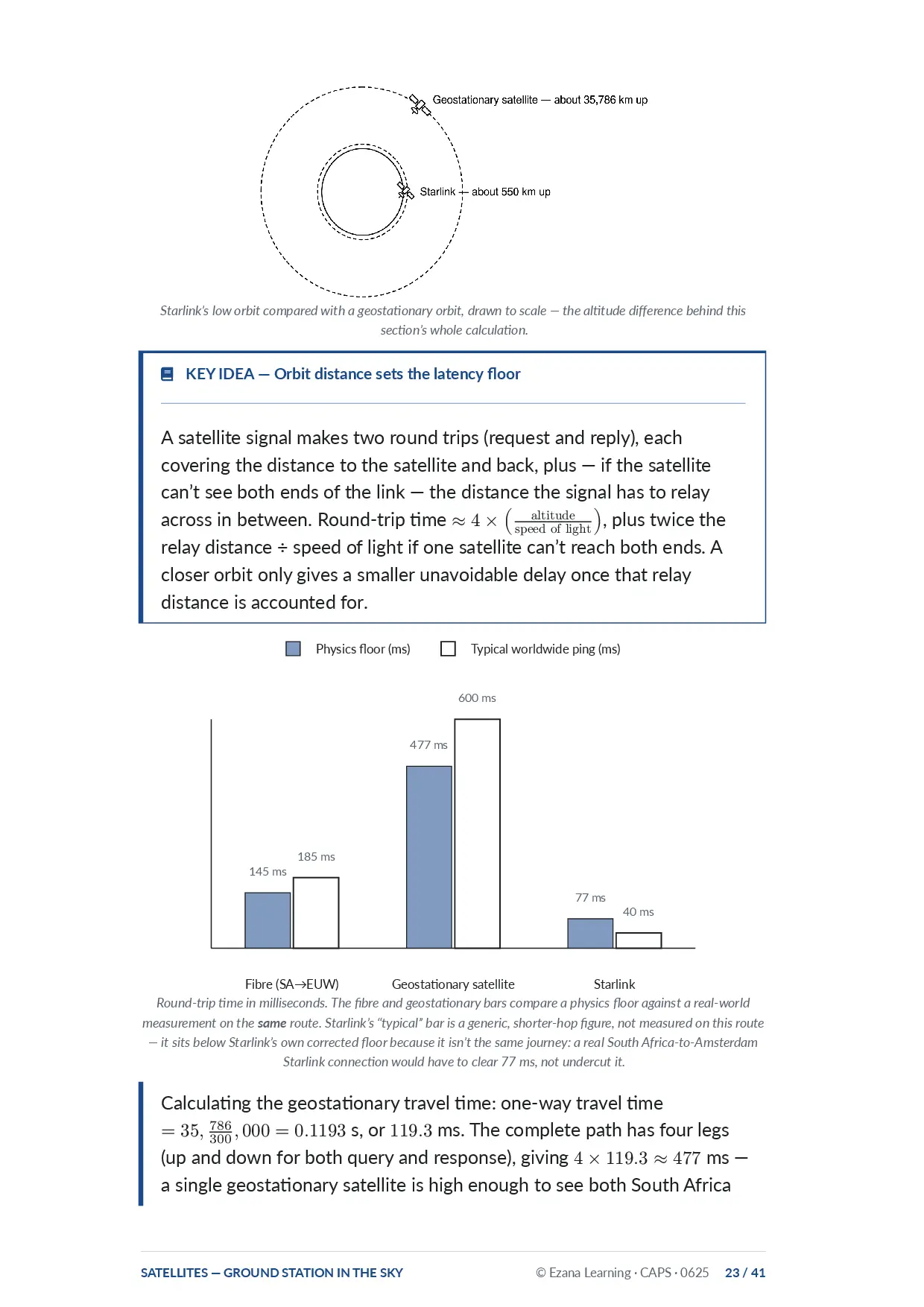
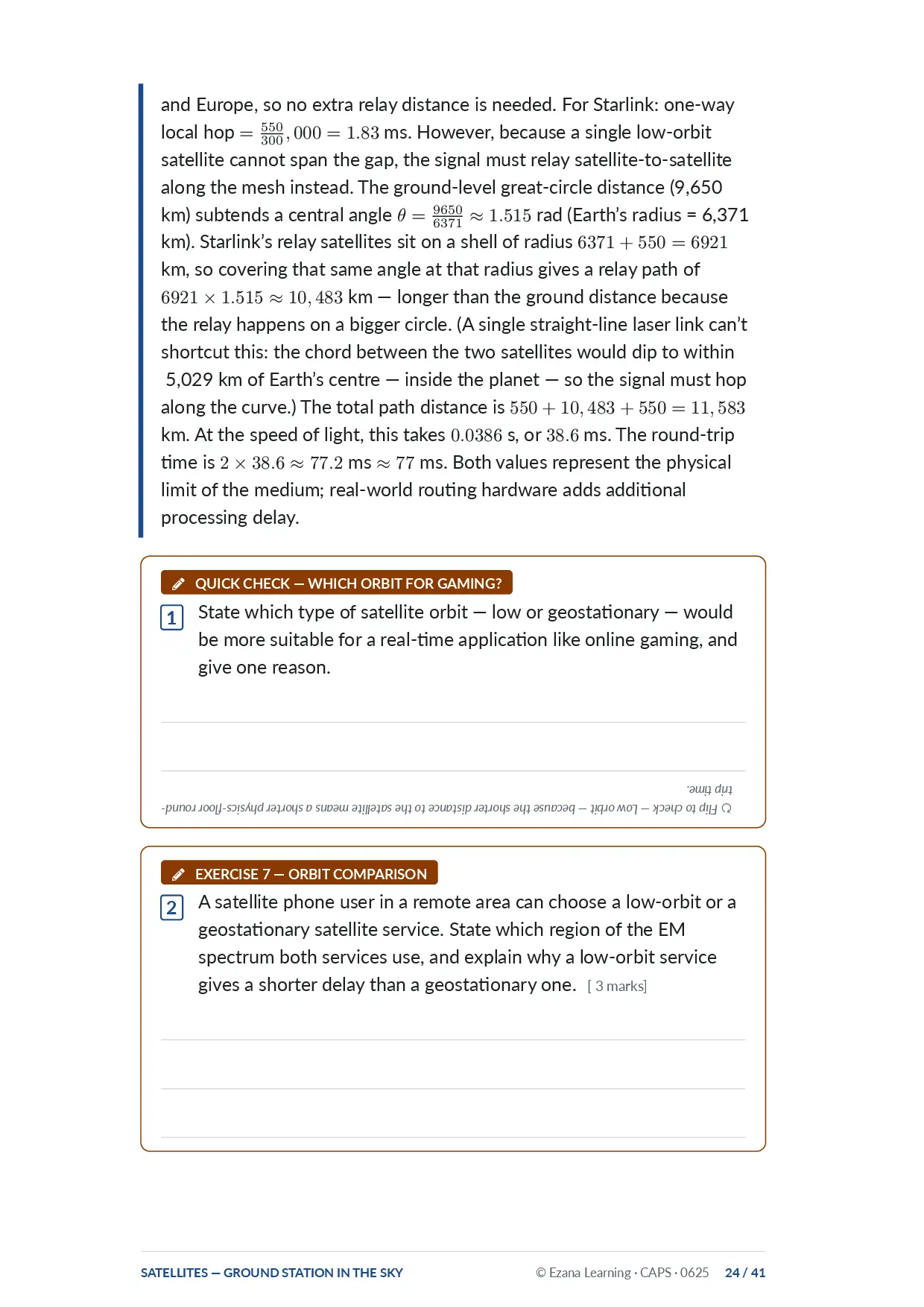
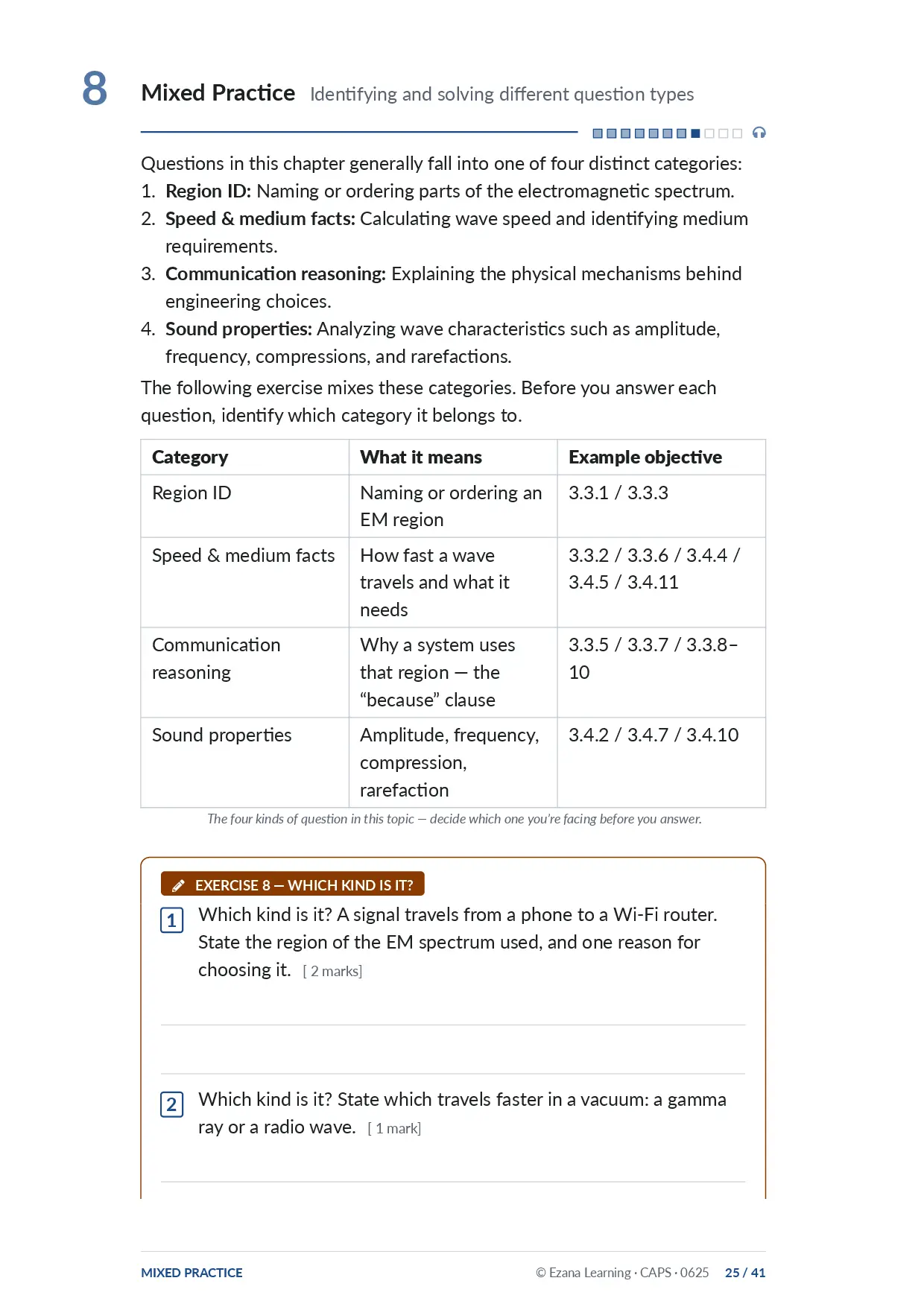
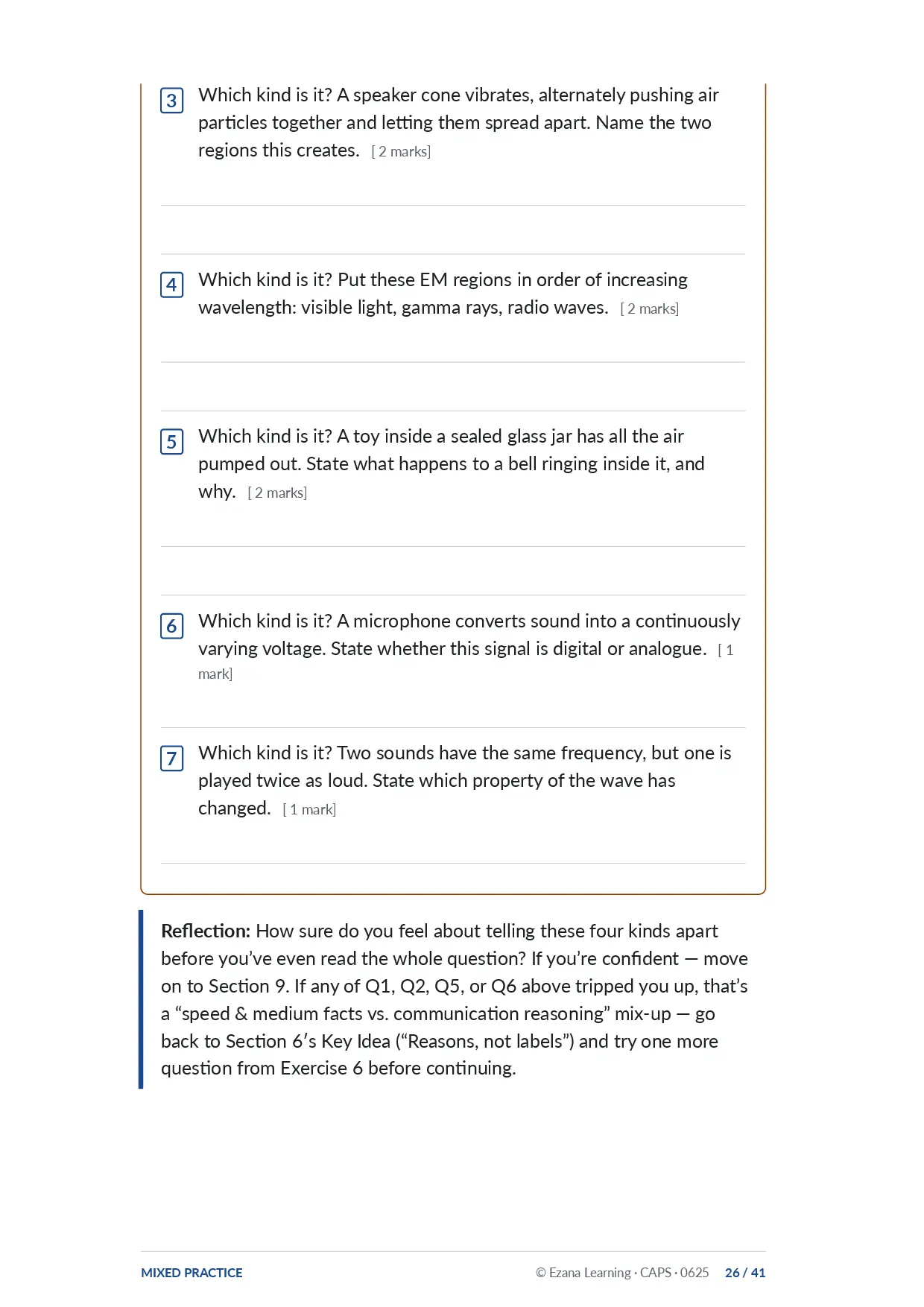
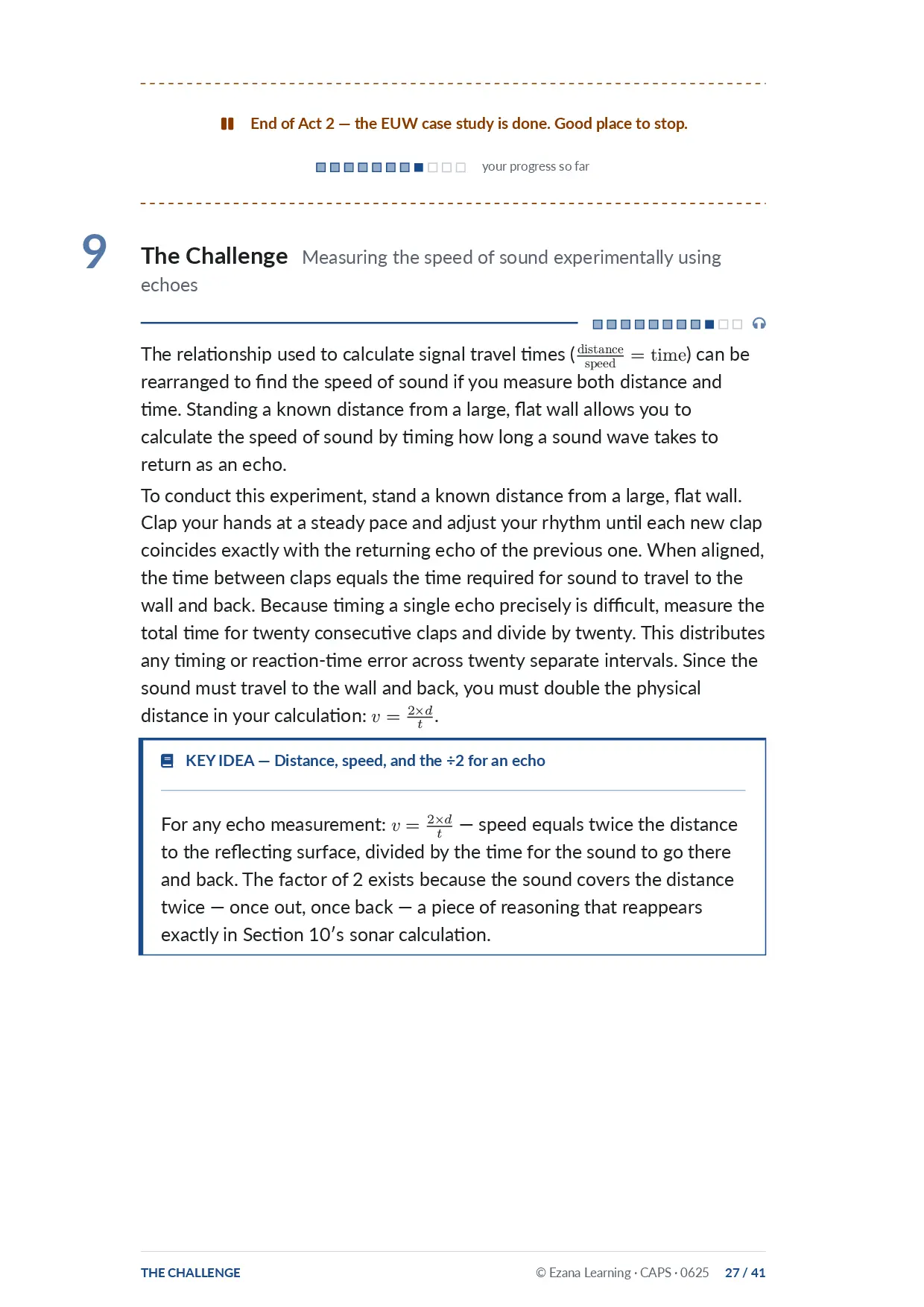
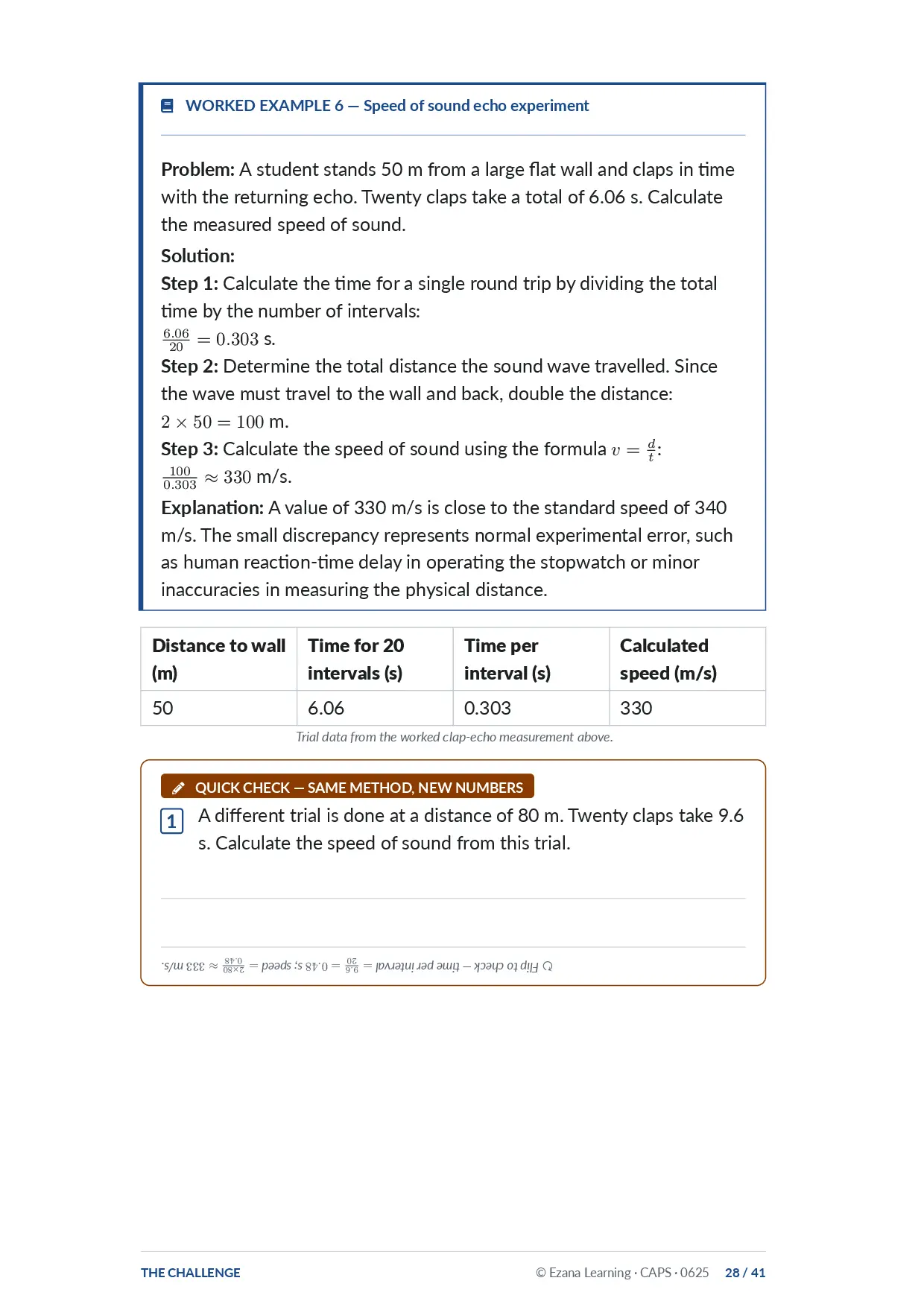
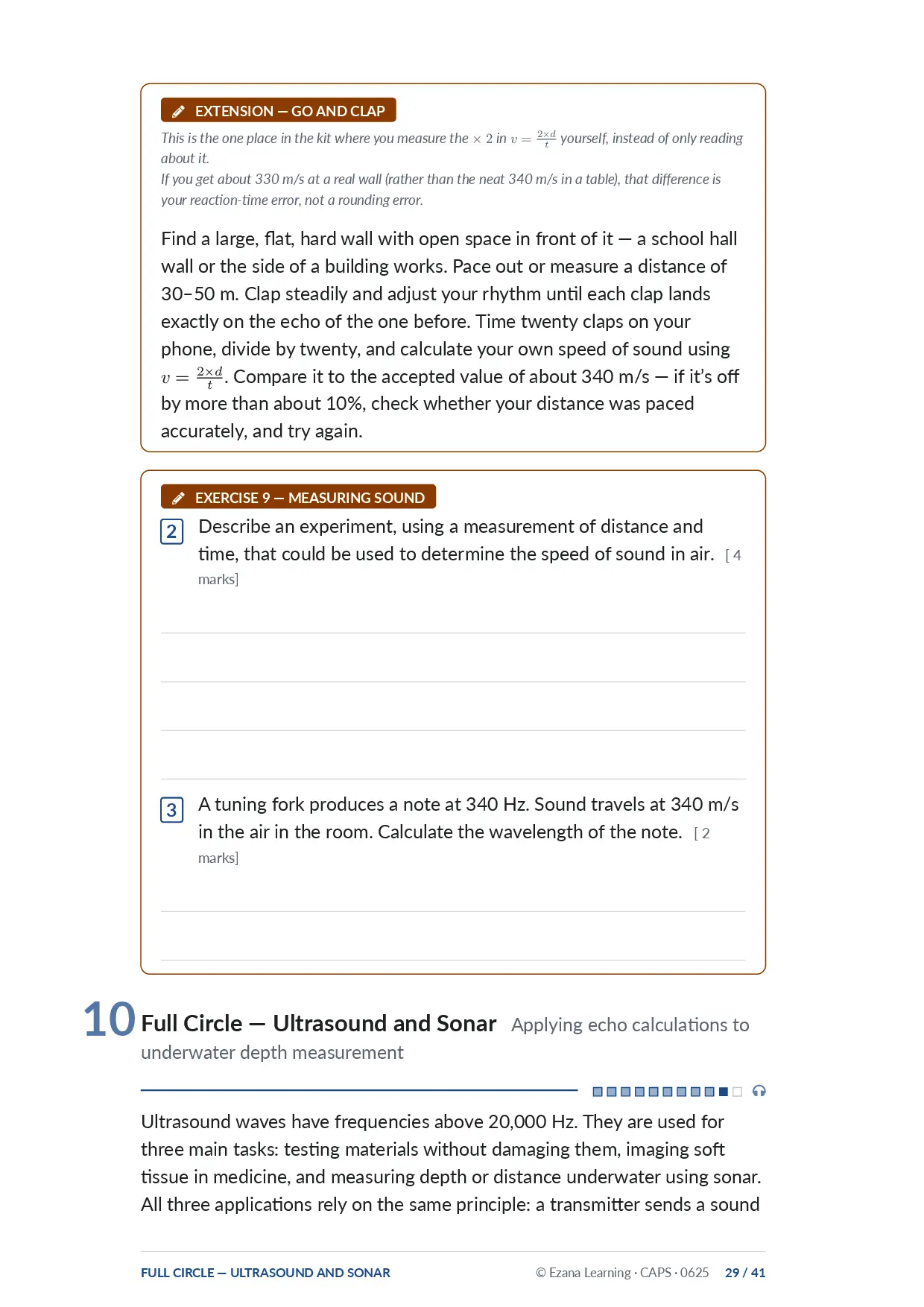
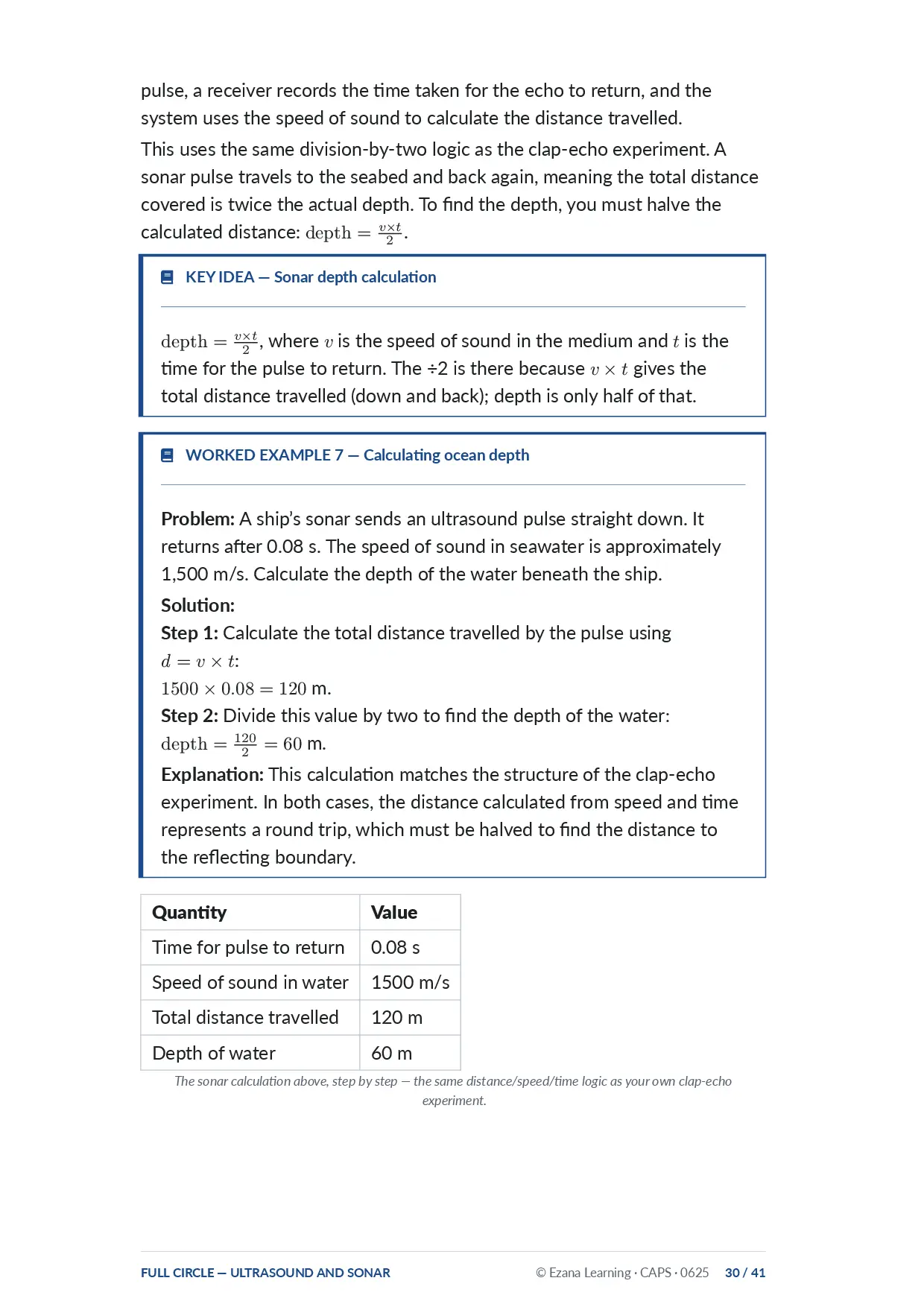
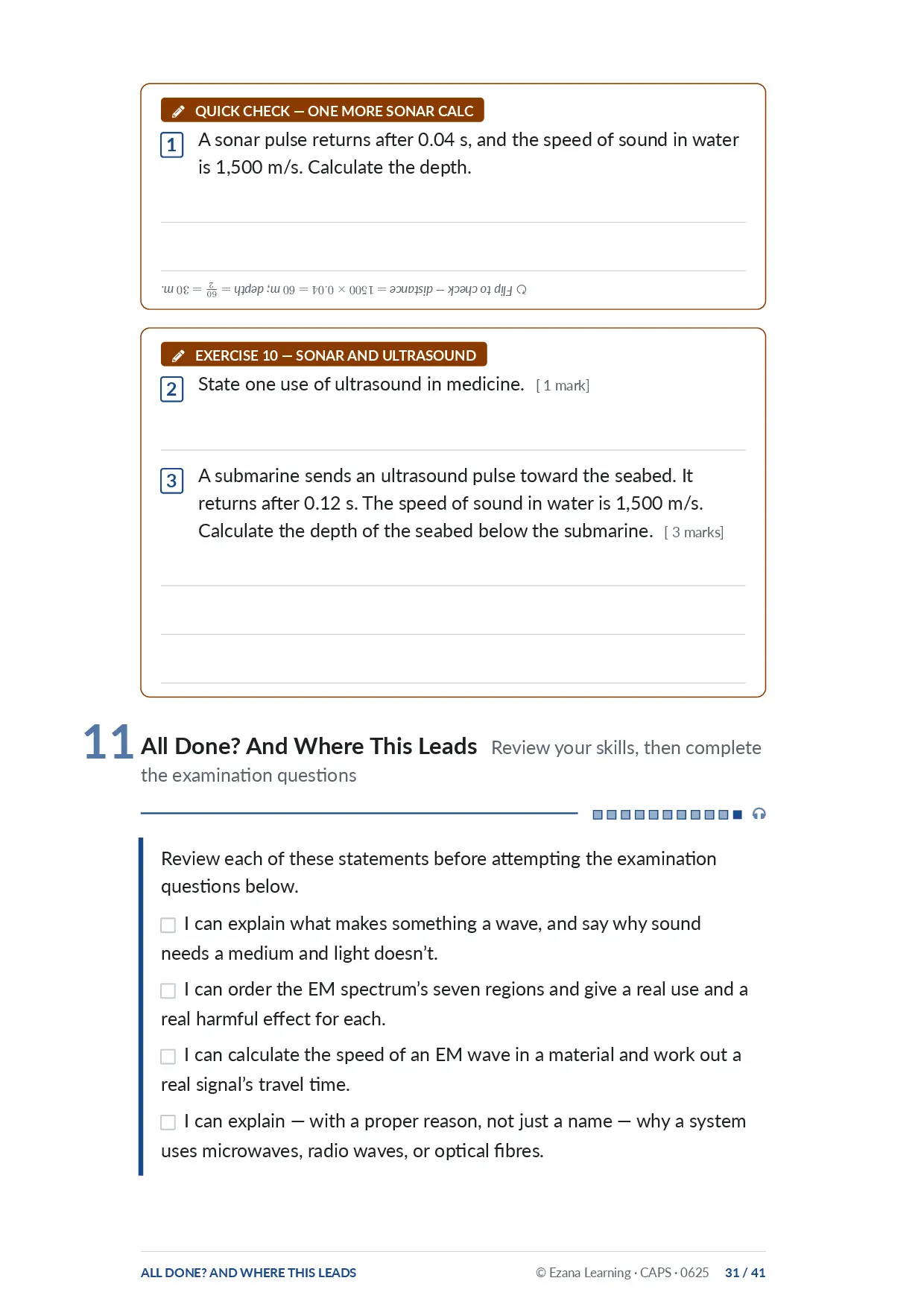
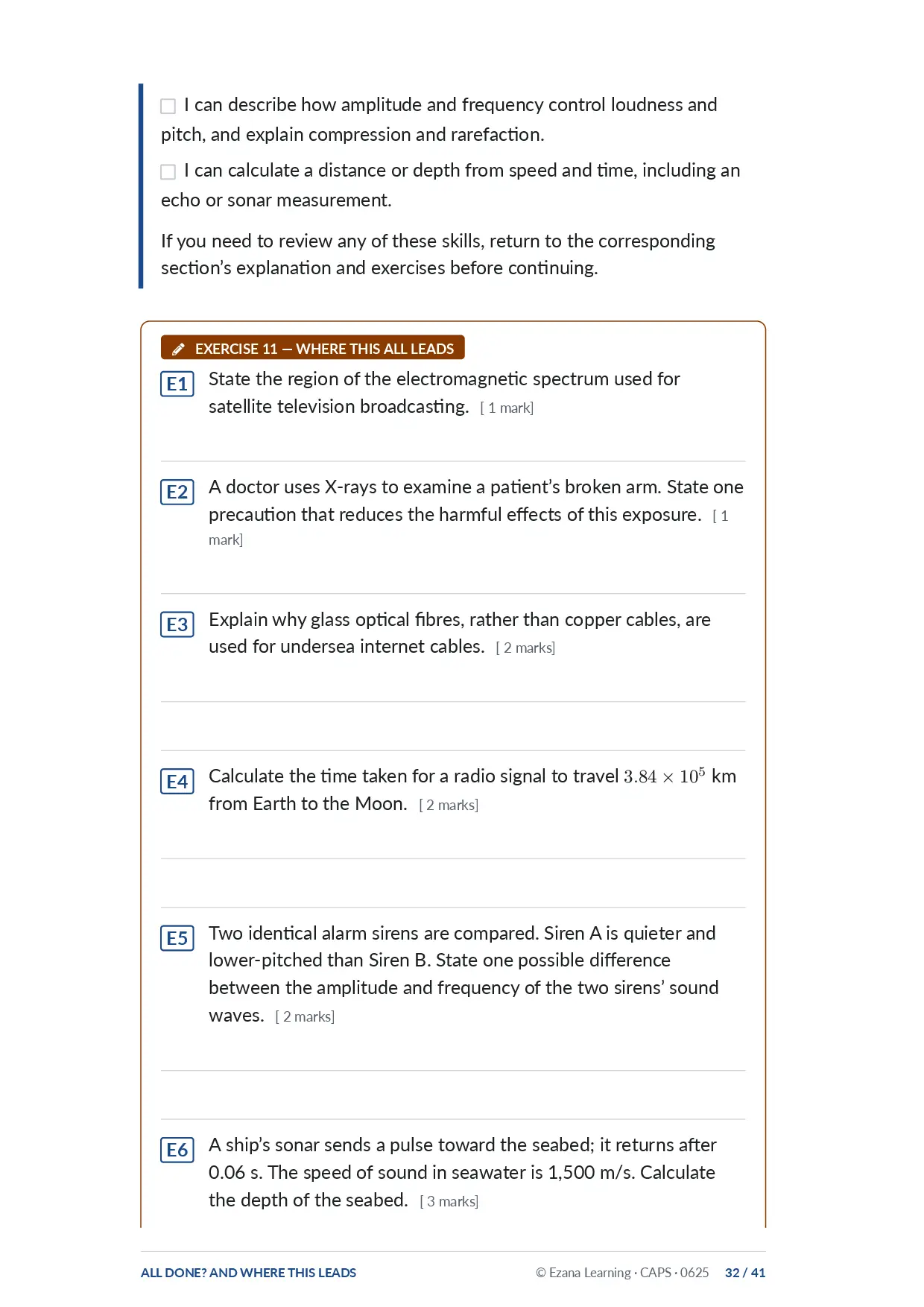
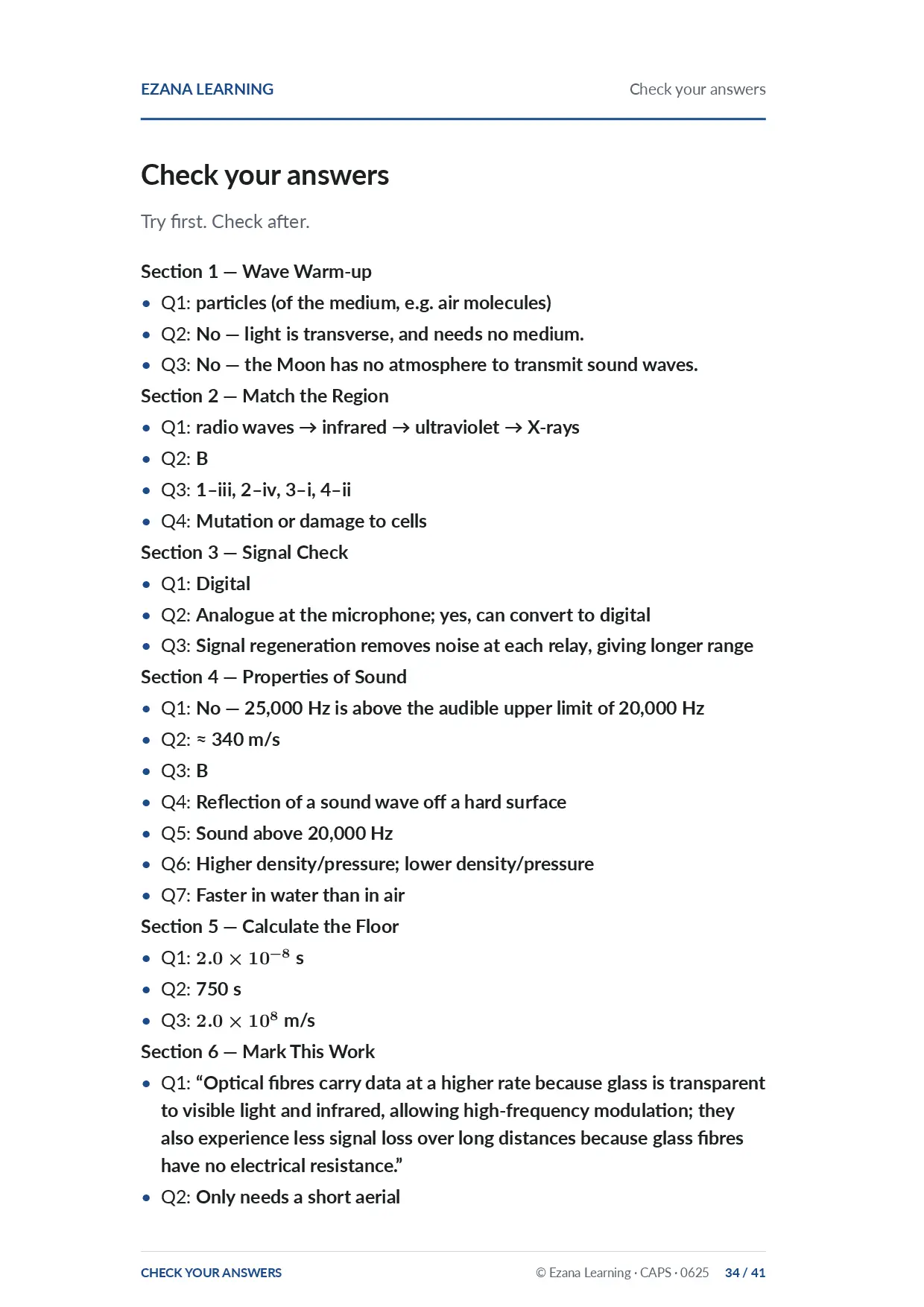
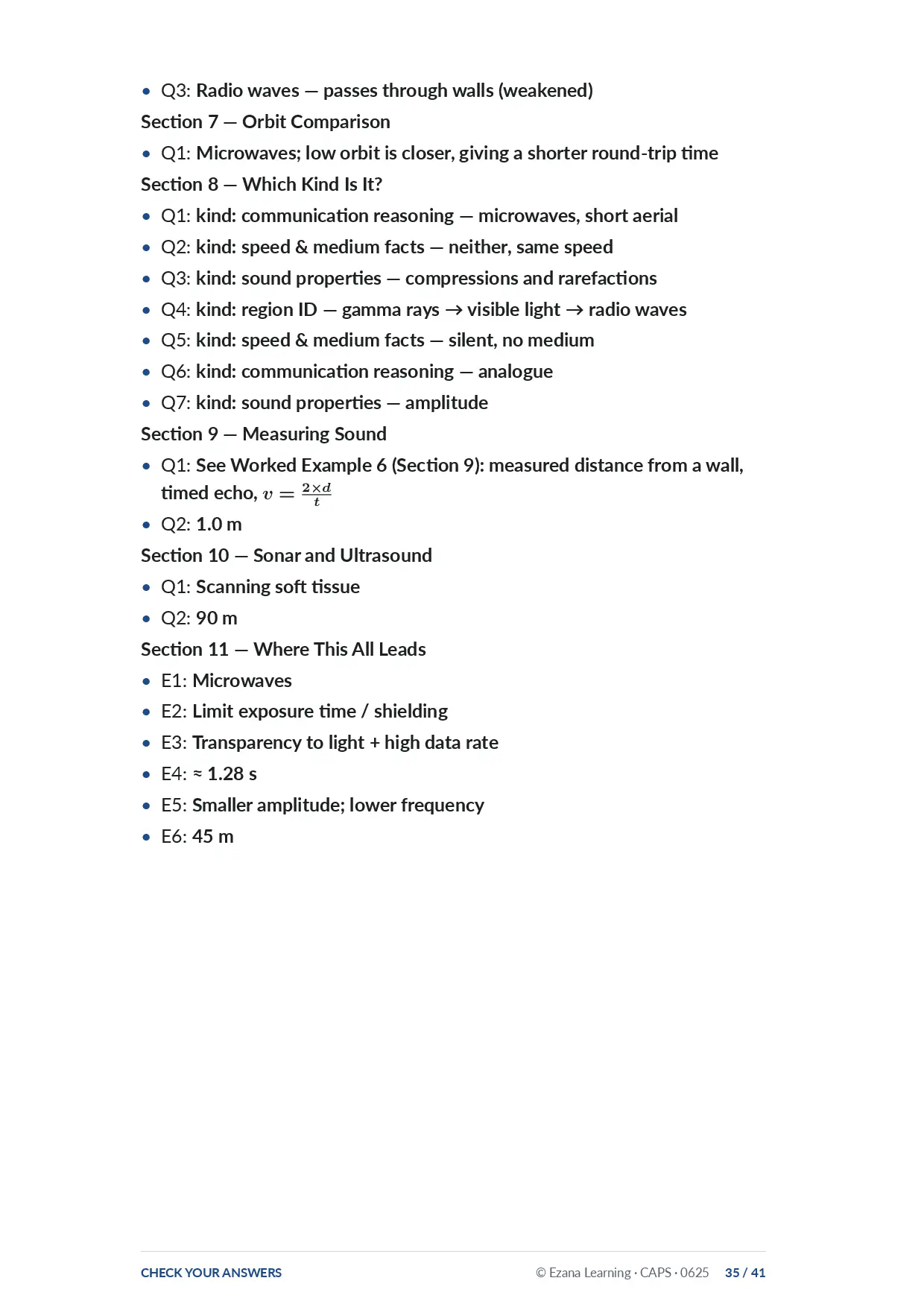

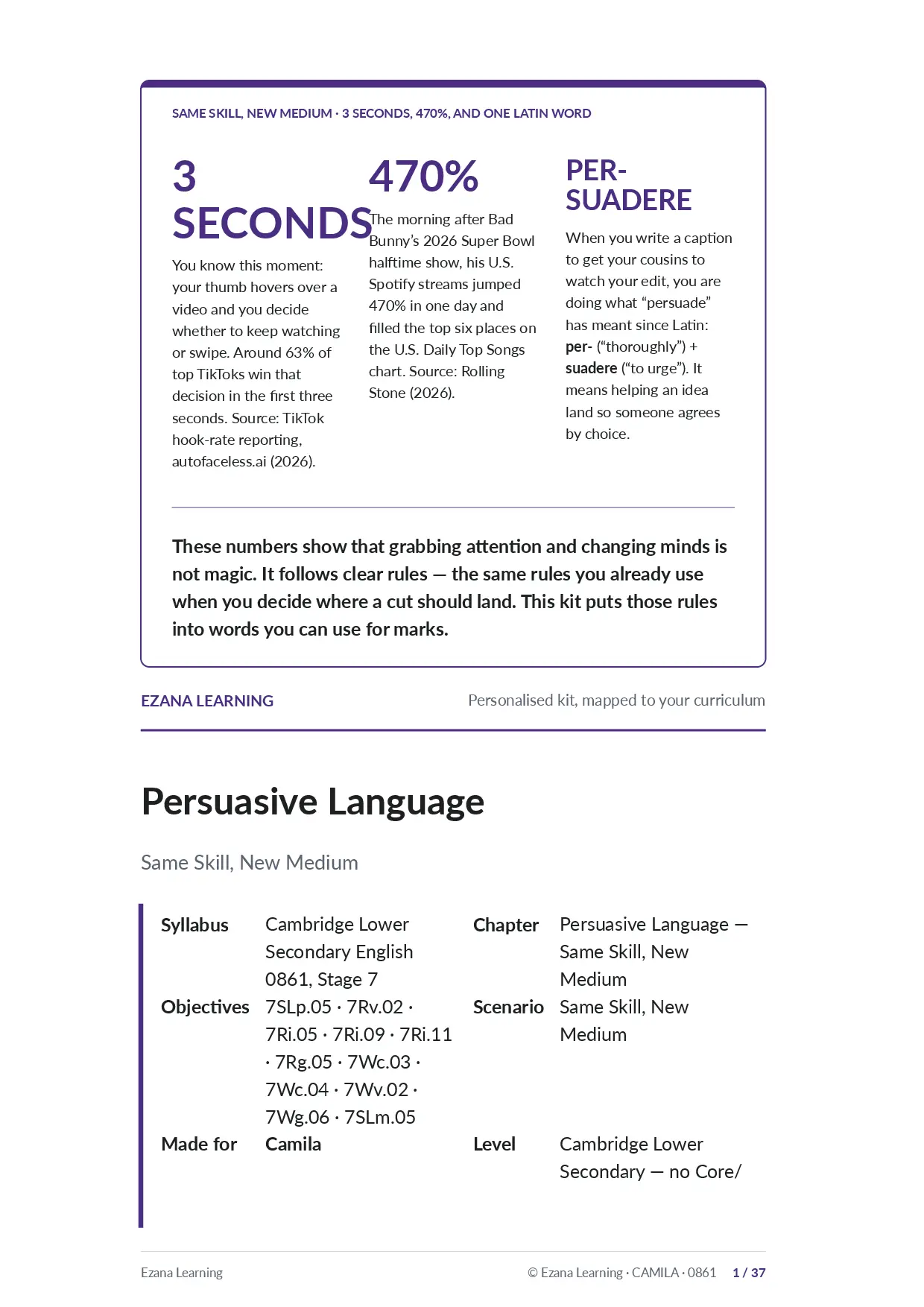
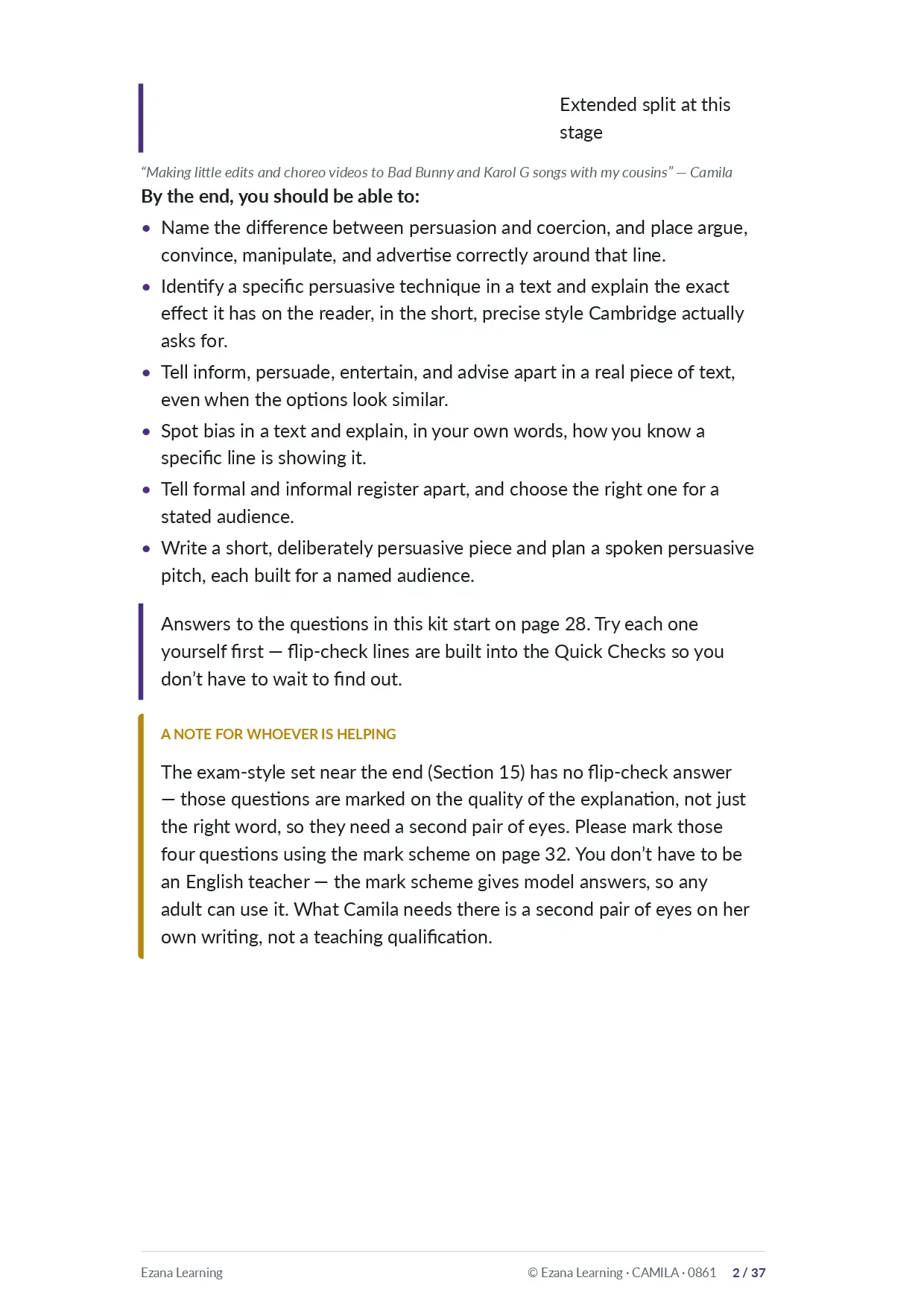
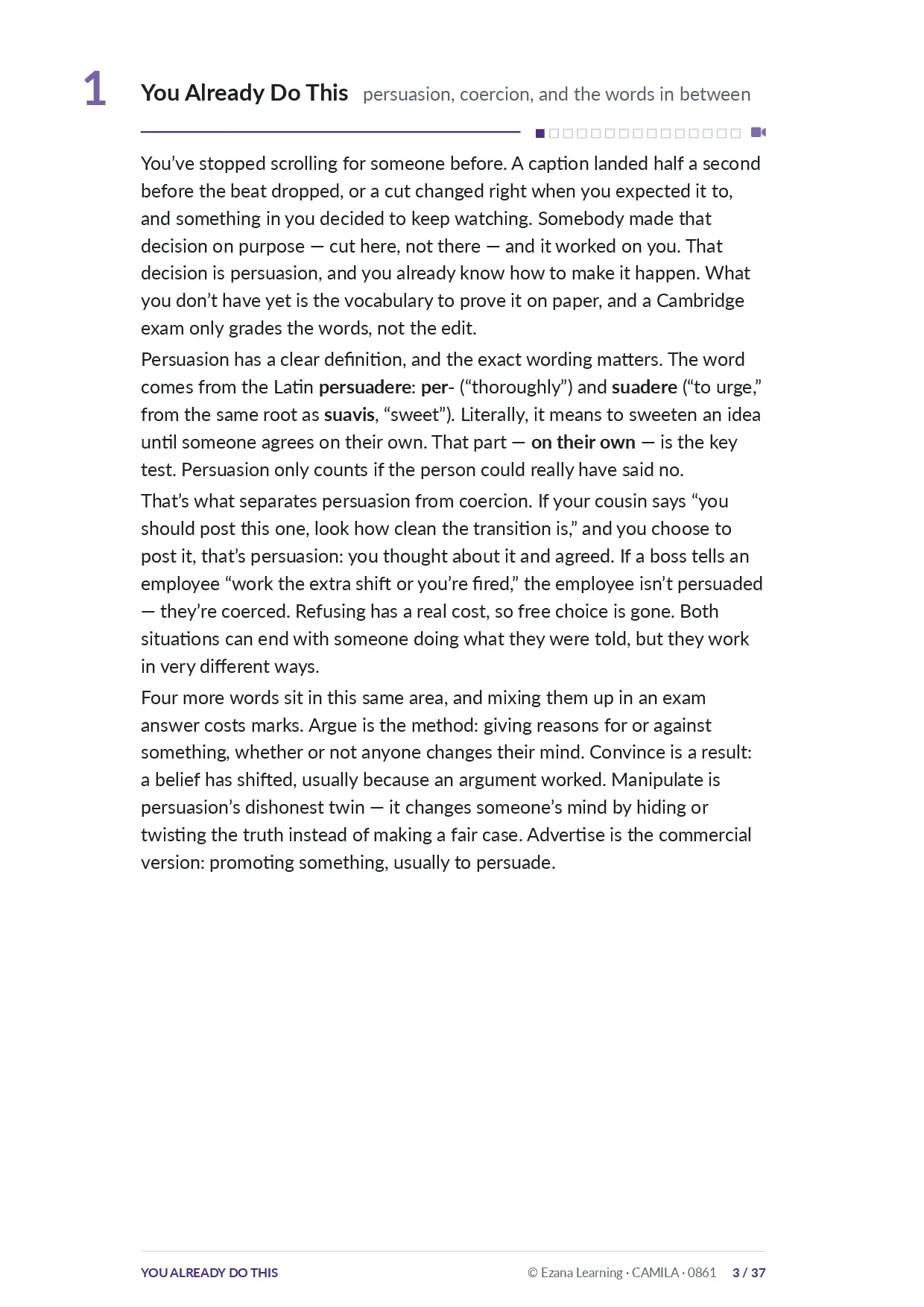
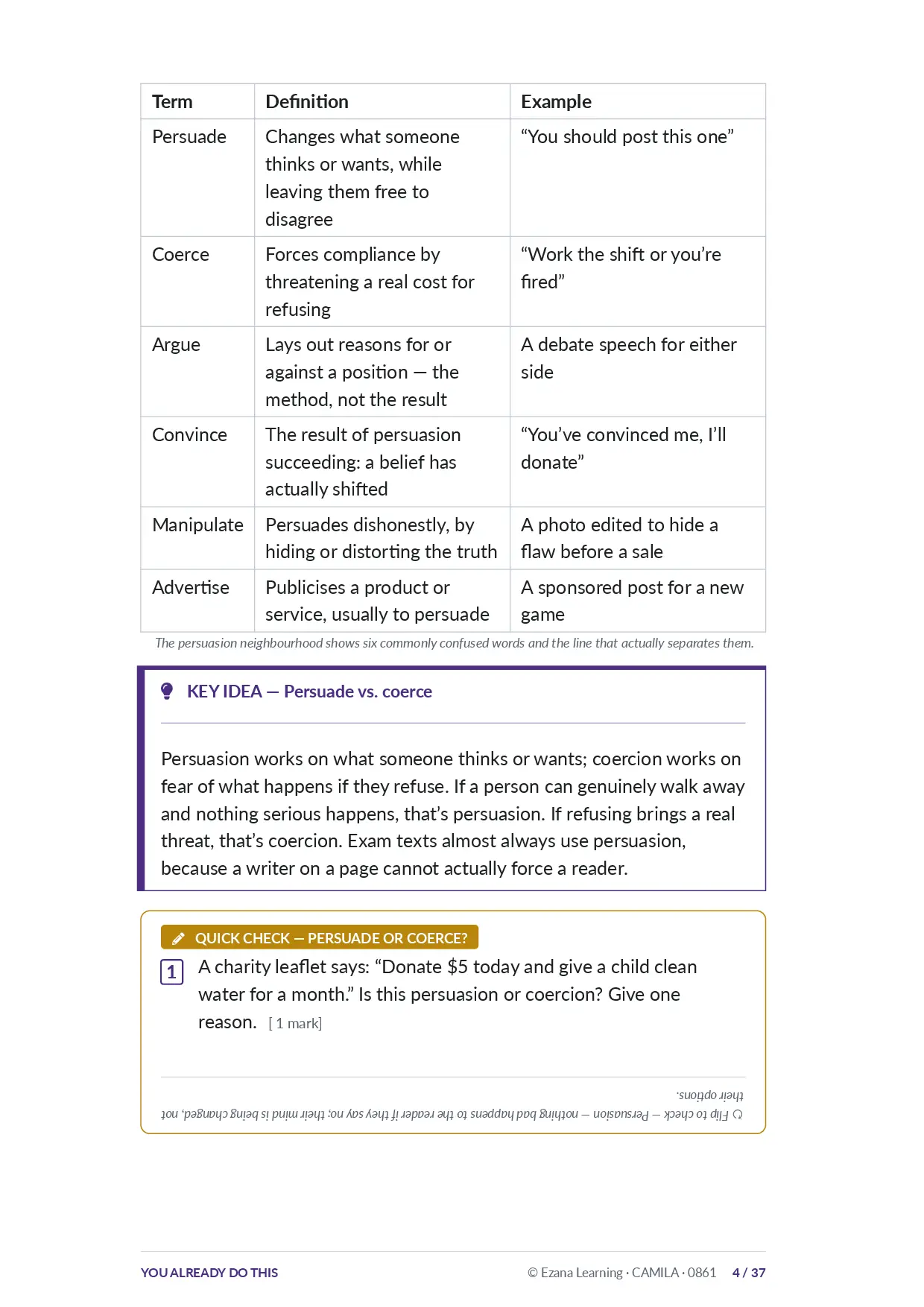
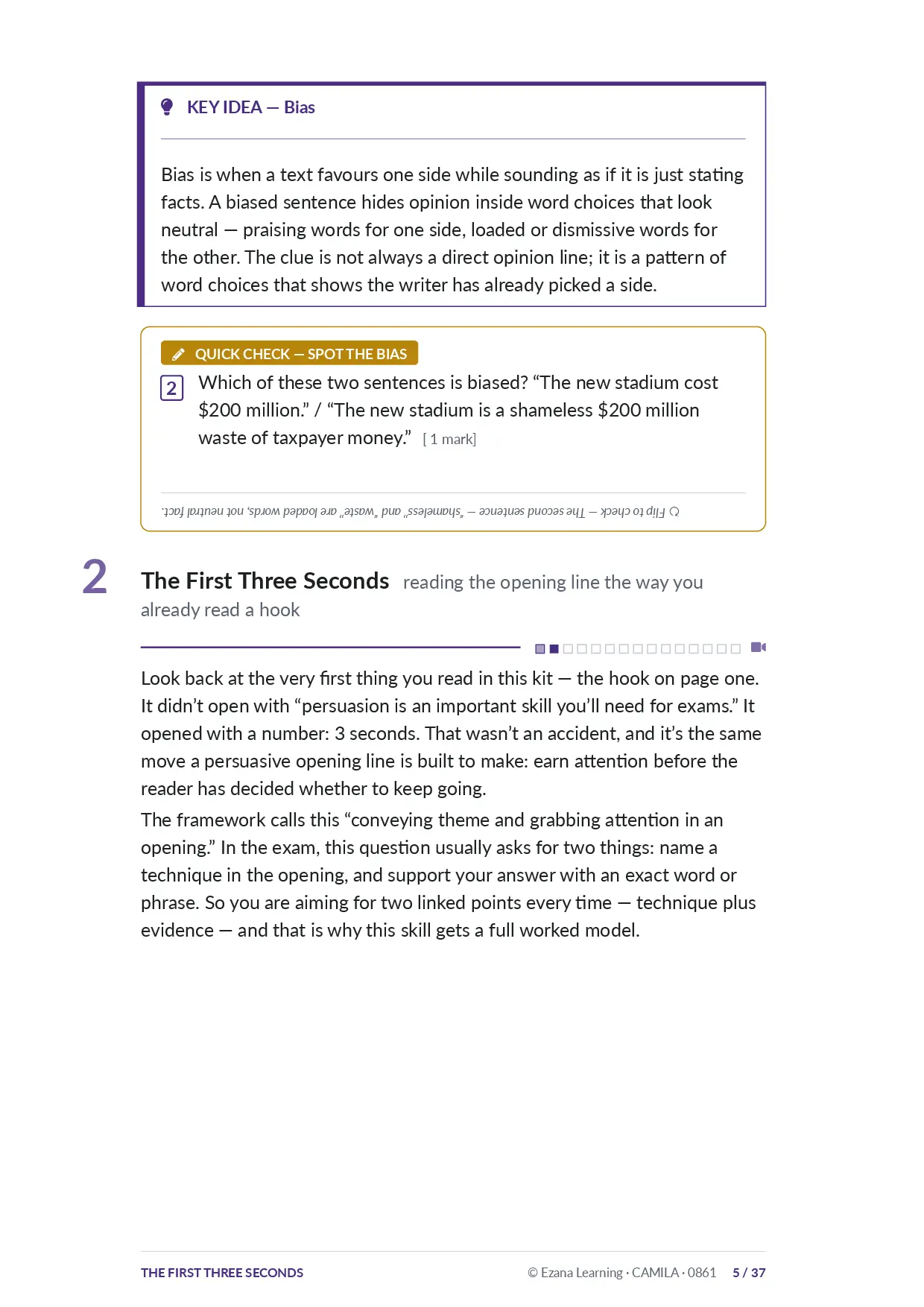
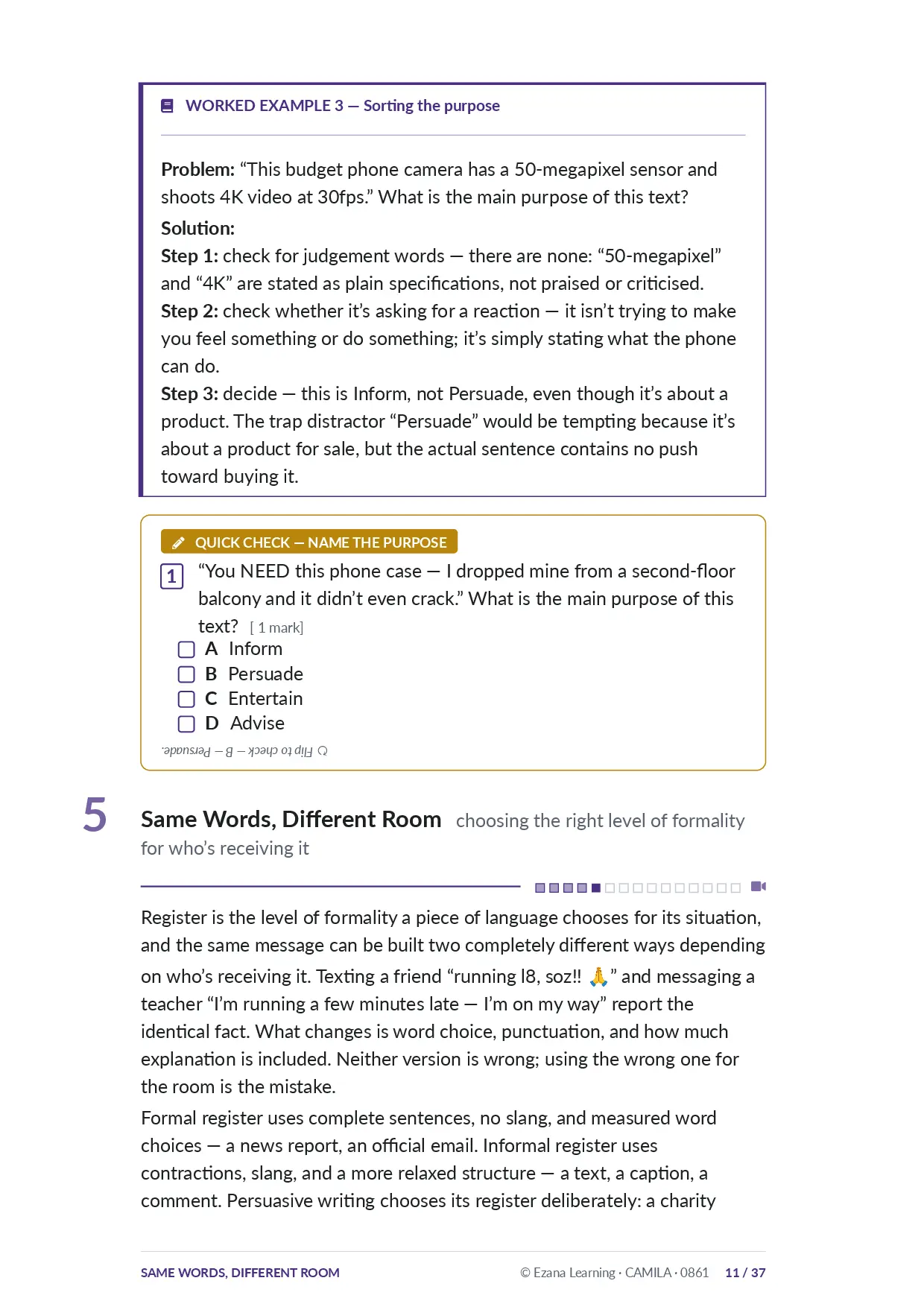
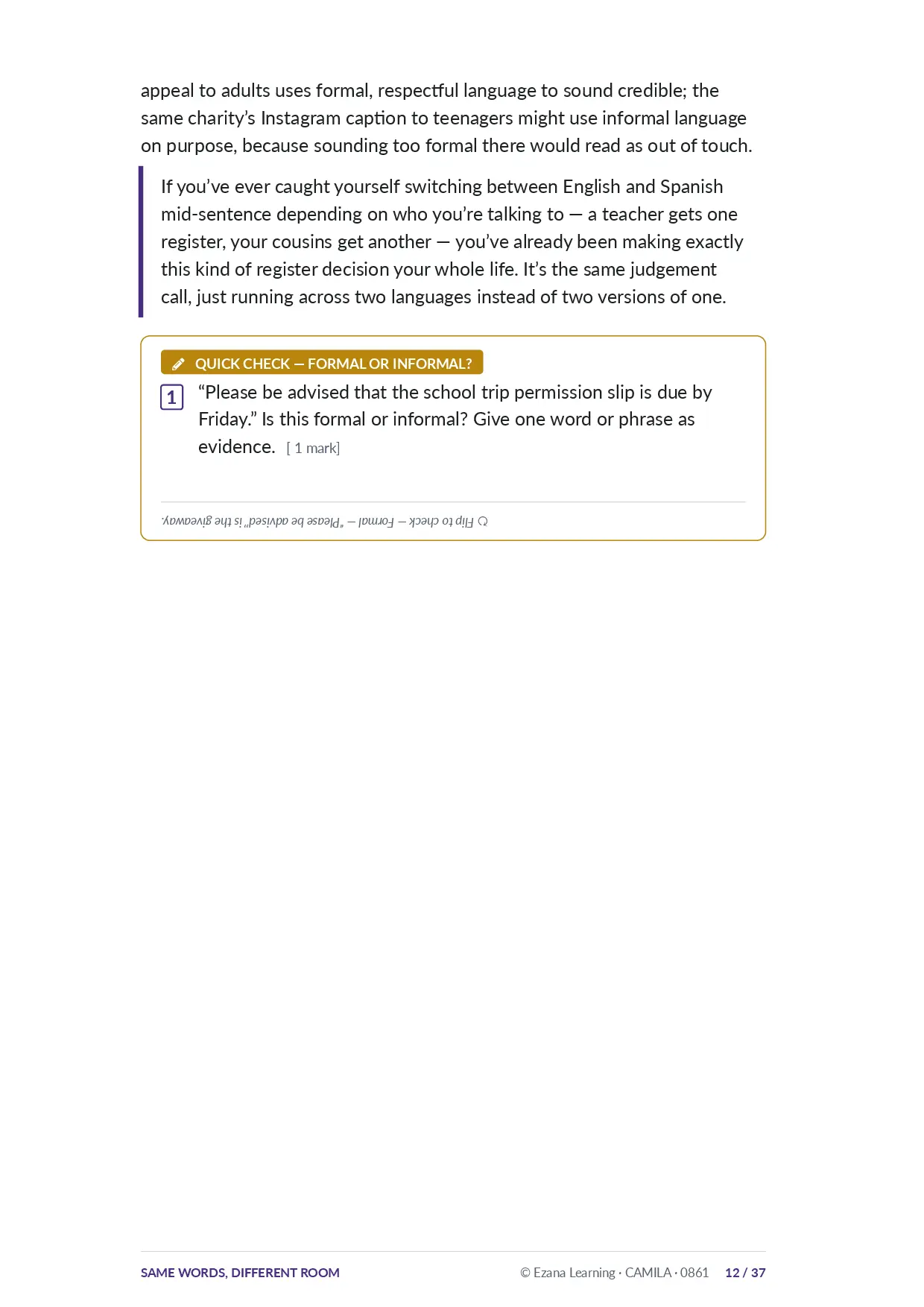
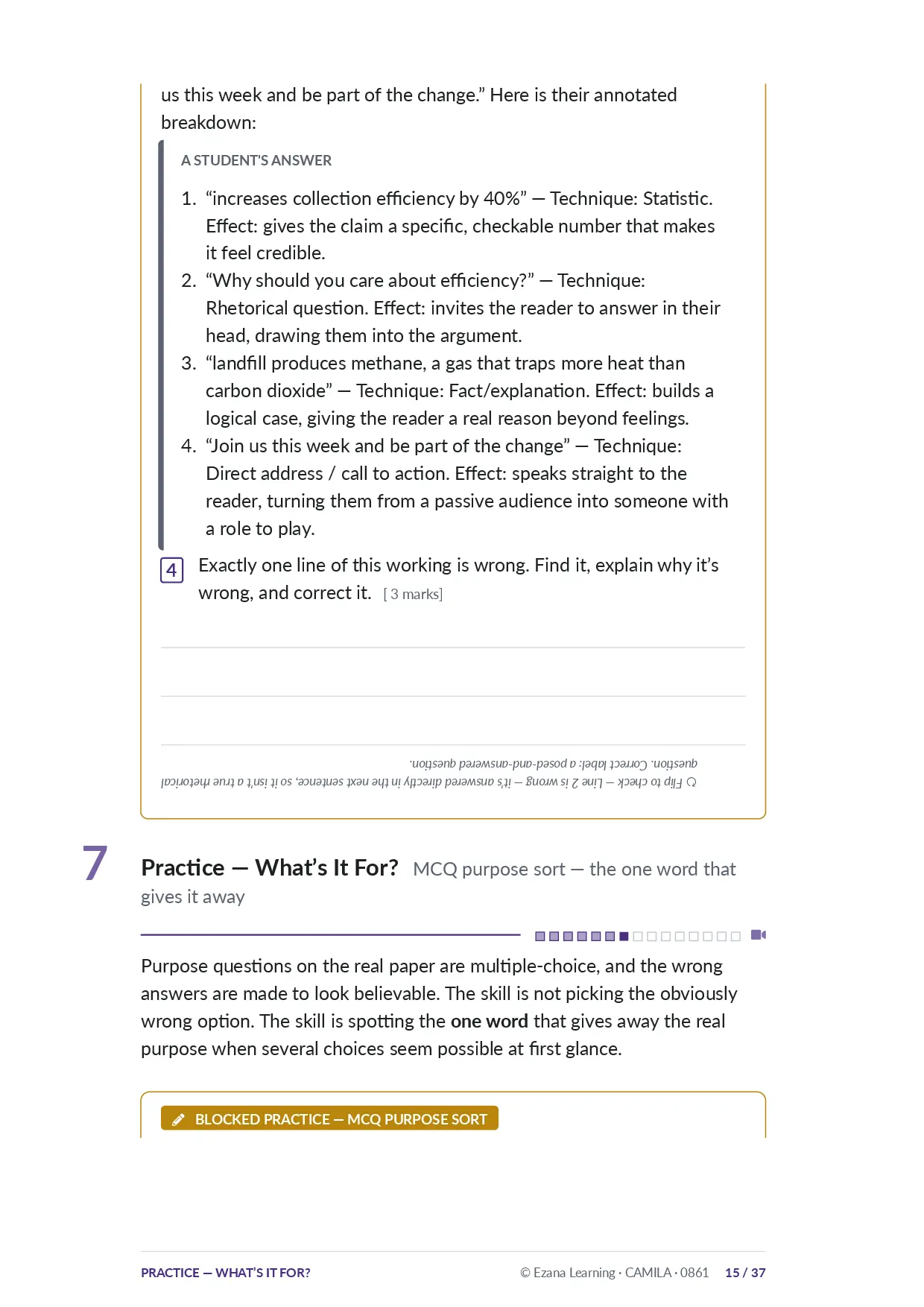
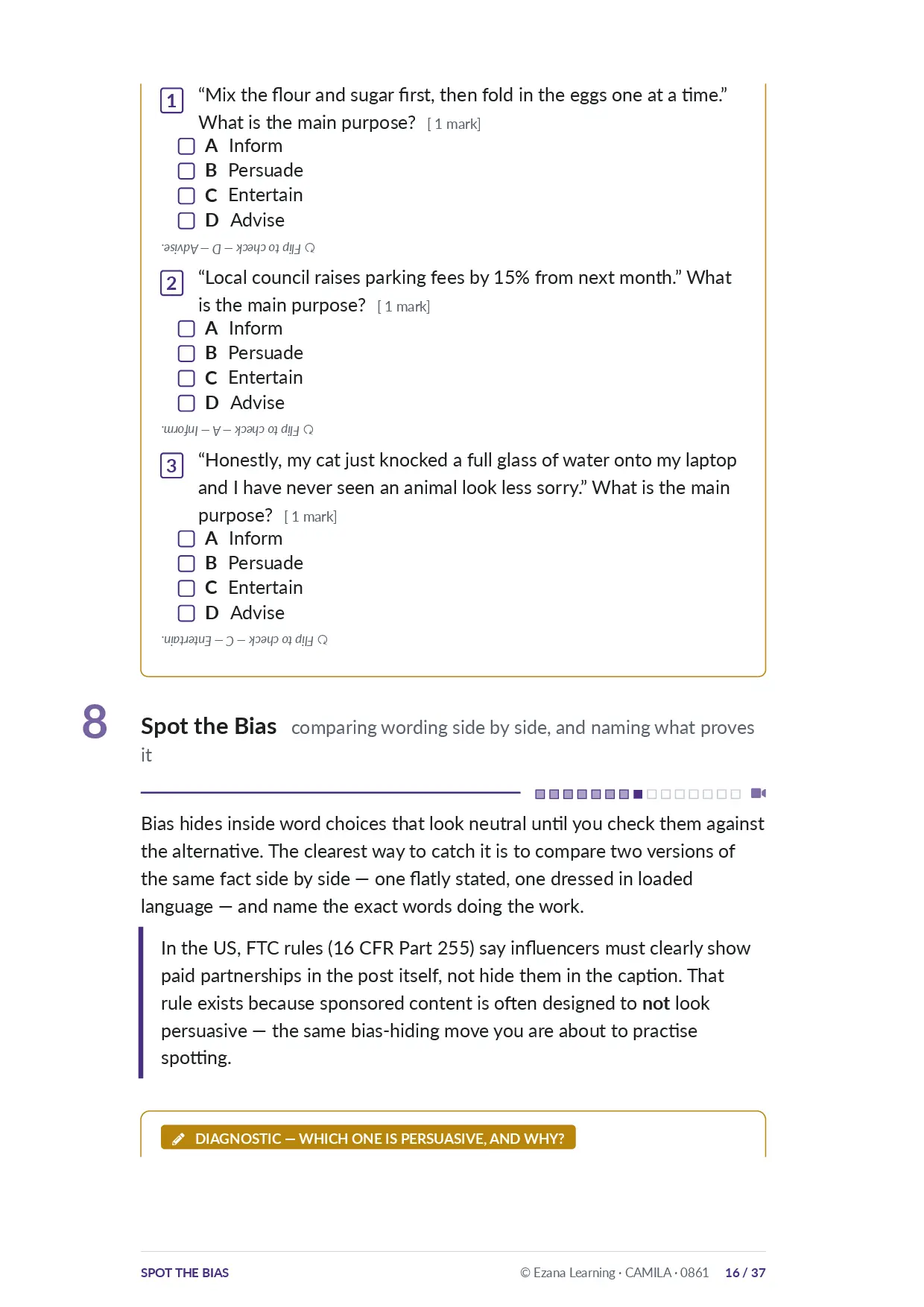
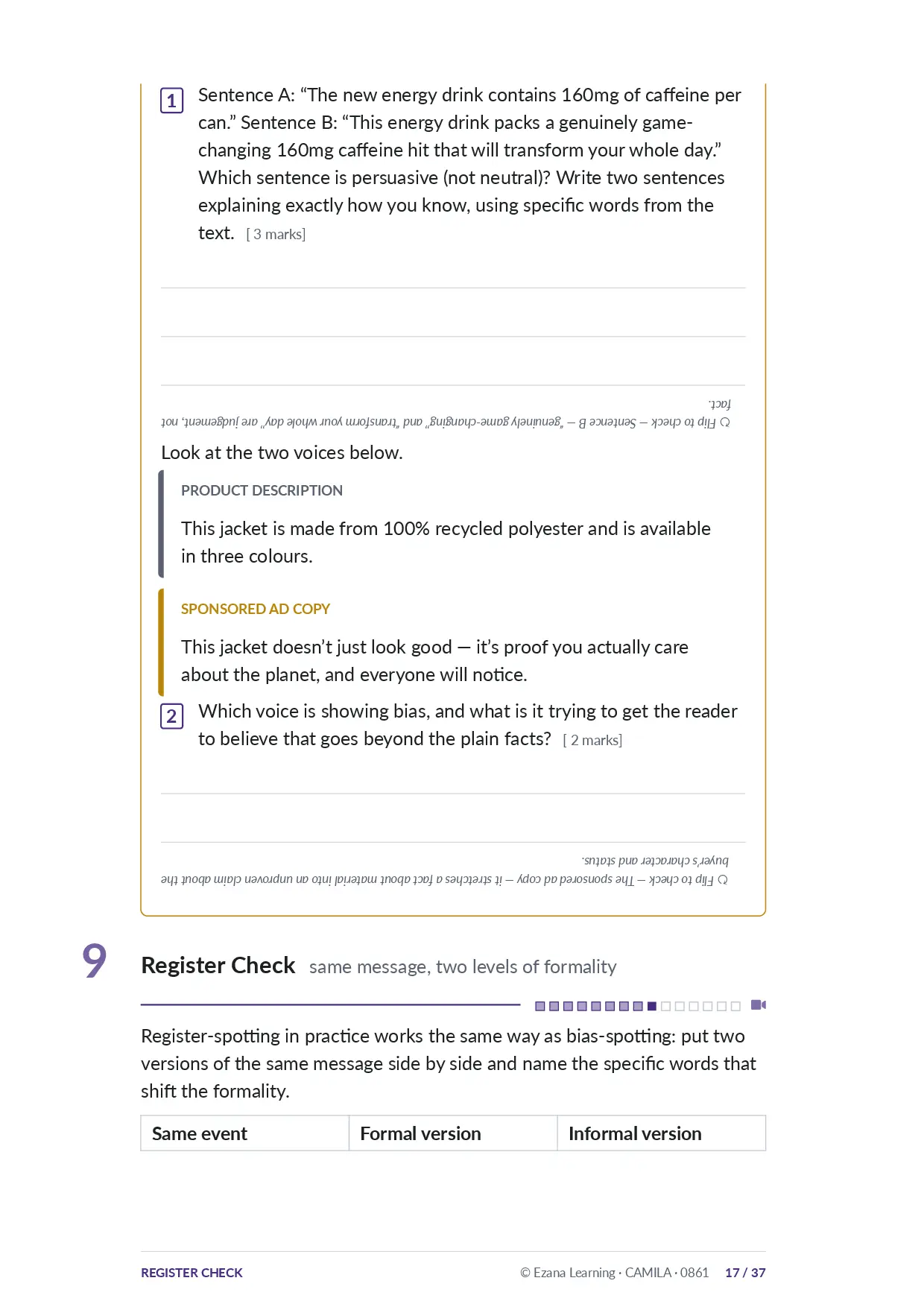
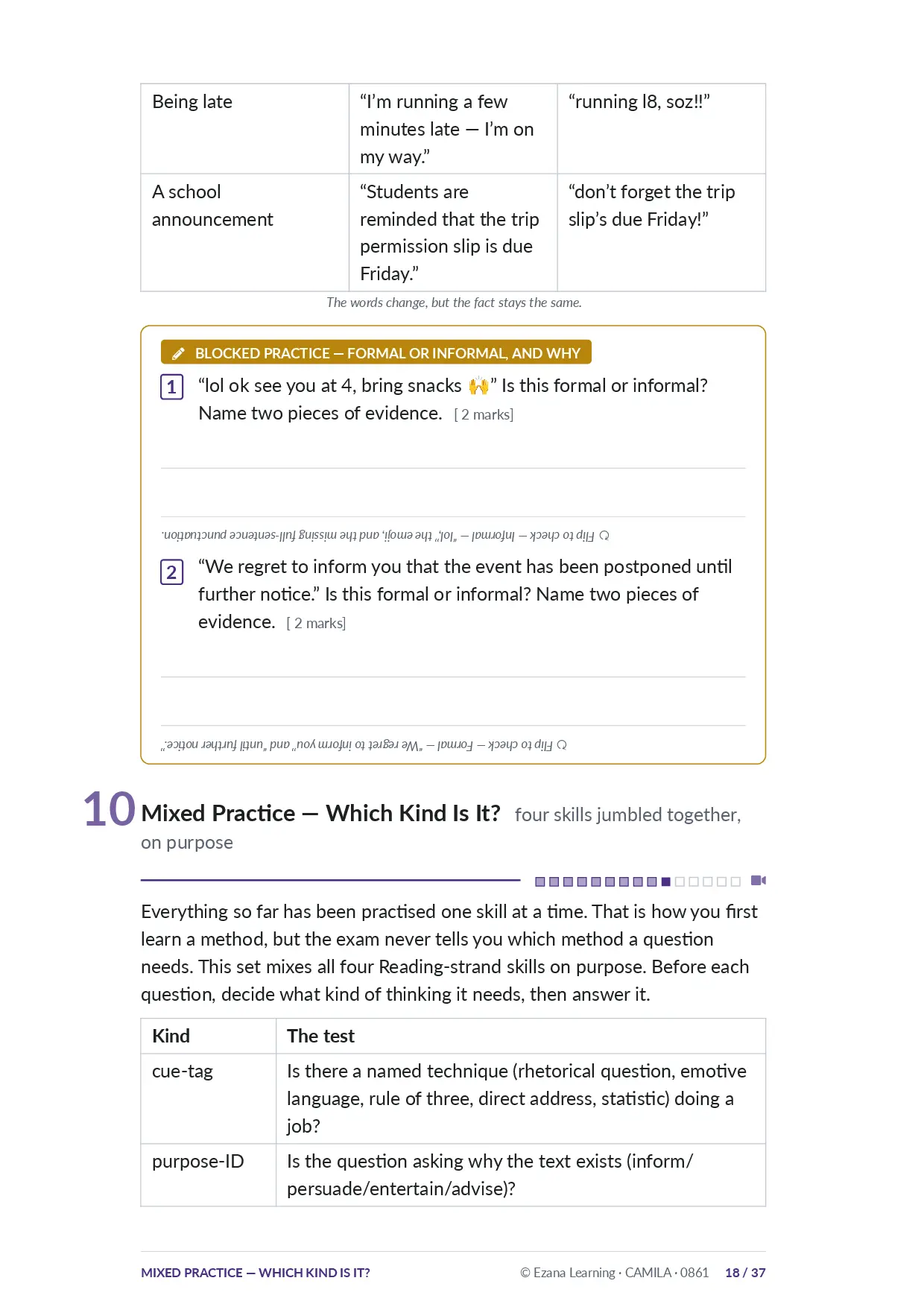
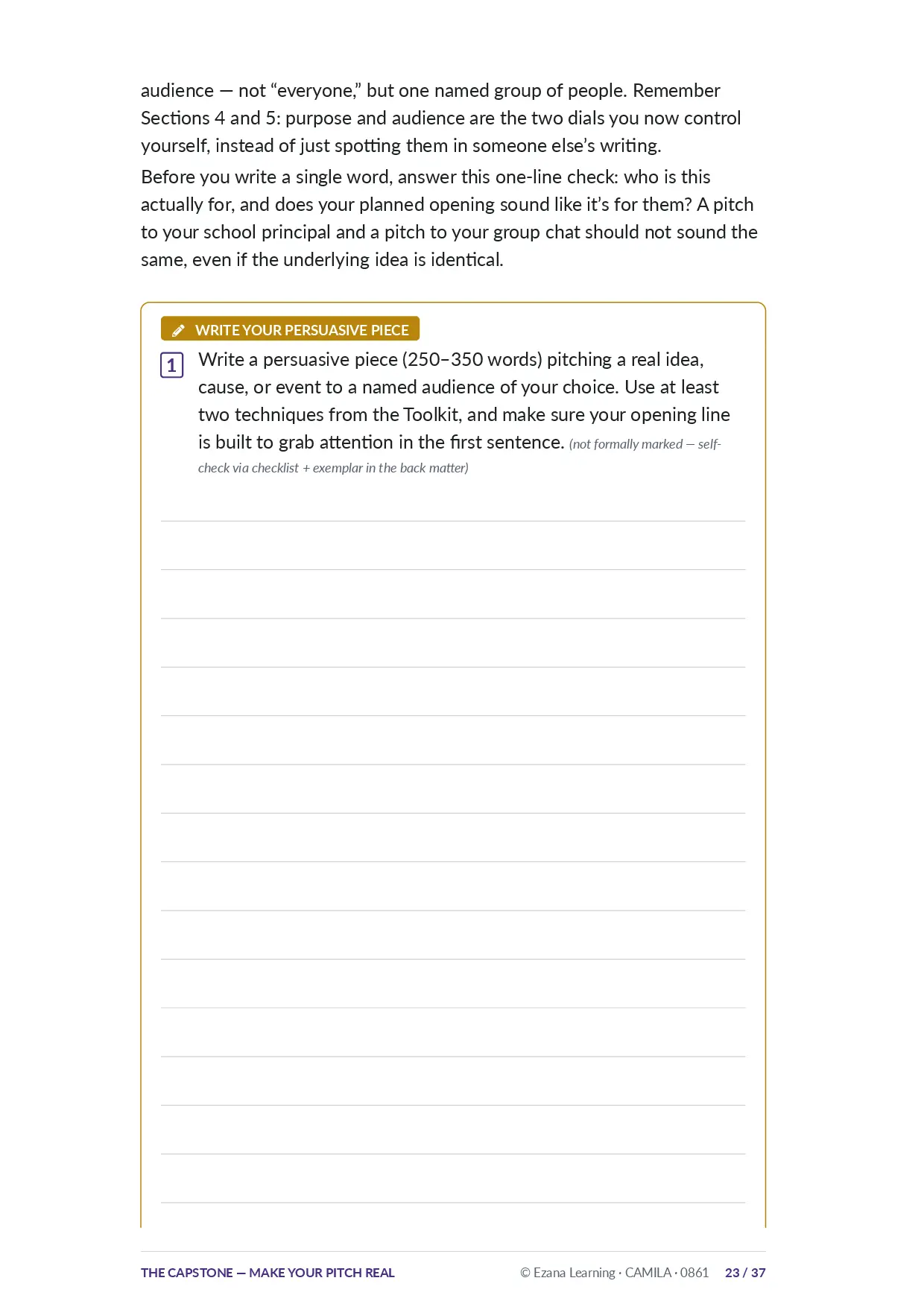
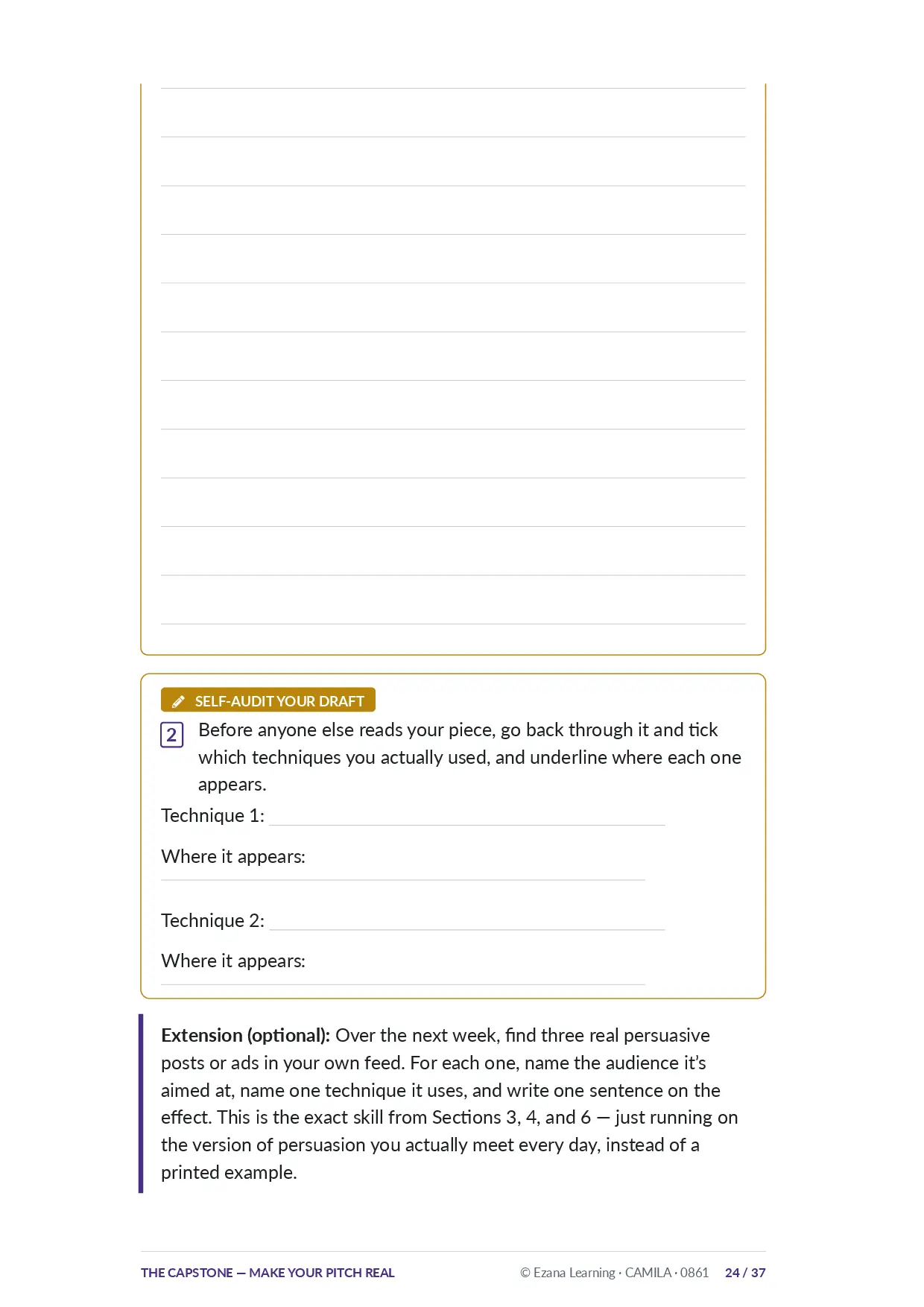
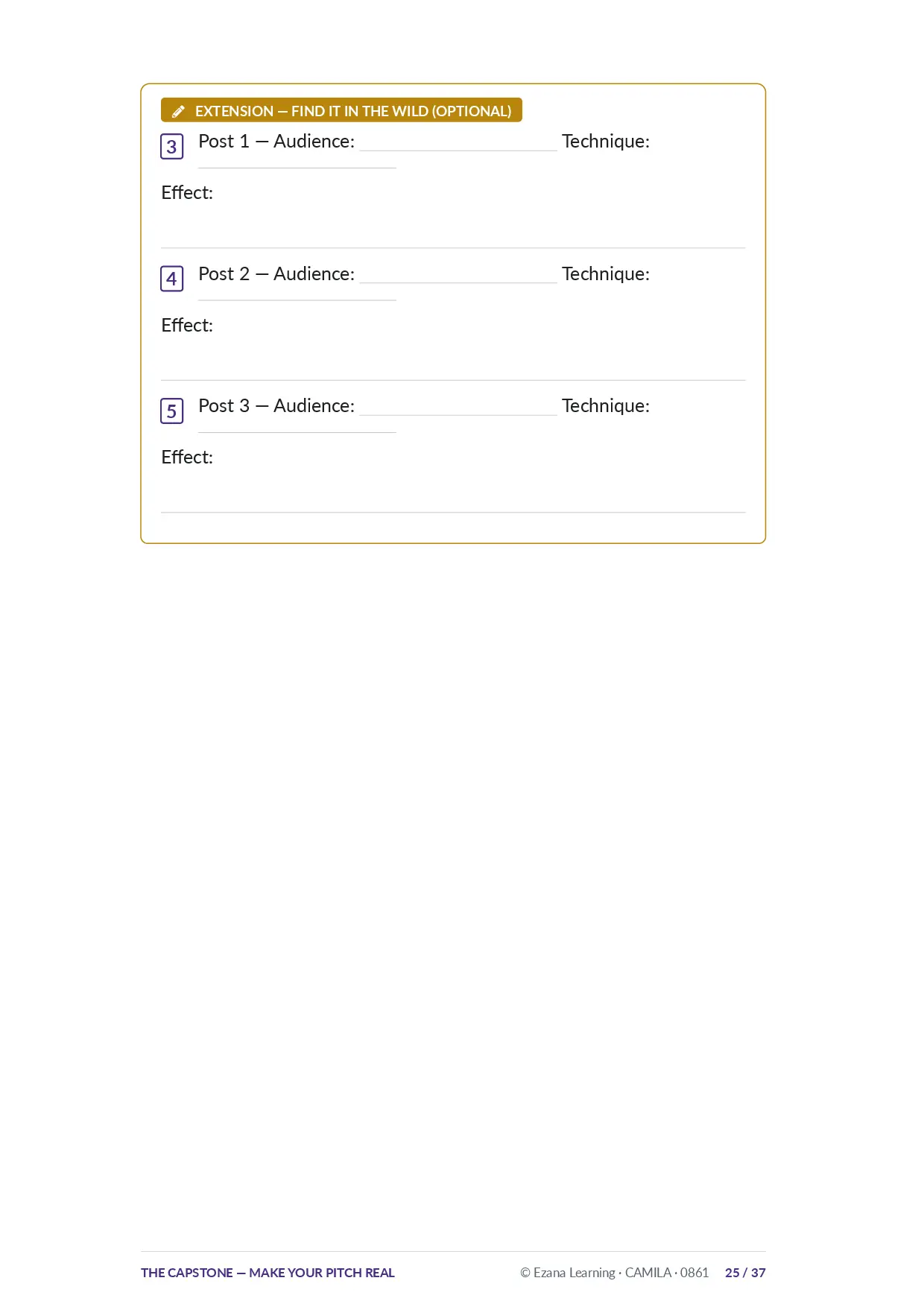
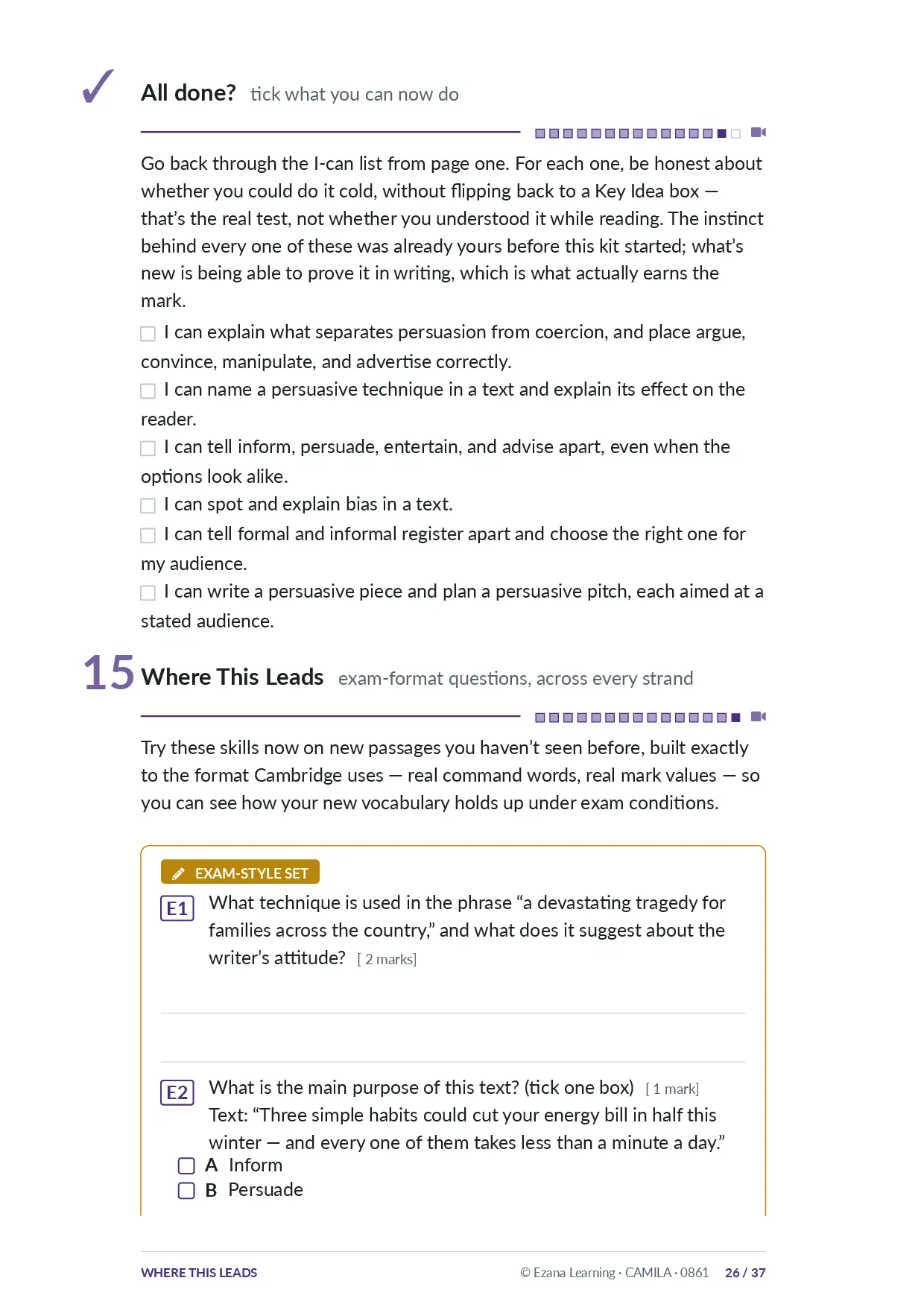
Camila — English: Persuasive language
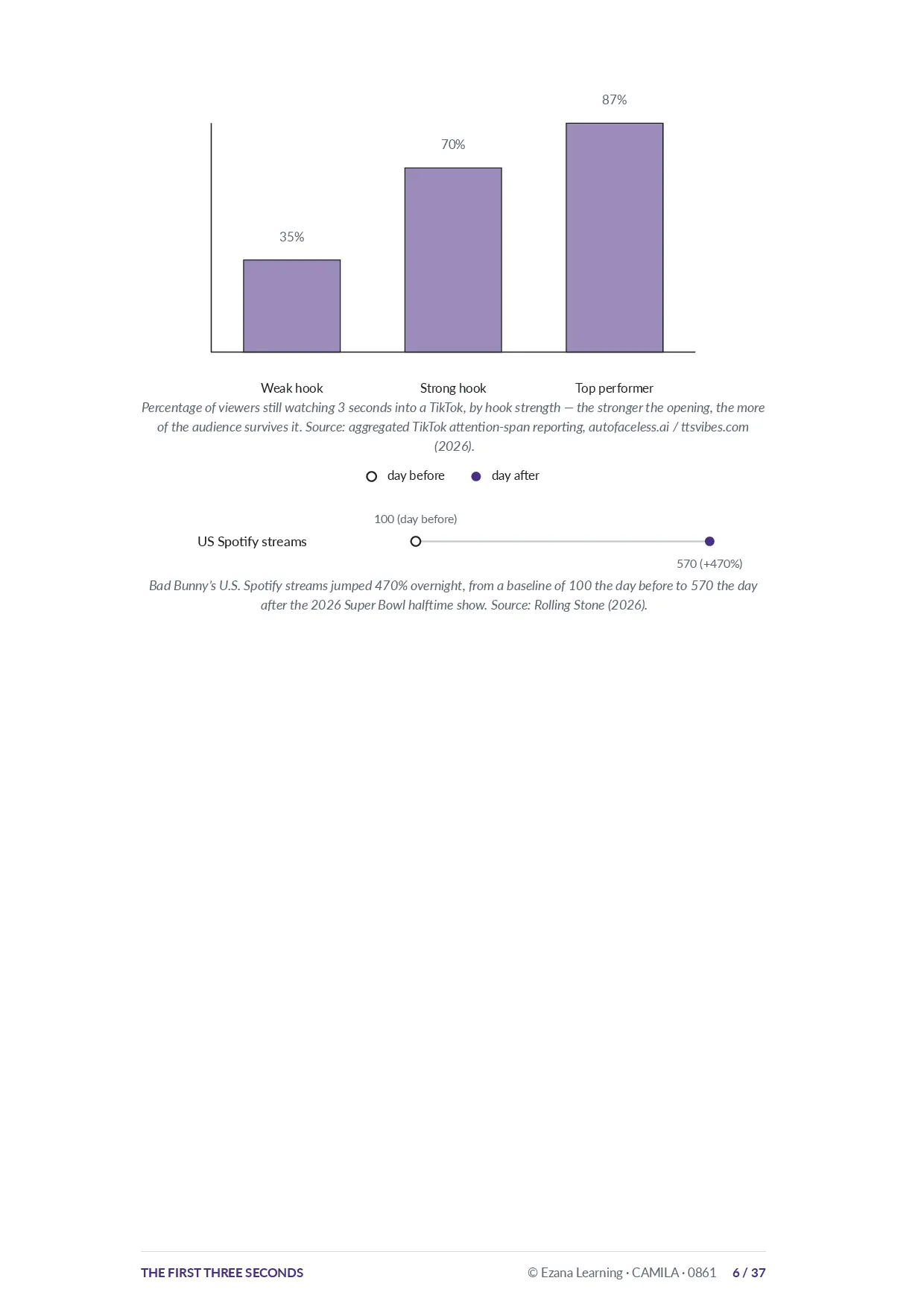
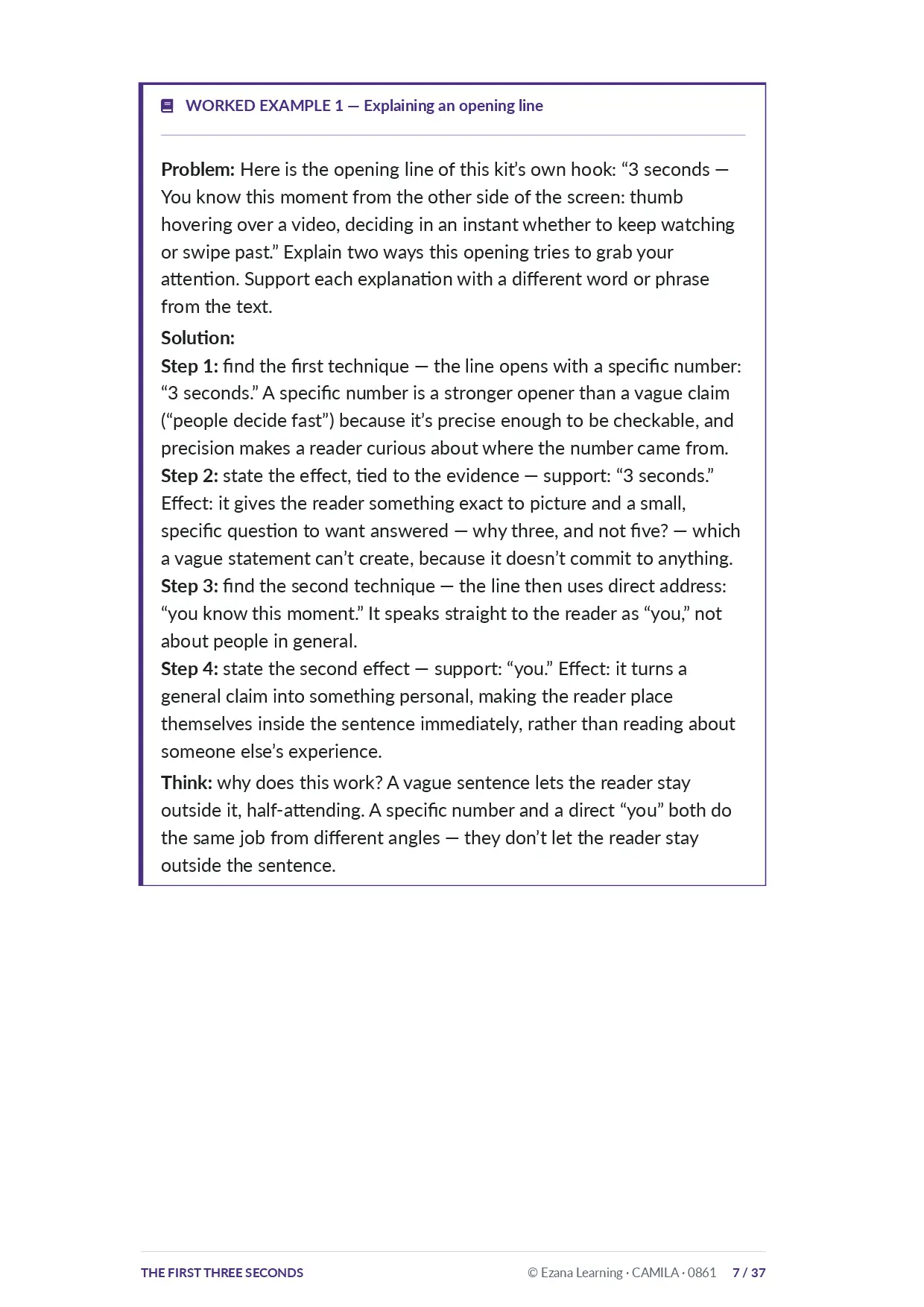
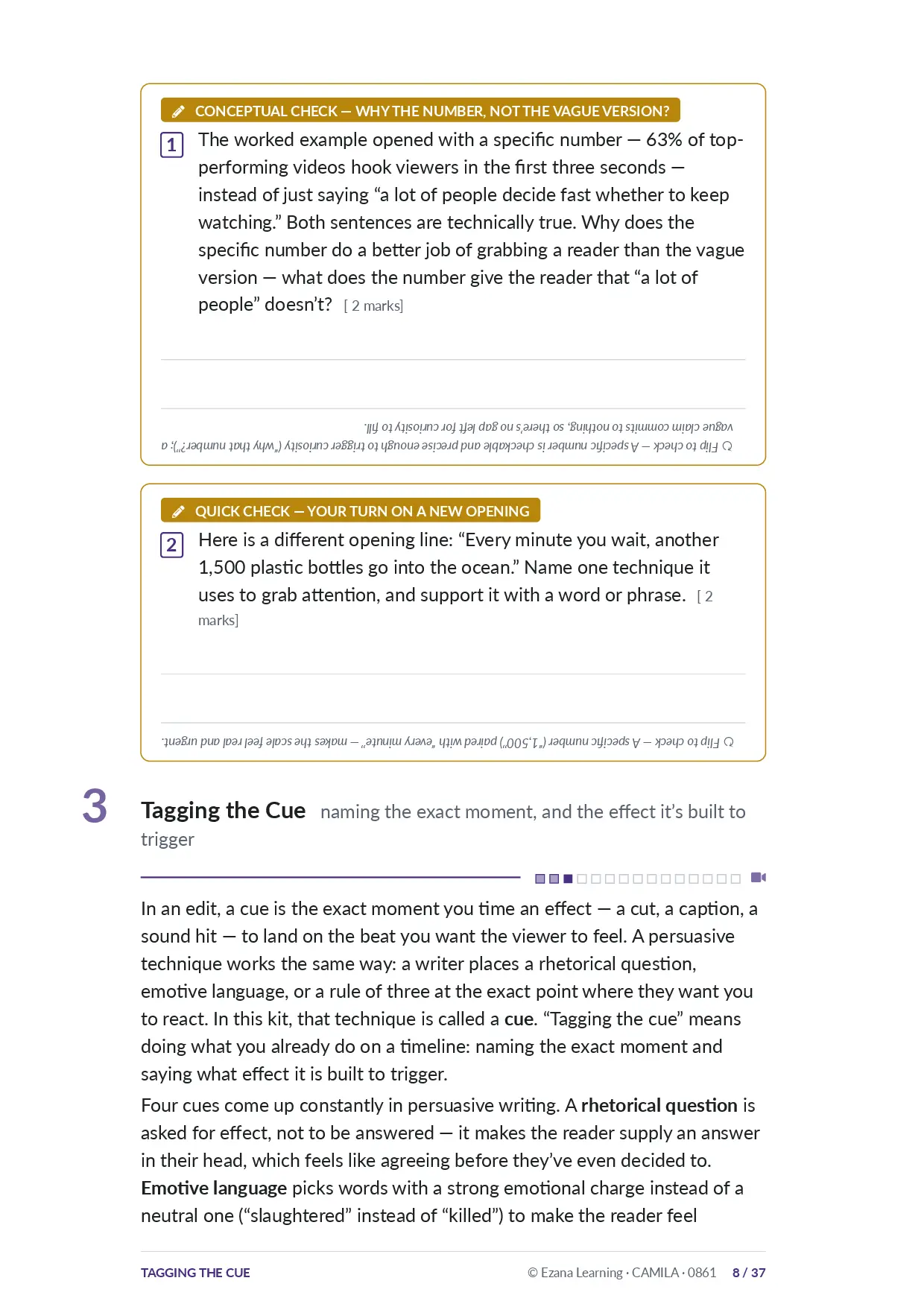
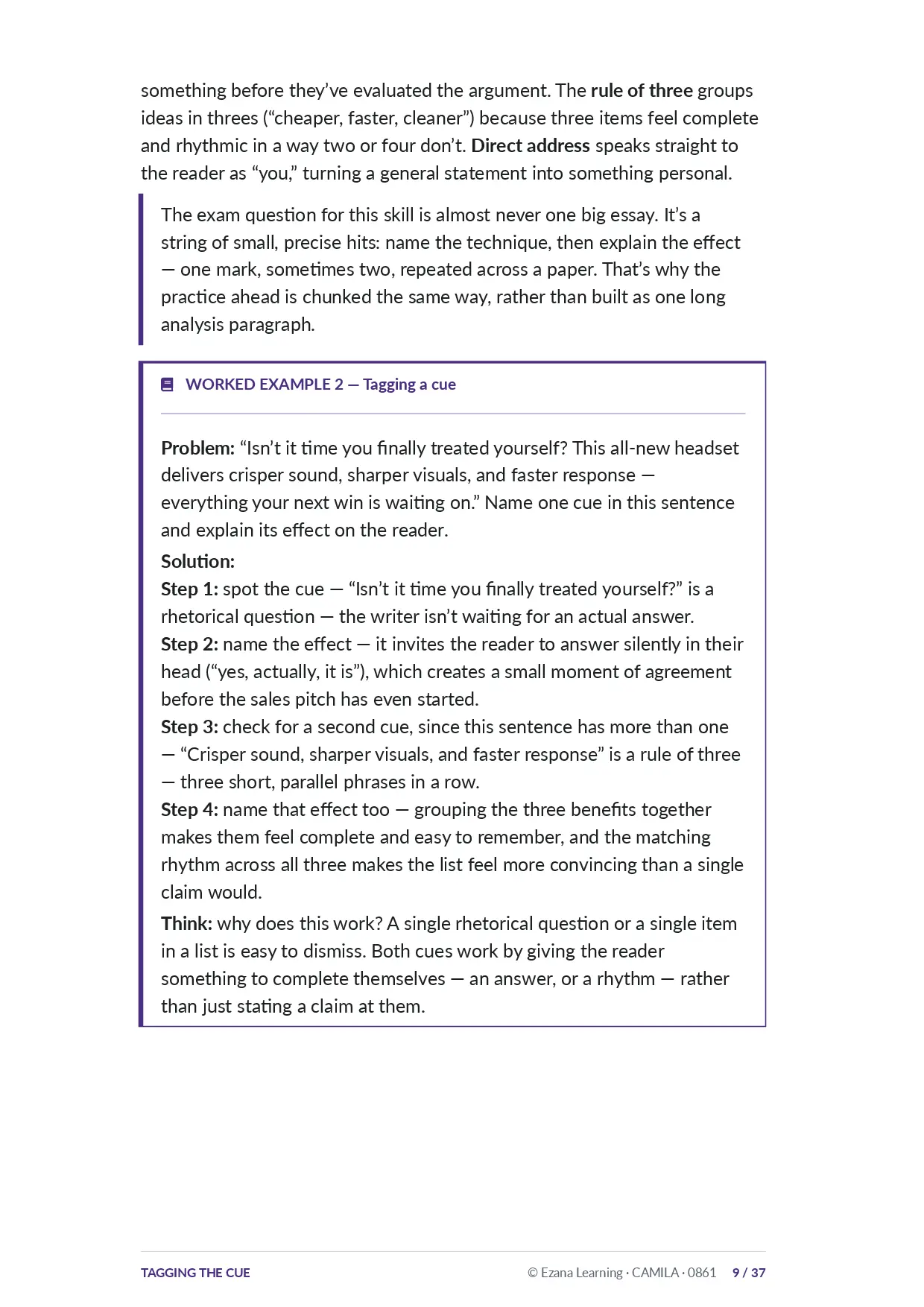
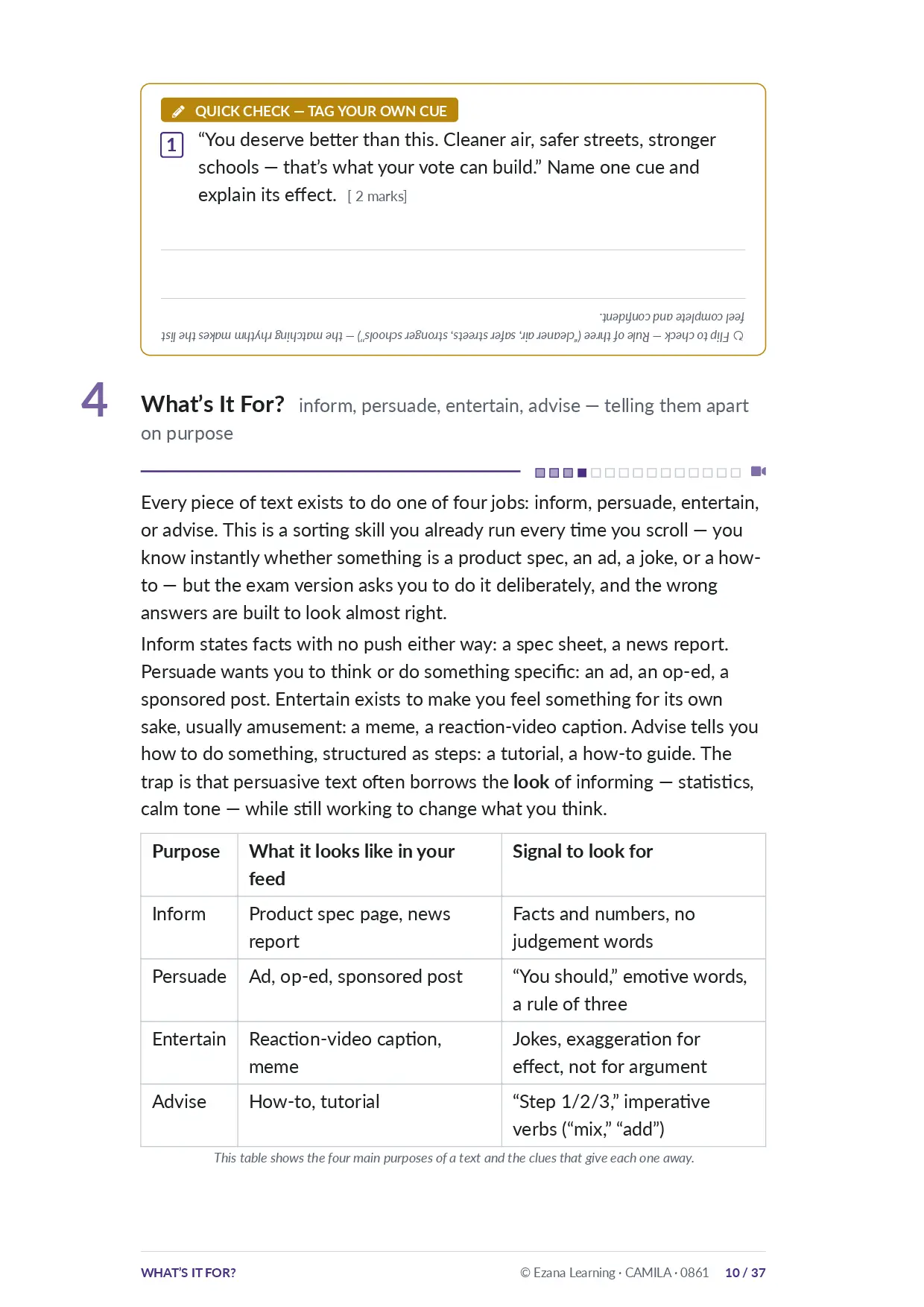
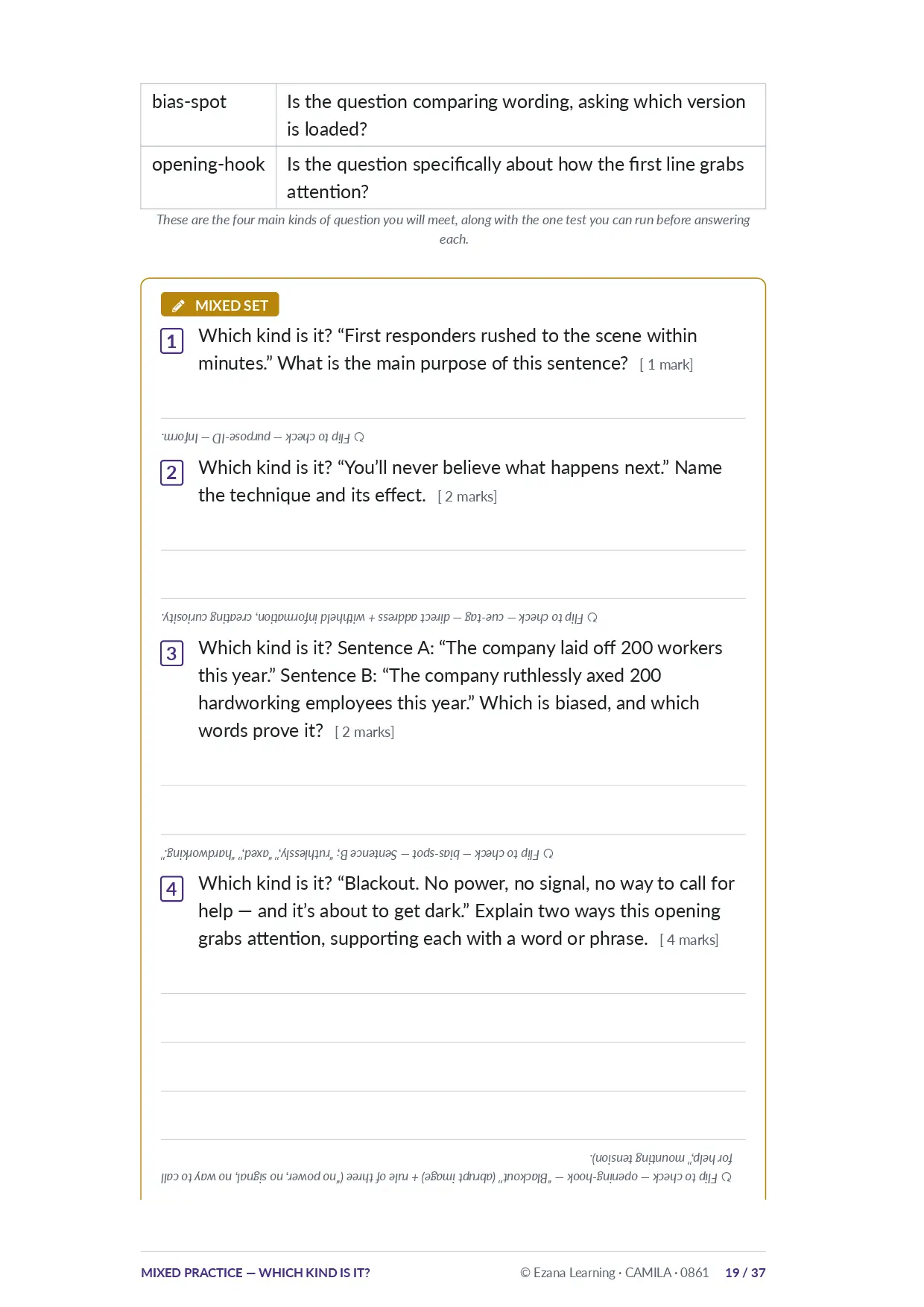
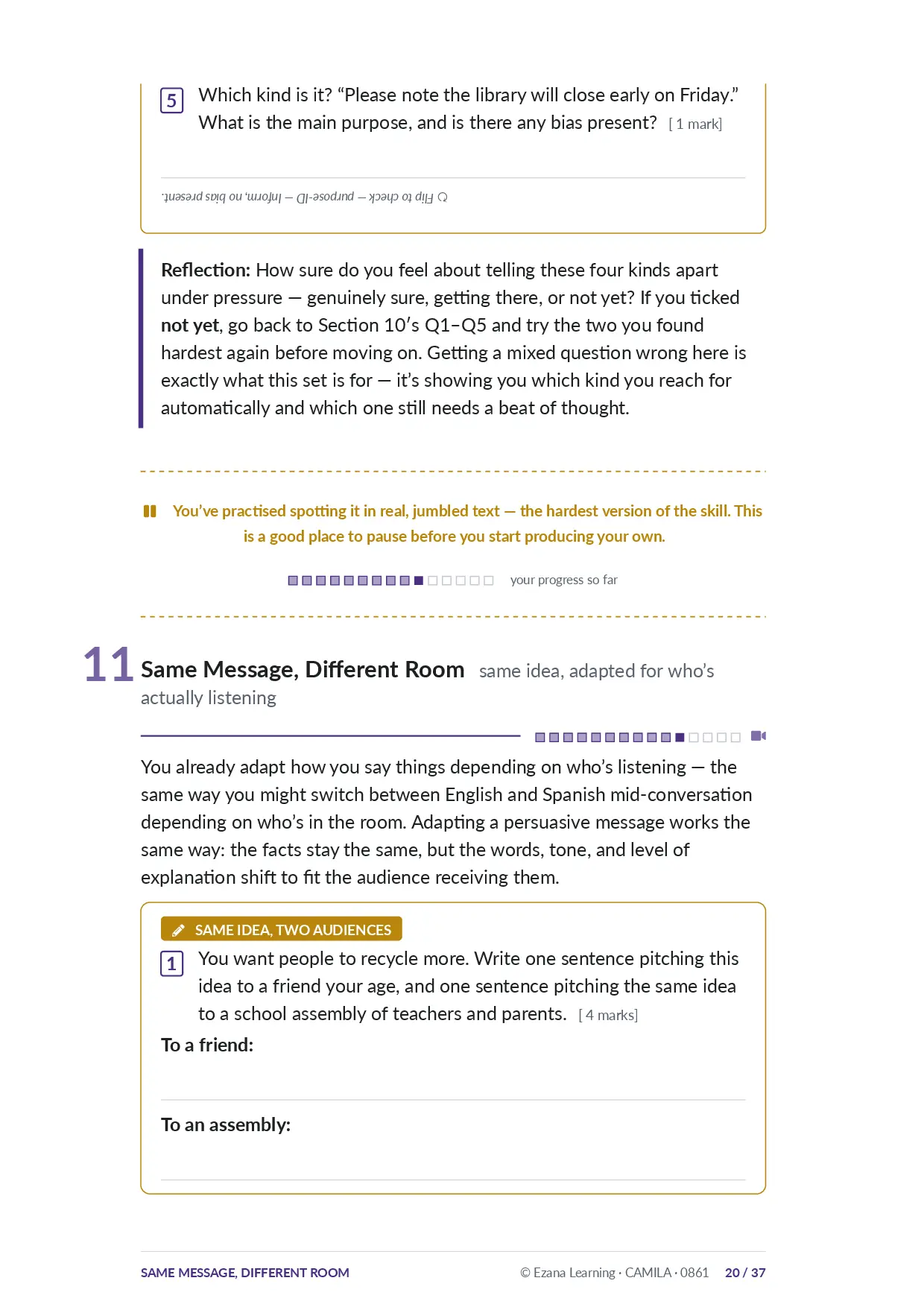
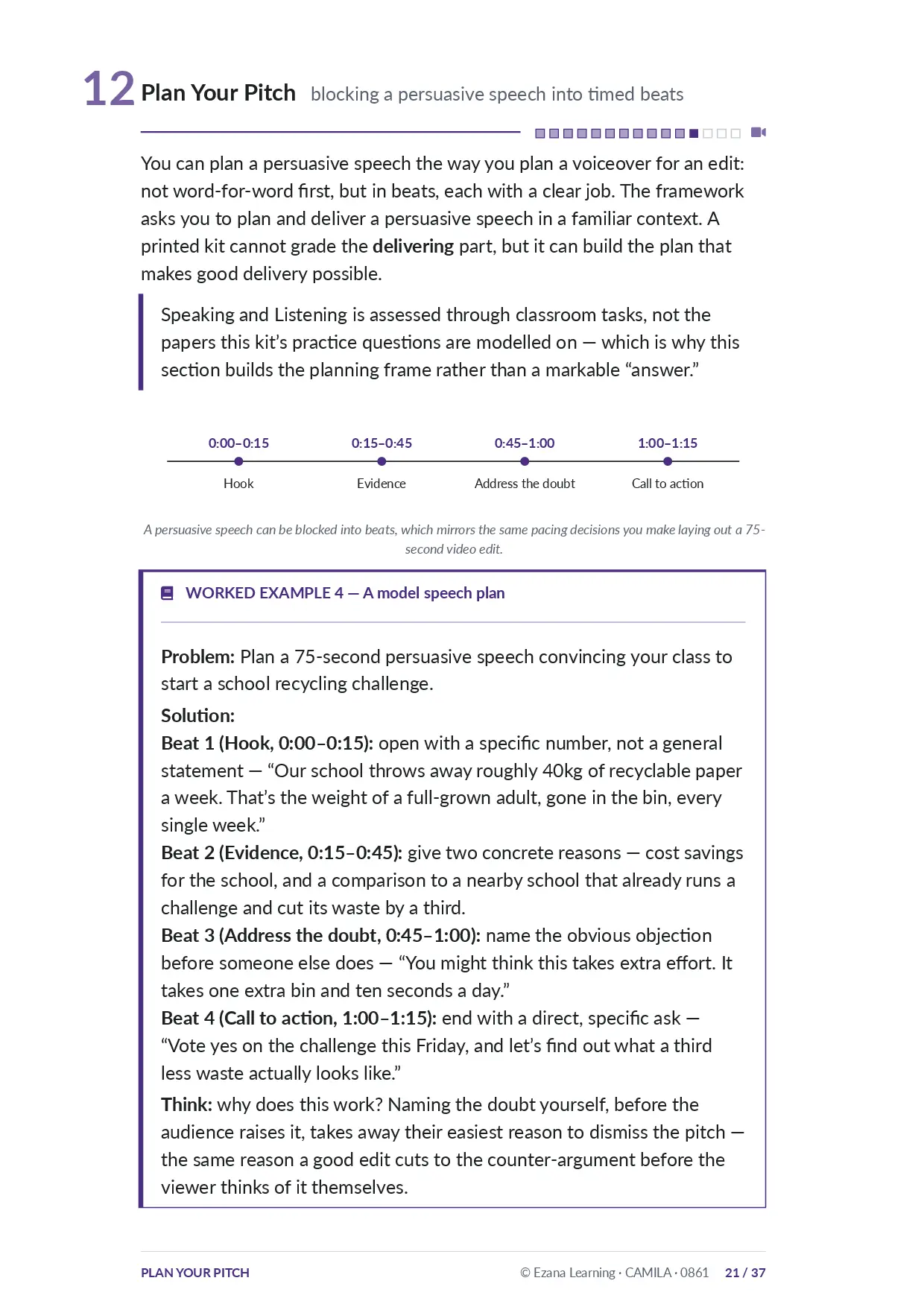
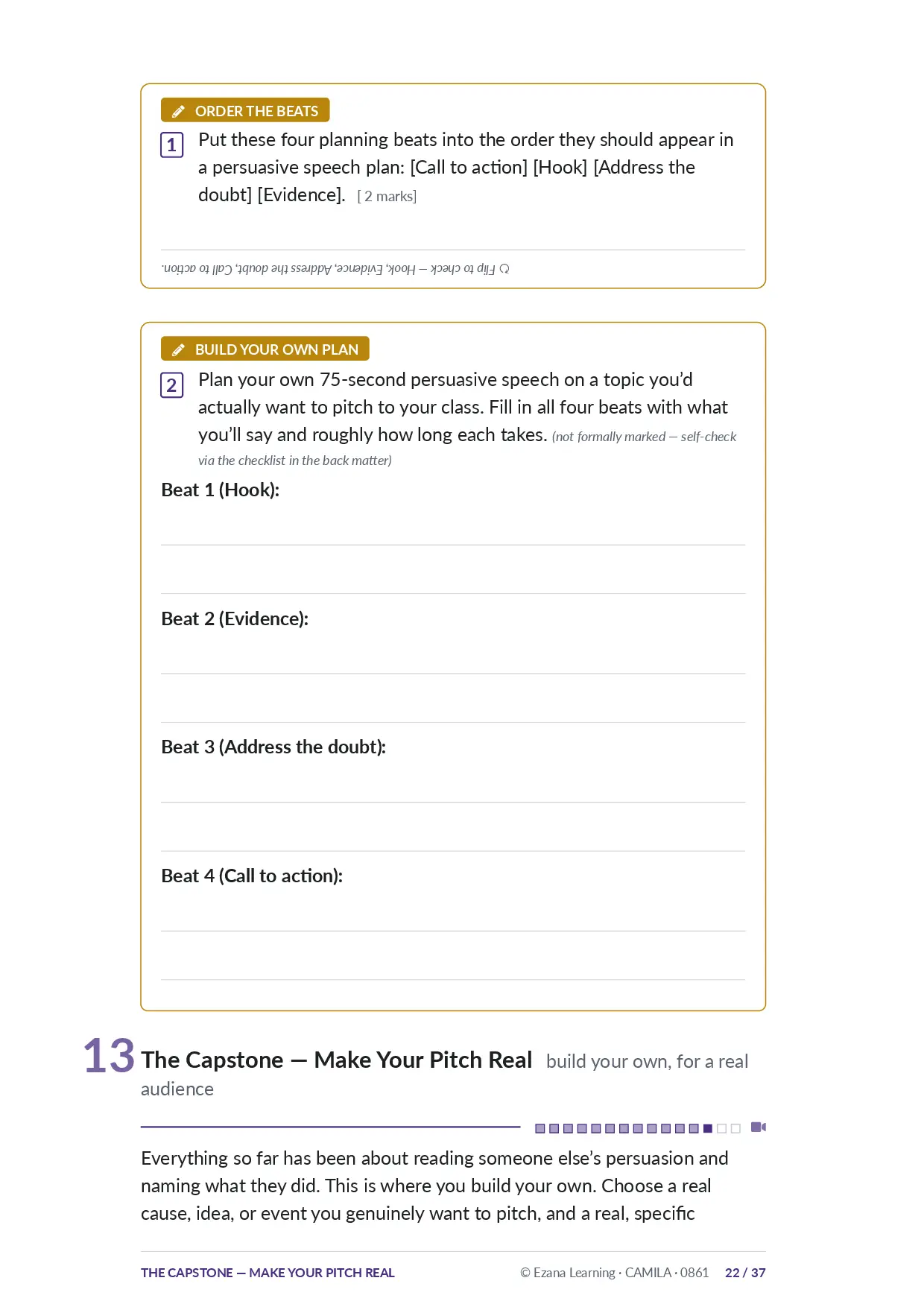
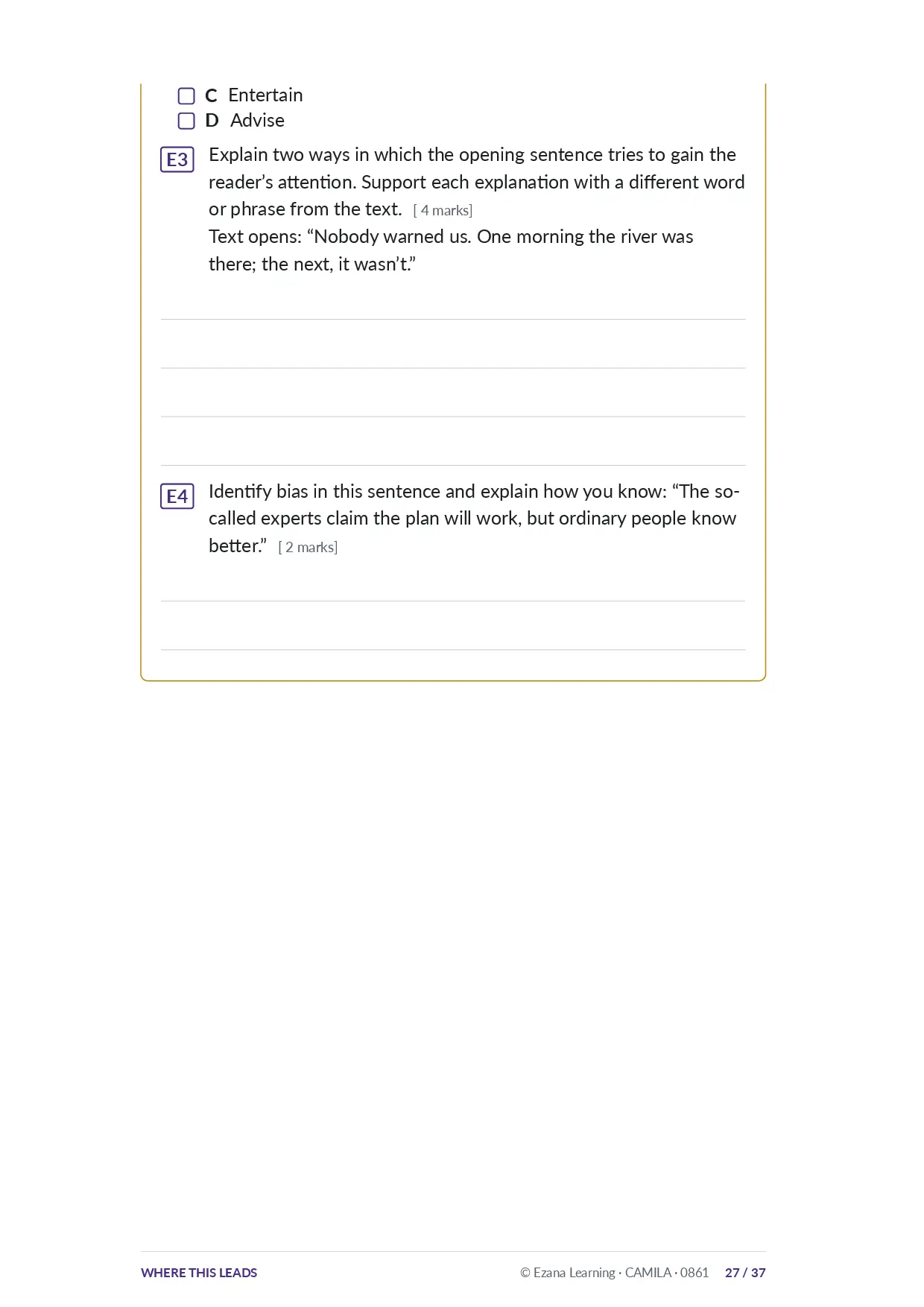
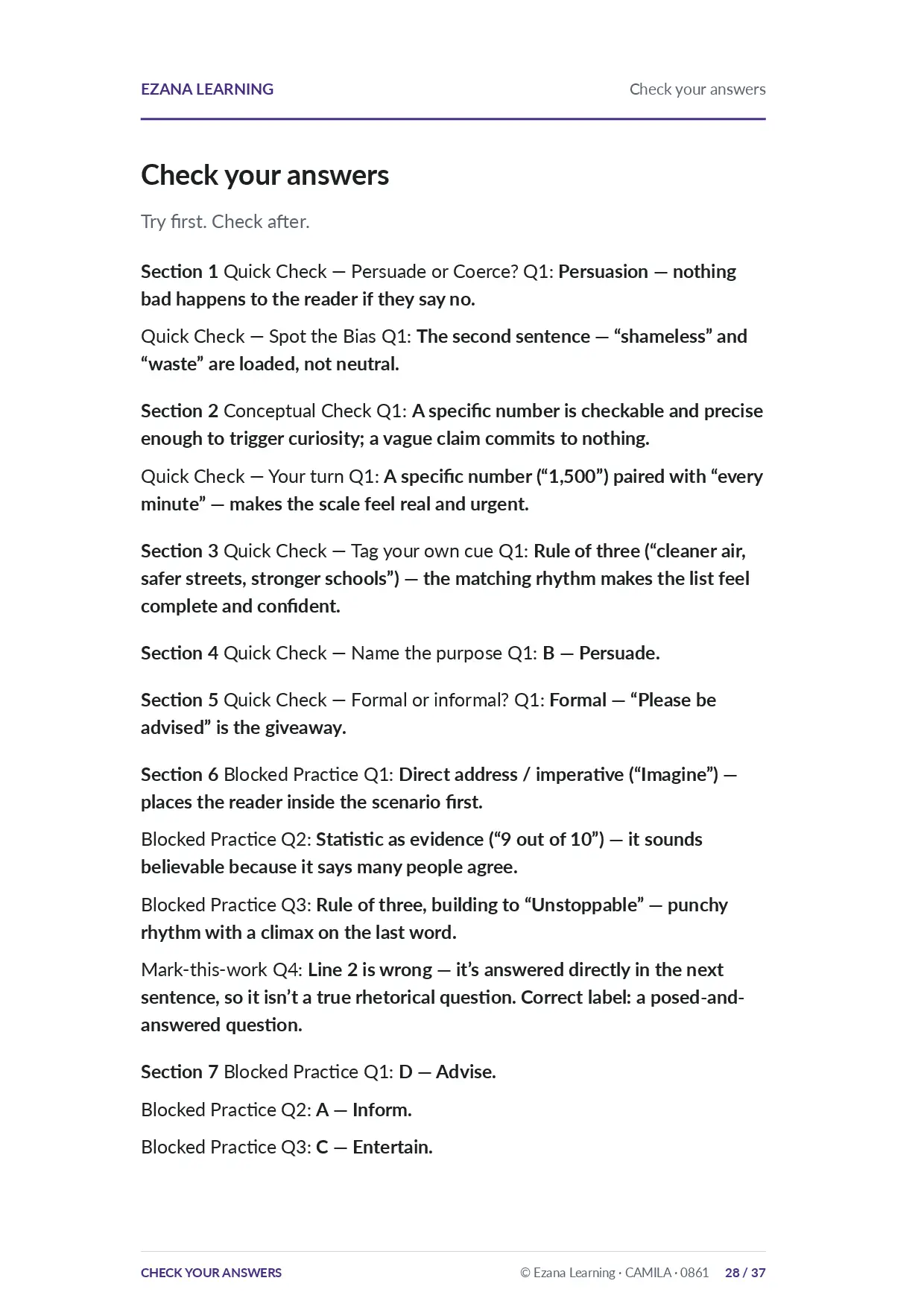
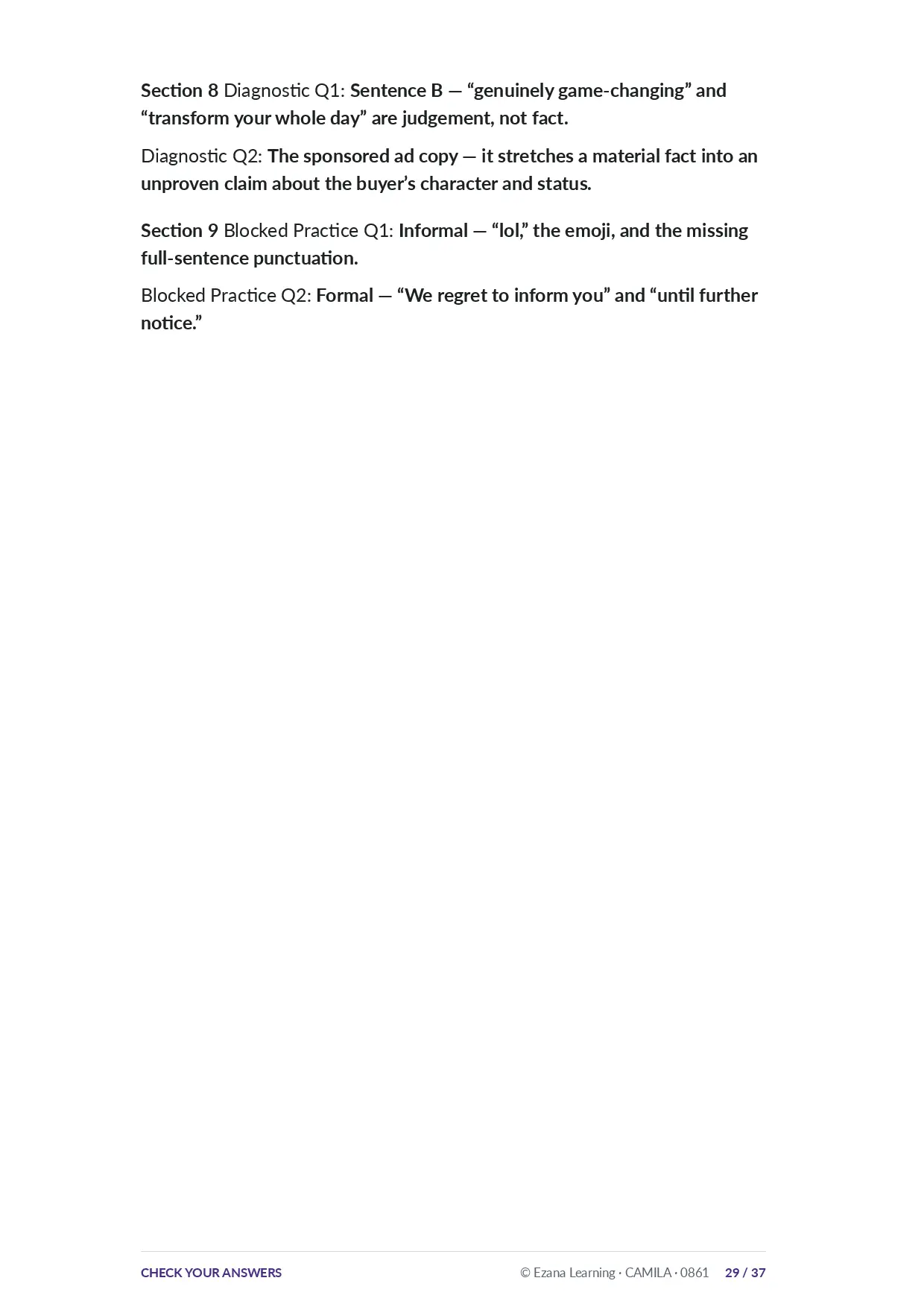
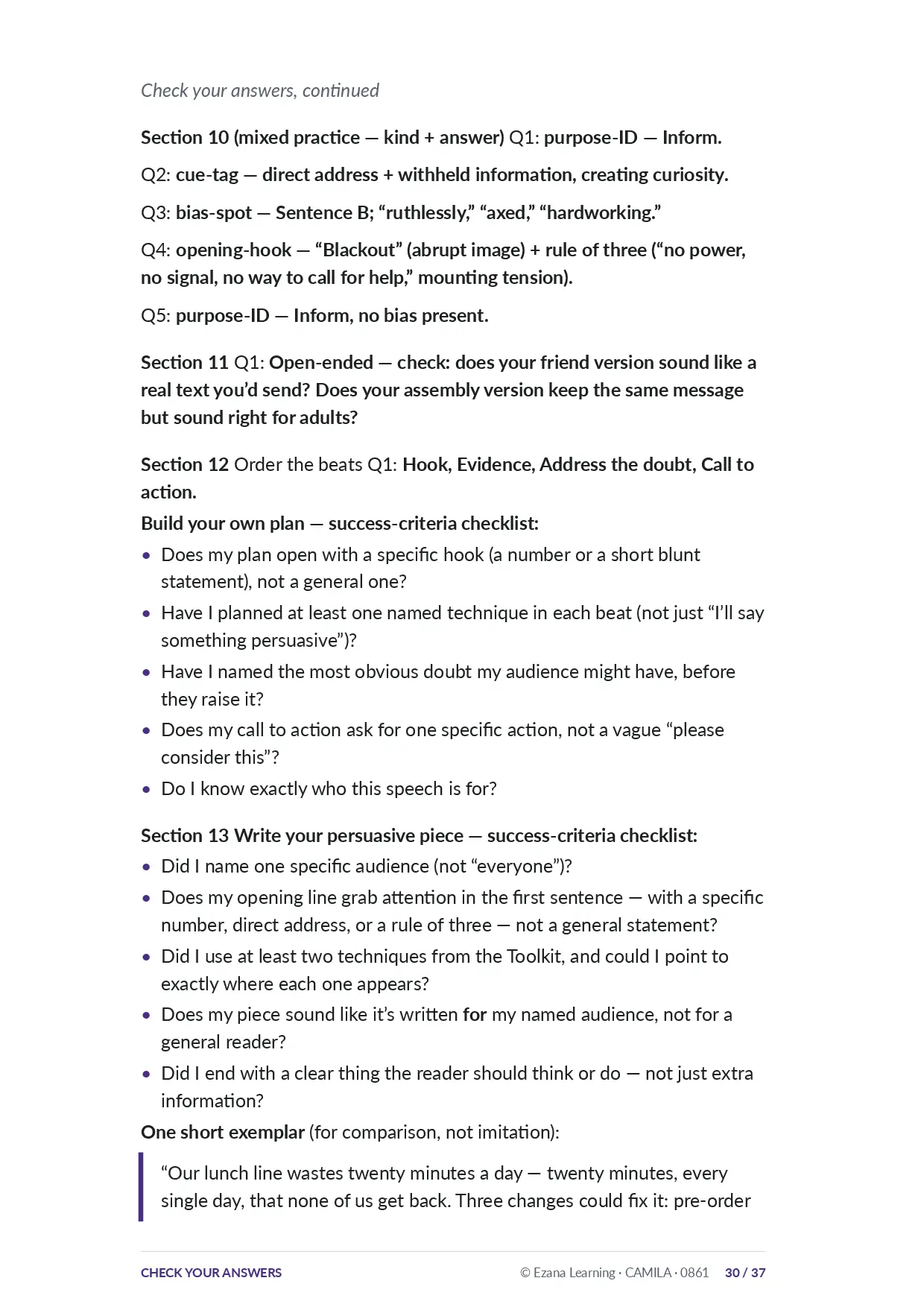
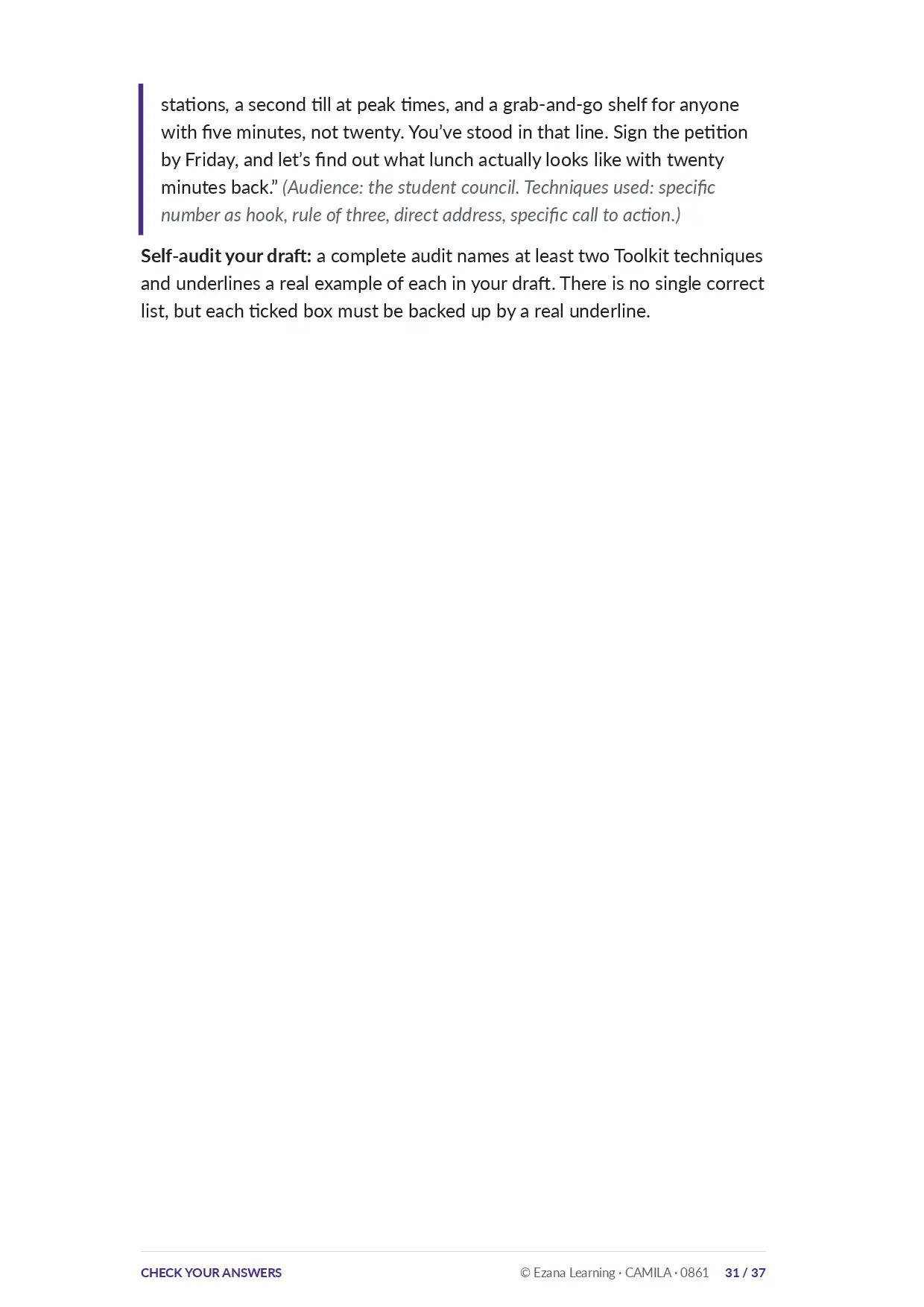
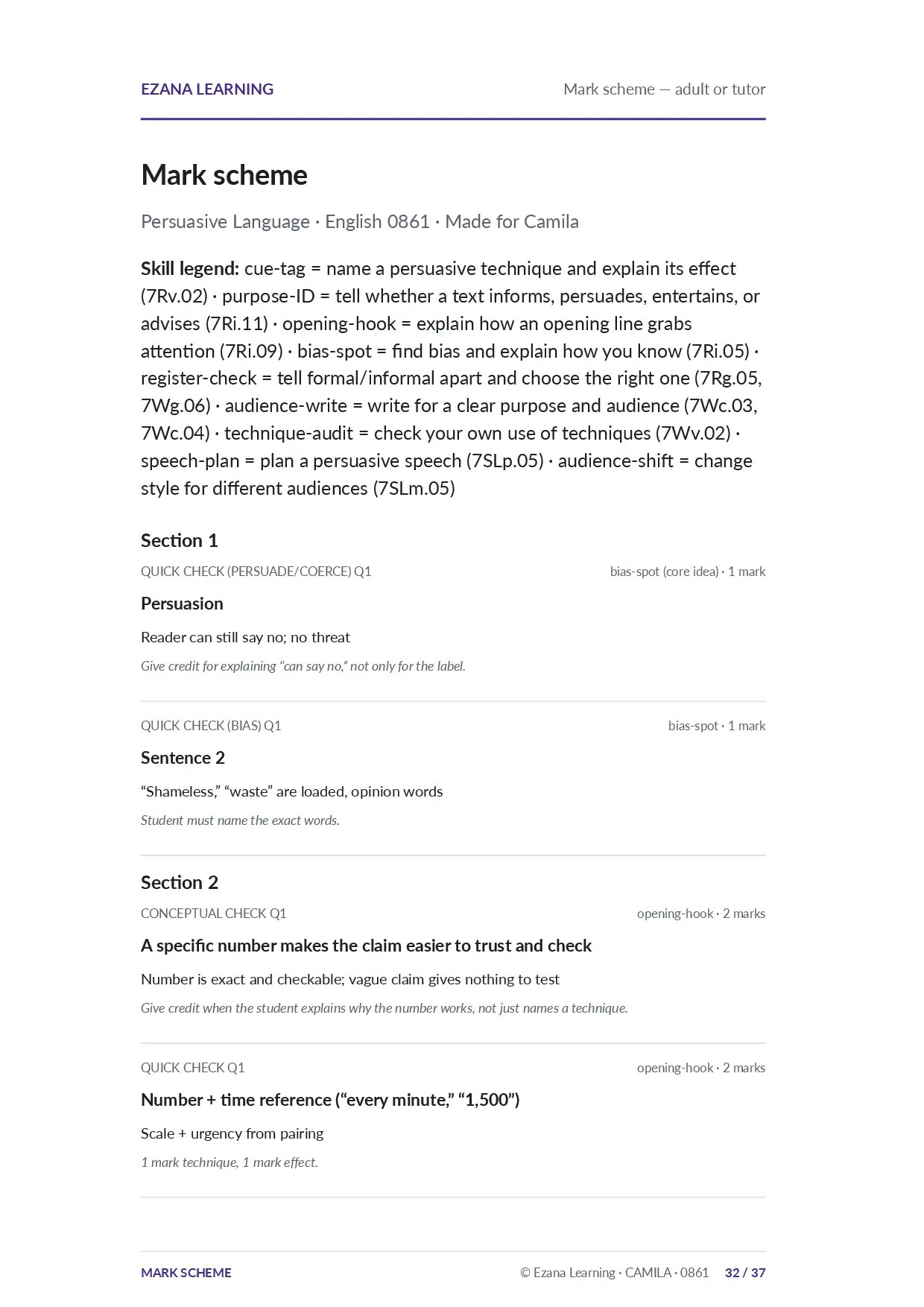
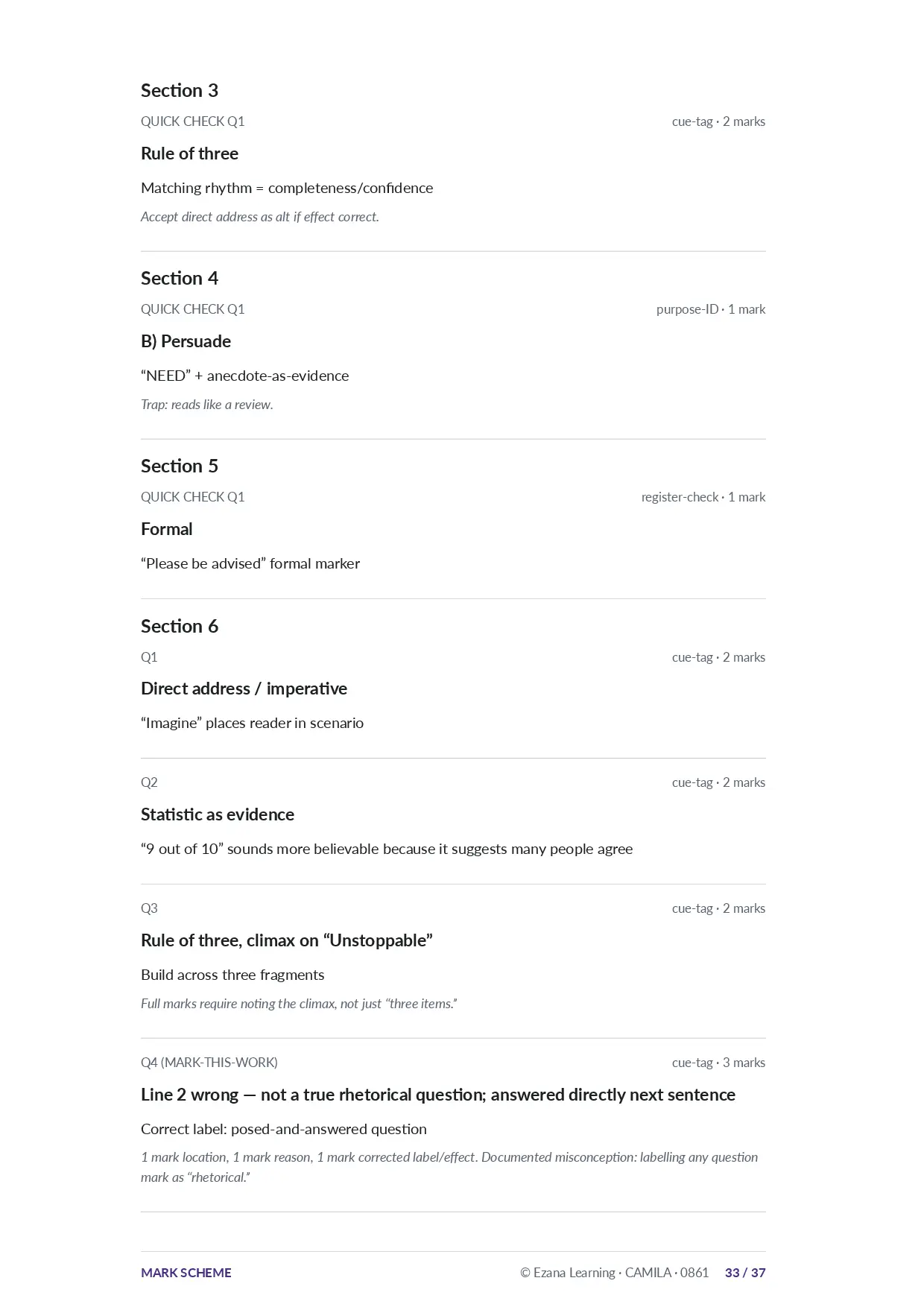
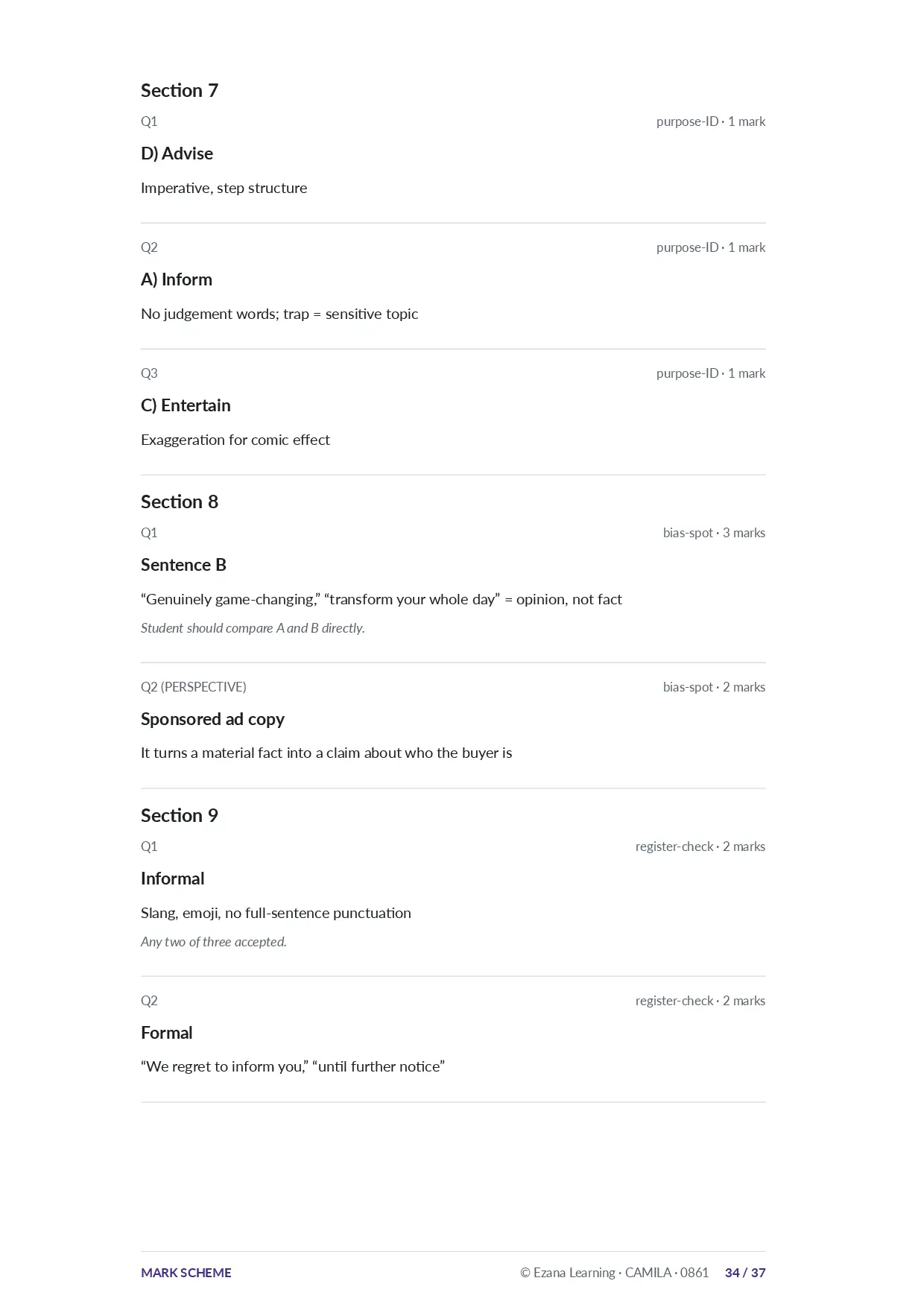
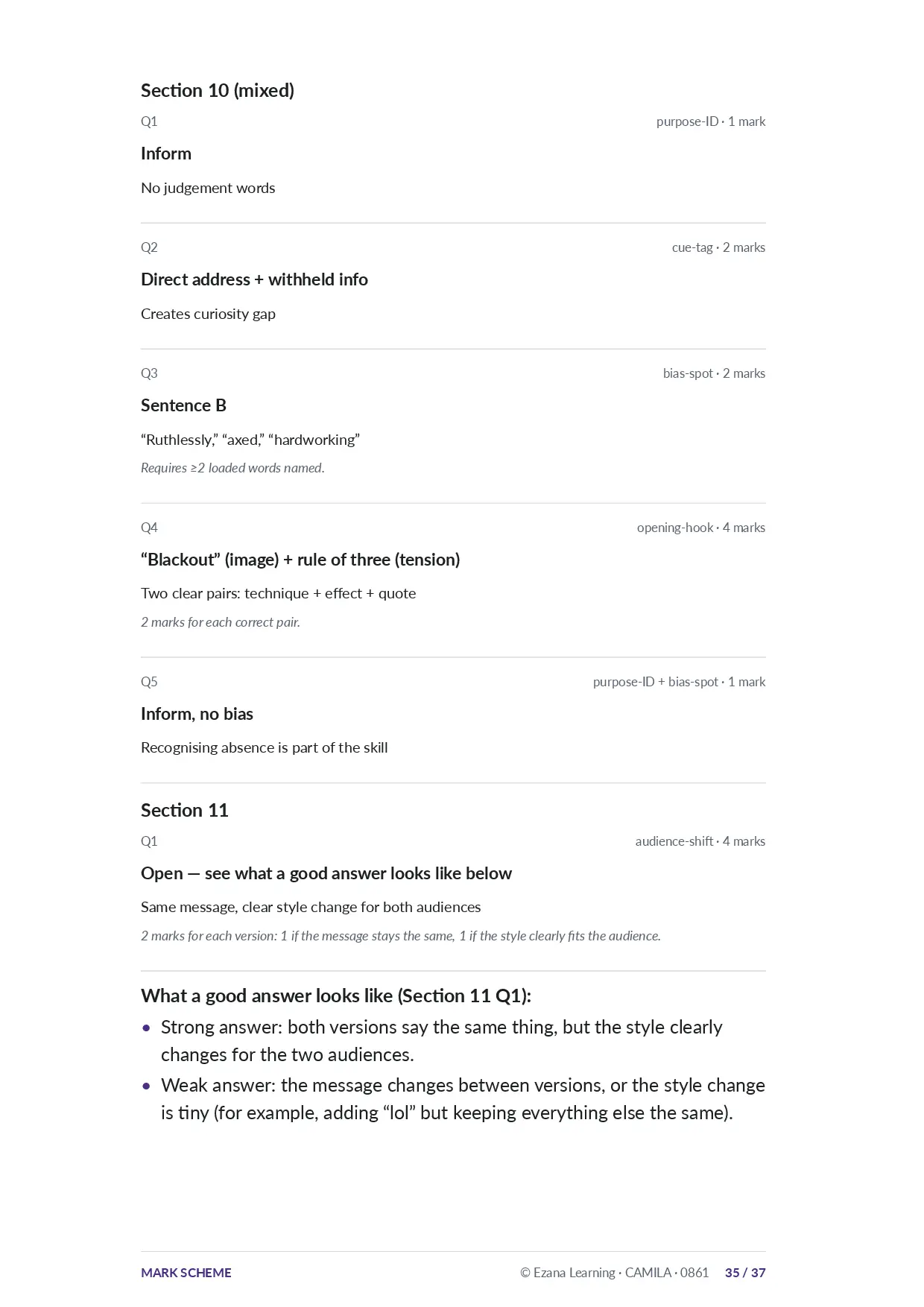
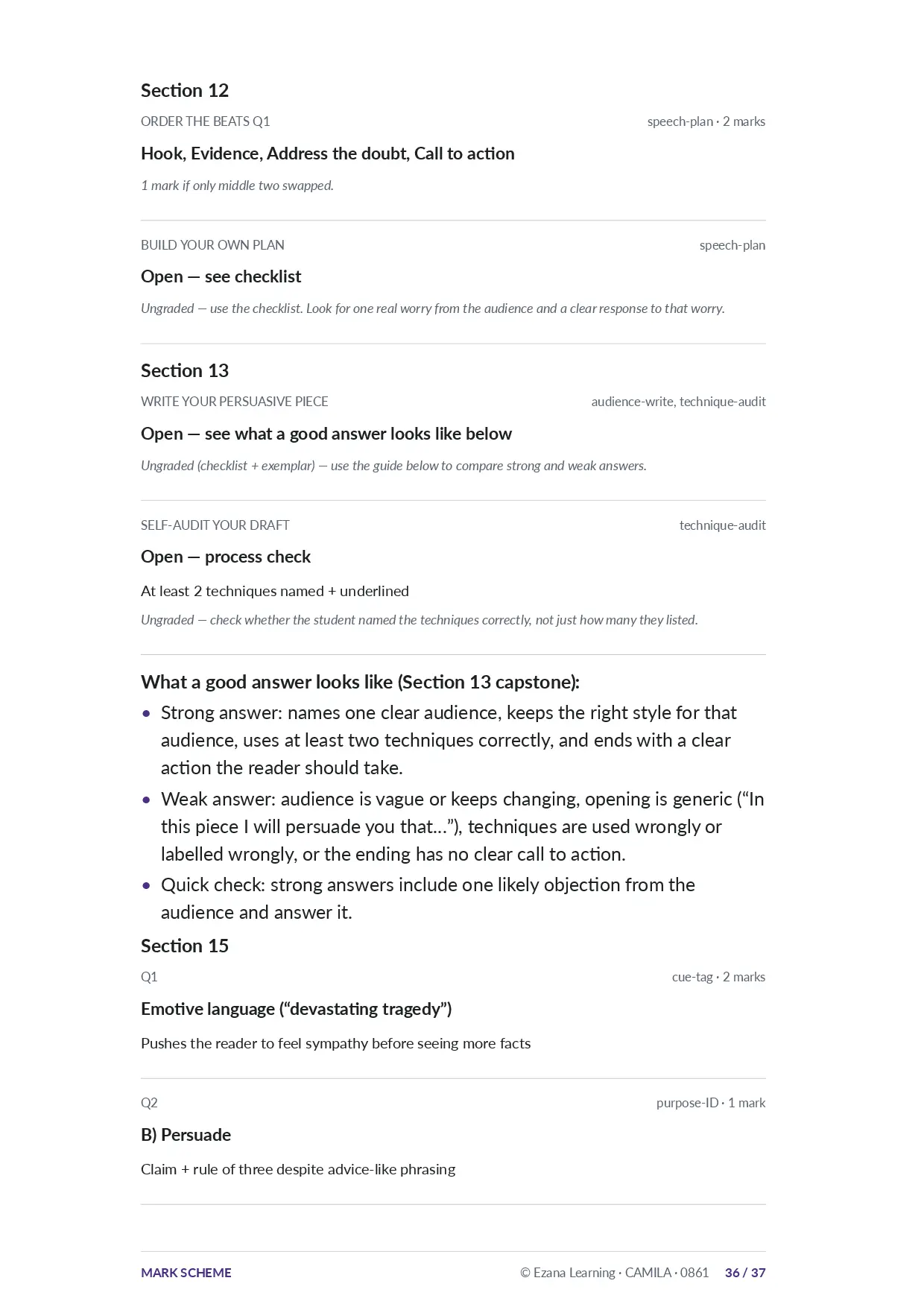
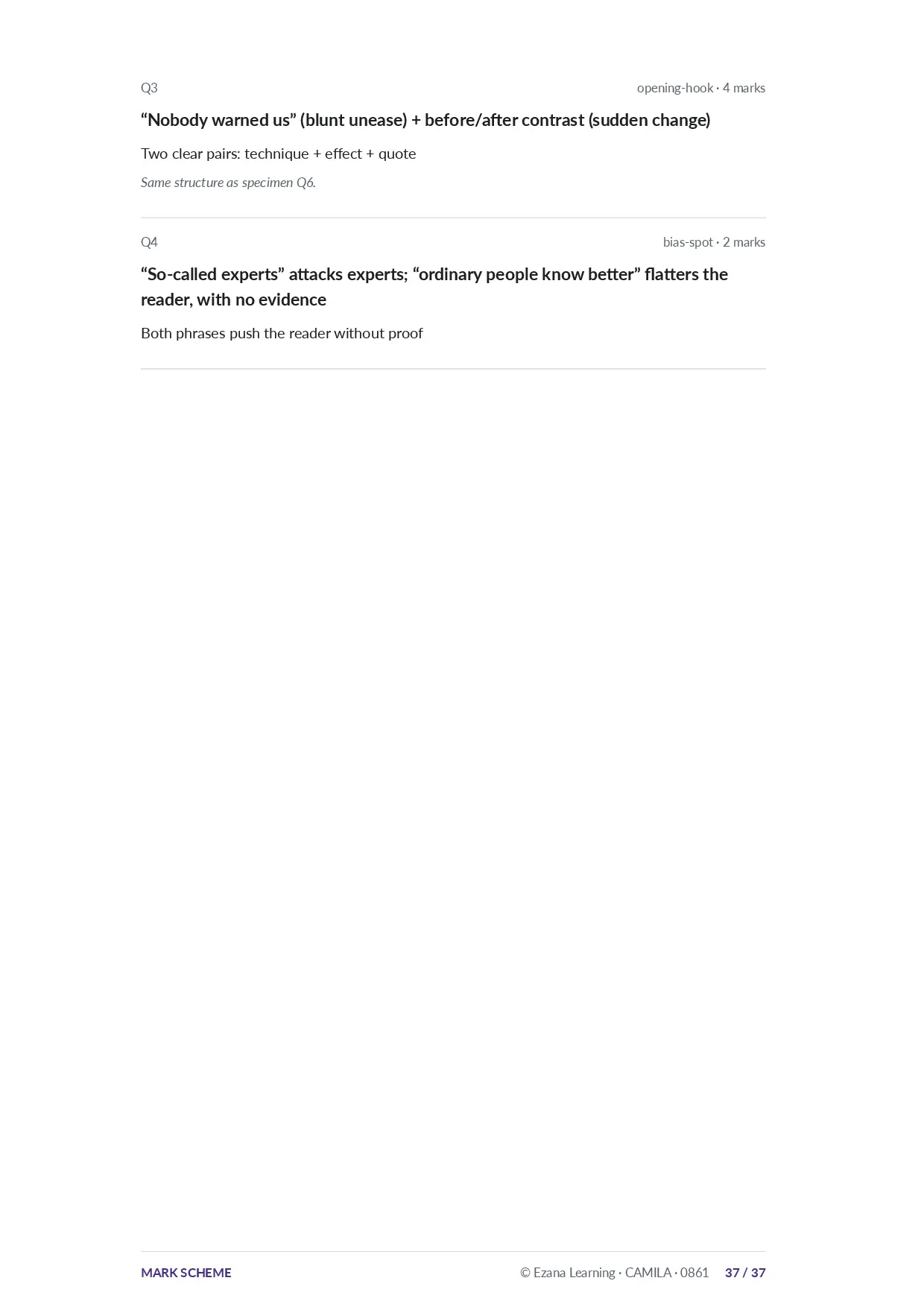
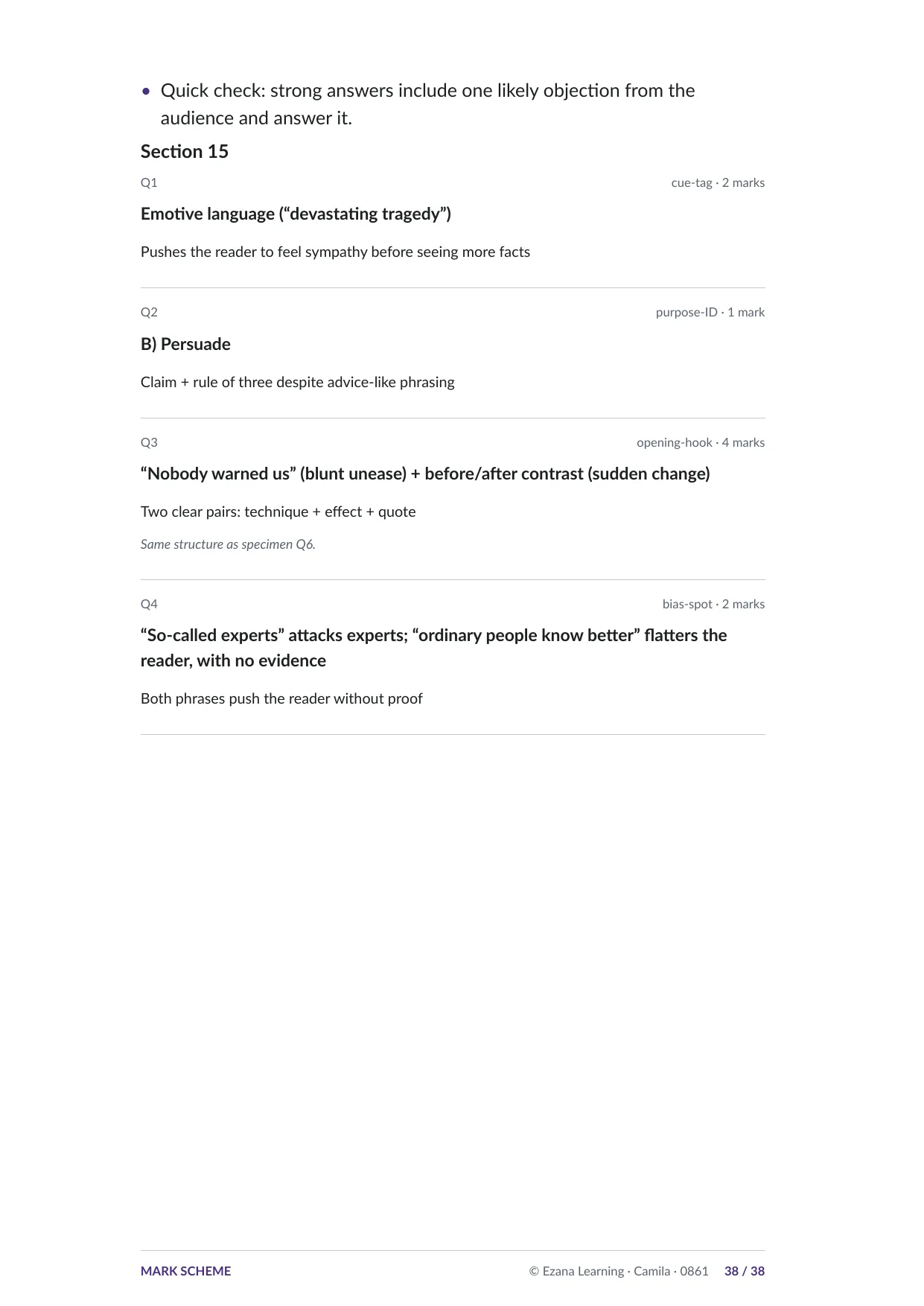
English 0861 · Stage 7 · Persuasive language · 38 pages · topic kitCamila likes content creation and music, and she edits videos with her cousins. The kit starts from something she already does: she tries to hold a viewer's attention in the first seconds of a video. Then it names those writing moves in exam language and gives practice that turns instinct into deliberate exam skill.
- Page 1 starts from a sourced TikTok retention figure, so the first example is familiar before formal terms are introduced (page 1).
- Page 8 uses the kit's own opening sentence as the first worked example, so she analyses a live example from her own page instead of an unrelated extract (page 8).
- Page 34 uses the same full worked answer format as the other sample kits, so families do not need a new checking system for each subject (page 34).
Click any page to open the reader and page through the whole kit. You can also scroll the strip sideways.
These kits fit Ron, Anaya, Caps and Camila — yours will fit your child
The questionnaire takes about 5 minutes: your child's part first, then yours, including the topic the first kit should cover.
Start the questionnaire